
Shedding is one of those aspects of snake keeping that looks straightforward from the outside — old skin comes off, new skin is revealed, everyone moves on — until it doesn't go smoothly and you're suddenly trying to figure out what went wrong and how worried to be.
The good news is that most shedding problems have clear causes and clear solutions. Understanding what's actually happening during a shed, what influences whether it goes well, and what to do when it doesn't will take most of the guesswork out of one of the most regular events in your snake's life.
The technical term is ecdysis, but the mechanism is straightforward: snakes don't grow the way mammals do. Their skin doesn't stretch indefinitely. It's periodically outgrown and replaced entirely. When a new skin layer has formed beneath the old one, the old layer is shed.
How often this happens depends on the individual animal and where it is in life. Young hognose snakes growing rapidly may shed every few weeks. Adults, whose growth has slowed significantly, might shed only three or four times a year. Frequency also increases during periods of healing. Shedding is part of how reptiles repair damaged skin which is why you'll sometimes see an animal shed outside its normal cycle after an injury or illness.
The shed itself is always the outer layer only. The new skin underneath has been forming throughout the pre-shed period, which is why the reveal after a good shed often looks so striking. That brightness isn't new, it was just hidden.
The first sign that a shed is coming is usually a change in your snake's eyes. They'll take on a bluish, cloudy, or milky appearance — sometimes described as going "blue" or being "in the blue." This happens because fluid is accumulating between the old and new skin layers to help separate them, and that fluid sits across the eye caps as well as the body.
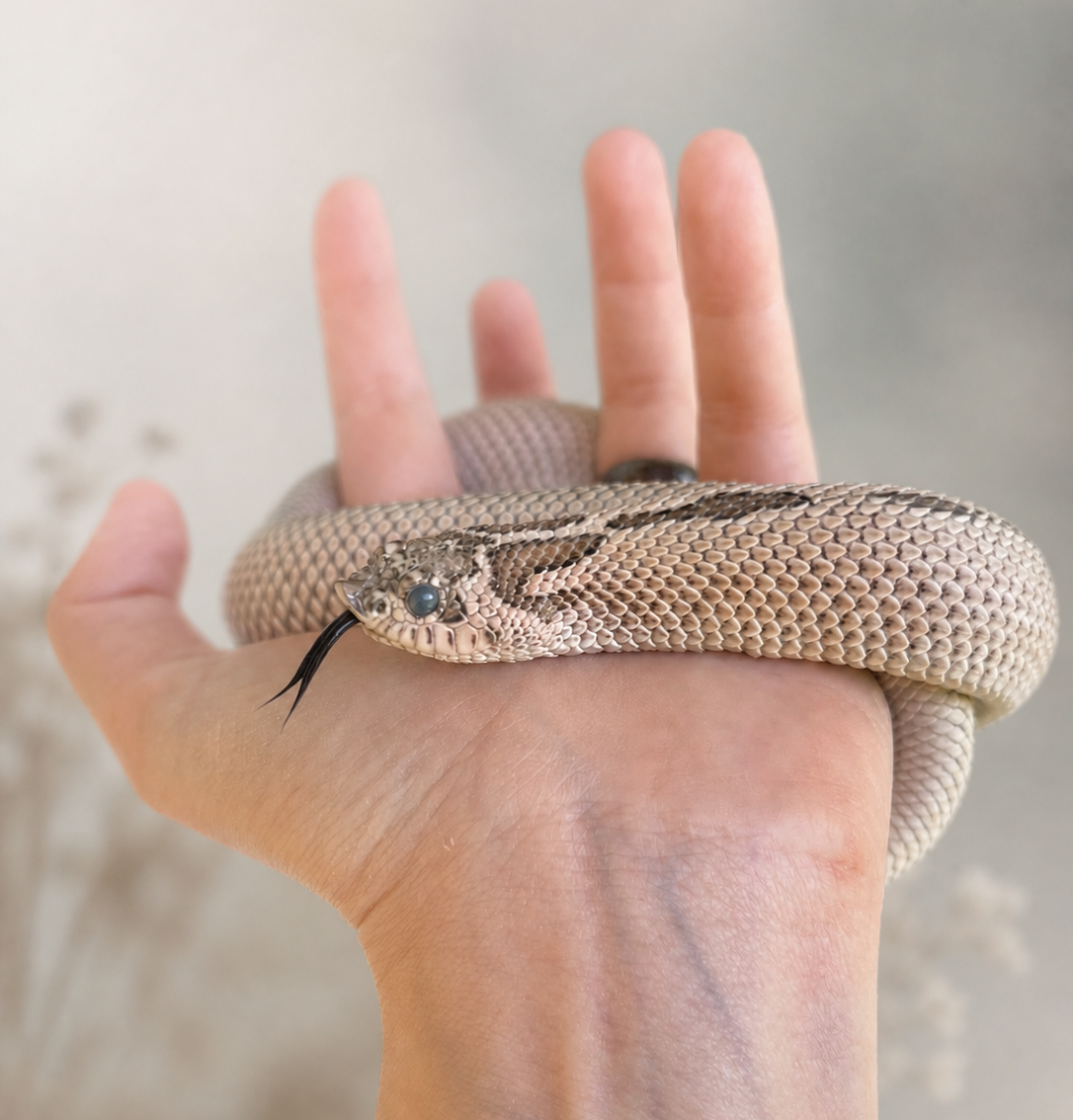
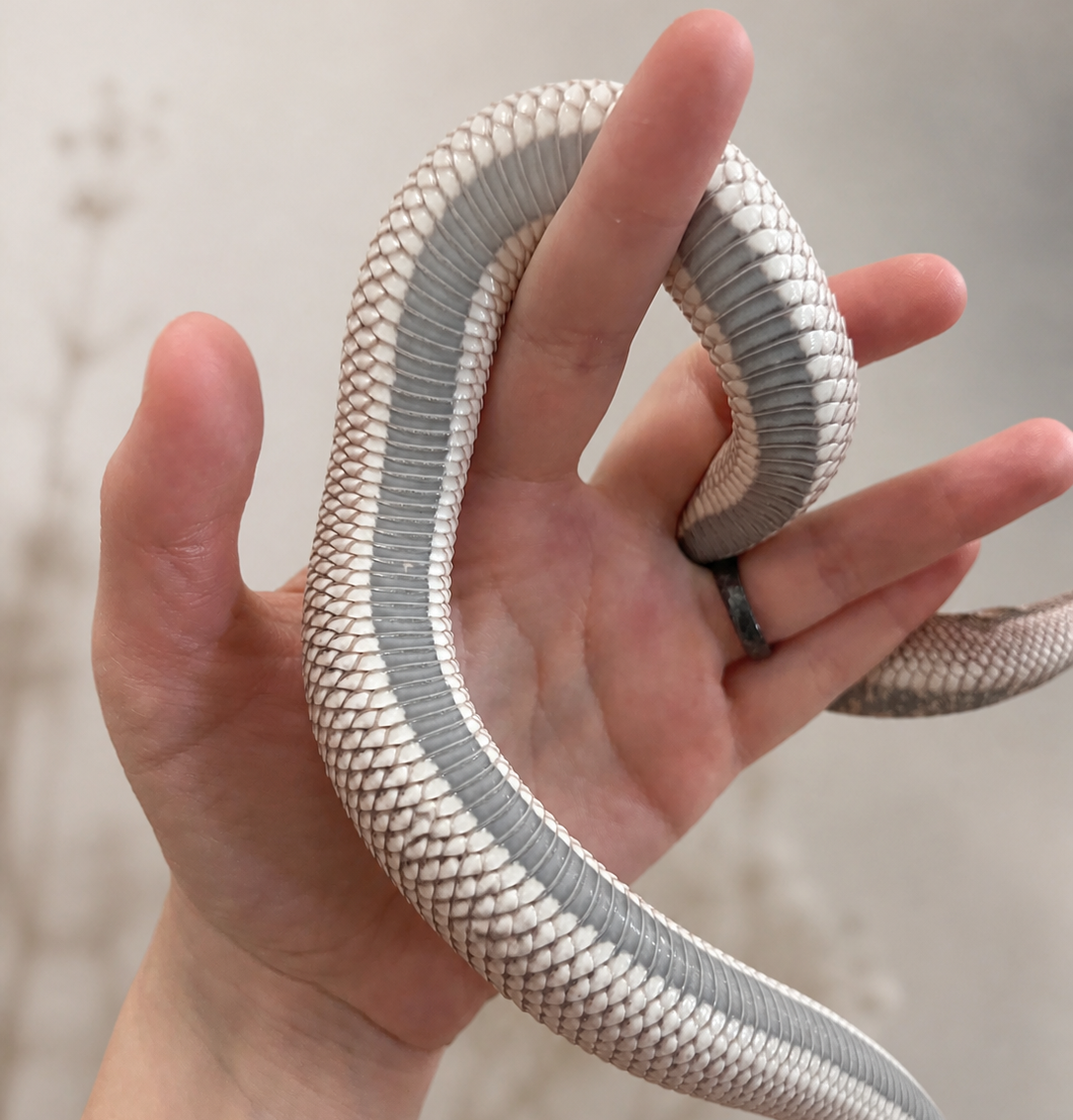
At the same time, your snake's overall coloration may dull and lose its normal clarity. The skin can look slightly drab or washed out compared to its post shed appearance.
Behaviorally, most snakes become more reclusive during this period. Spending more time in hides, being less interested in food, and being more defensive or skittish when disturbed are all normal pre shed behaviors. The eyes in blue phase are functionally impaired — the cloudiness genuinely affects vision — so a snake that's more reactive to sudden movements or handling attempts during this period isn't being difficult, it literally can't see you as clearly as usual.
After several days in blue phase, the eyes will often clear again before the actual shed occurs. This clearing phase can be confusing the first time you see it — it looks like the shed has resolved on its own — but it just means the process is progressing normally and the shed itself is imminent.
Don't offer food during blue phase. Most snakes will refuse anyway, and the ones who don't are more likely to regurgitate because of the general physiological disruption happening during this period. Wait until after the shed is complete and the animal has had a day or two to settle.
When the time comes, your snake will begin rubbing its snout against rough surfaces in the enclosure — the edge of a hide, a piece of cork bark, a rock — to loosen the old skin around the lips and nose. Once that leading edge is free, the snake works its way out of the old skin by moving forward while the skin peels back, turning inside-out as it comes off.
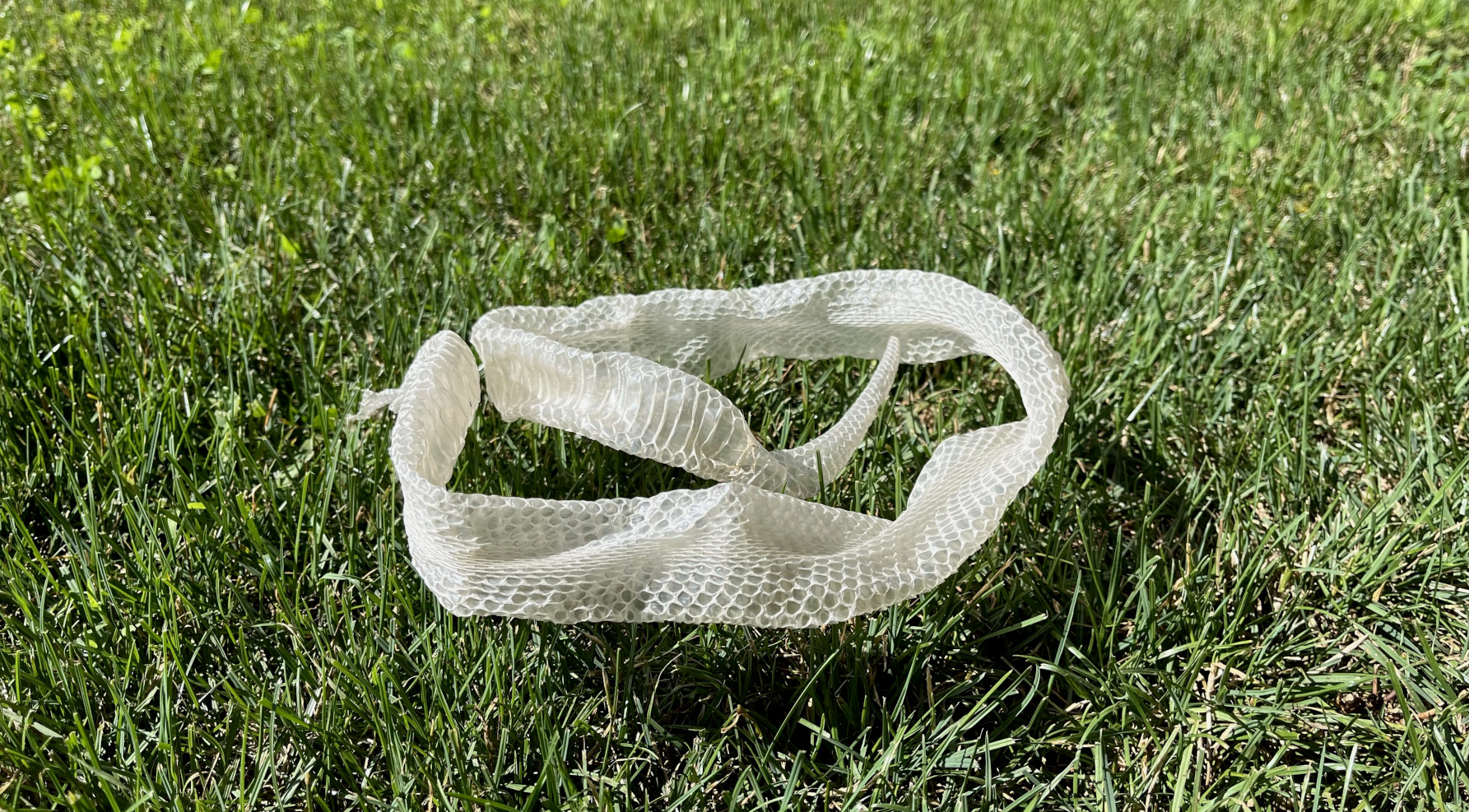
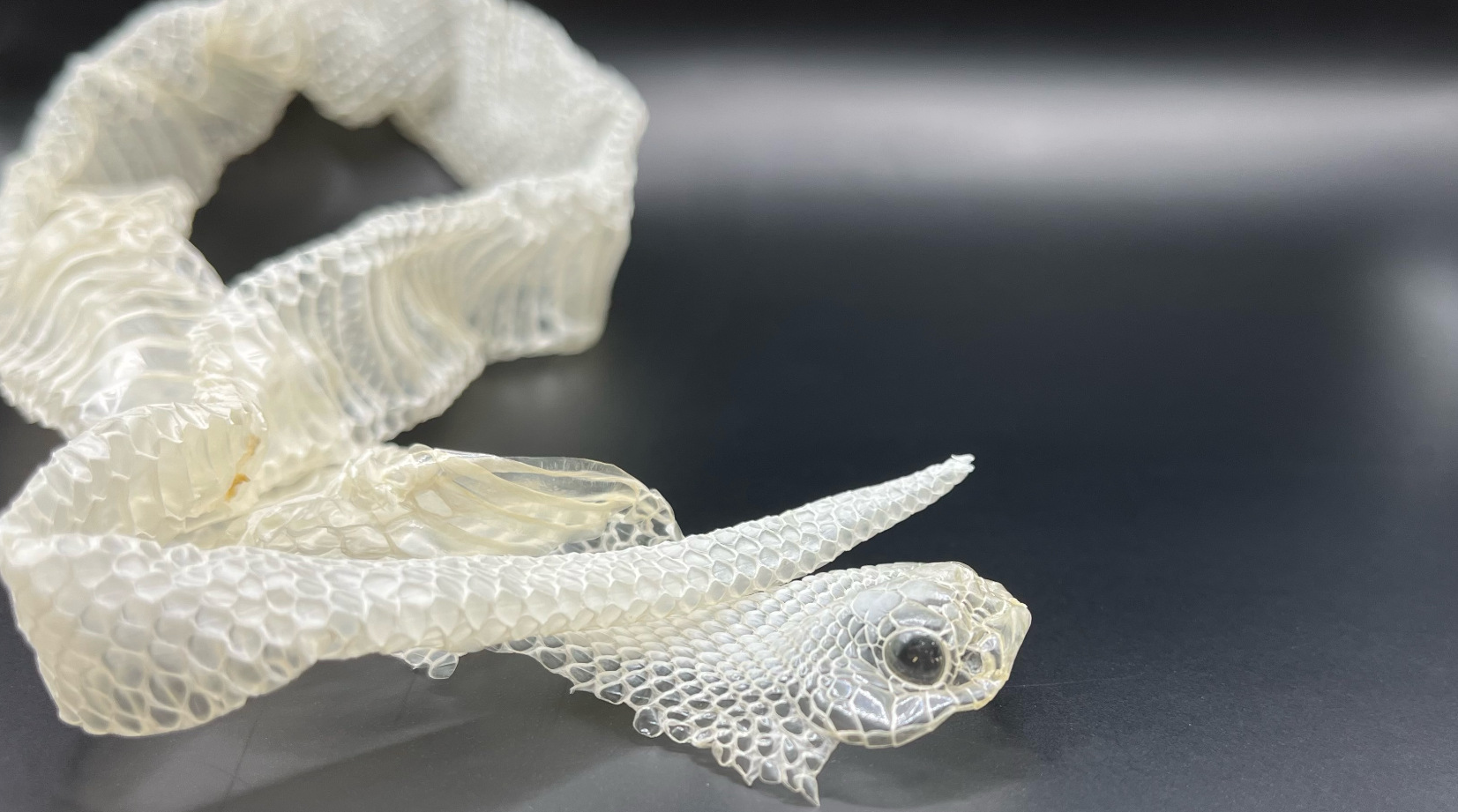
In a healthy snake with good husbandry, the shed should come off in a single continuous piece — body, tail, and crucially, both eye caps. The eye caps, also called spectacles, are clear scales that cover the eyes and shed with the rest of the skin. Checking that both are present in the shed is one of the most important post-shed checks you can do.
The entire process is usually complete within a day of starting. If your snake has been actively trying to shed for more than 24 to 48 hours without completing it, something is interfering.
Western hognose snakes come from relatively arid environments, which leads some keepers to keep their enclosures drier than they should be. Particularly during shedding cycles.
The moisture content of the old skin layer is what determines how easily it separates from the new skin beneath it. Too dry, and the old skin desiccates and sticks rather than sliding off cleanly. This is the single most common cause of incomplete sheds in captive hognose snakes.
The target ambient humidity for a western hognose enclosure is generally 30–50%. During shedding, you want to nudge this upward — not dramatically, not to tropical levels, but enough to keep the shed moving. Light misting once or twice a day during pre shed and active shed phases is usually sufficient. A humid hide — a small enclosed space lined with damp sphagnum moss, placed on the warm side — gives your snake access to elevated local humidity whenever it needs it without raising the ambient humidity of the whole enclosure to a level that creates respiratory risks.
If you're in a particularly dry climate or your indoor heating significantly dries the air in winter, this matters even more. What works in summer may not be adequate in winter in the same room with the same setup.
A well hydrated snake sheds more easily than a dehydrated one. The moisture content of the body affects the skin's elasticity and the ease of separation in the same way external humidity does. Always ensure fresh water is available, and check that your snake is actually drinking. Some individuals, particularly younger ones, may benefit from a shallow soak during the pre shed period to ensure adequate hydration going into the shed.
Nutrition also plays a role that's easy to overlook. Deficiencies in vitamin A specifically are associated with dysecdysis — problematic shedding — because vitamin A is involved in the maintenance of epithelial tissue, which is what skin is made of. A snake fed an appropriate variety and size of prey items on a consistent schedule is unlikely to develop deficiencies, but animals that have been underfeeding, recovering from illness, or going through extended fasting periods may be more vulnerable to shed problems for this reason.
Your enclosure needs to give your snake something to push against when it's time to start the shed. A bare, smooth-sided enclosure with no textured surfaces makes the initial loosen-and-peel stage significantly harder. Cork bark, climbing branches, rough rocks, and textured hides all serve this purpose. A snake that's actively trying to shed will use every surface available to it. The more options you've given it, the easier the process tends to be.
The humid hide mentioned above is worth setting up at the first sign of pre shed behavior rather than waiting to see if the shed goes well without it. It costs nothing to add it proactively, and removing it after a successful shed is easier than dealing with a retained eye cap that could have been prevented.
Incomplete shedding, technically called dysecdysis, ranges from minor to genuinely serious depending on where the retained skin is and how long it stays.
Retained eye caps are the most concerning location. The eye cap is a thin, clear scale, and retained caps left in place are difficult to see clearly, can impair vision, and can lead to infection beneath the scale if they remain. If you can't confirm both eye caps are present in the shed skin, examine your snake's eyes carefully under good light. A retained cap often gives the eye a slightly dull or layered appearance compared to the other eye. Do not attempt to remove retained eye caps without knowing exactly what you're doing; the eye is directly beneath, and incorrect technique can cause serious injury. If you're uncertain, a vet visit is the right call.
Retained skin around the tail tip is the other high priority location. Old skin that dries and tightens around the tail acts like a tourniquet. It can restrict blood flow and, if left in place through subsequent sheds, can eventually cause the tail tip to die and drop off. Check the tail end carefully after every shed.
Patchy shedding across the body is less immediately dangerous but indicates a husbandry problem that needs addressing. A one-off patchy shed might not be cause for significant concern. Repeated patchy shedding over multiple cycles is telling you something about your humidity, hydration, or nutrition that needs to change.
If your snake has retained skin after a shed attempt, the first response is a warm soak. Shallow water at around 28–30°C (82–86°F), fifteen to twenty minutes. The warmth and moisture will often be enough to loosen retained patches to the point where they come away on their own or with very gentle assistance from a damp cloth.
Gentle is the operative word. Old skin that's genuinely ready to come off will move with almost no pressure. Skin that requires real force to shift isn't ready — forcing it risks injuring the new skin underneath. If a soak doesn't produce results, another soak the following day is more appropriate than applying more pressure.
After any assisted shed, examine the skin and the snake carefully. Confirm eye caps, confirm the tail, and check that the skin you removed came away completely rather than tearing and leaving remnants behind.
If soaking doesn't resolve retained eye caps or if you're seeing repeated severe dysecdysis across multiple shed cycles, a reptile vet should be consulted. Chronic shedding problems that don't respond to husbandry improvements sometimes indicate underlying health issues.
A complete shed is worth looking at carefully rather than just disposing of it. Lay it out and check:
Full length: does it appear to cover the whole body? A very short shed might indicate it came off in pieces you missed.
Both eye caps: two small circular pieces at the head end of the shed, slightly more opaque than the surrounding skin. If you find only one, or none, examine your snake's eyes.
Tail tip: the very end of the shed should taper to a complete point. If it's torn or absent, check the tail carefully.
A clean, complete, inside-out shed in a single piece is one of the more satisfying confirmations that your husbandry is working. Most experienced keepers still check every one. The information is too useful to skip.
Shedding is a reliable window into your snake's overall condition. A snake that sheds cleanly and consistently, cycle after cycle, is a snake whose basic needs are being met. A snake that sheds poorly — repeatedly, not occasionally — is telling you something needs to change.
Get the humidity right. Keep the water fresh. Provide surfaces to shed against. Add a humid hide during pre shed phases. Check every shed when it comes off. These aren't complicated steps, but done consistently they make the difference between shedding being a non-event in your snake's life and it being a recurring source of problems.

No comments yet — be the first.