
Bringing home a new western hognose snake is one of those moments that's hard not to get swept up in. New animal, new personality, new chapter. If you're adding to an existing collection, the temptation to get everyone introduced and settled as quickly as possible is understandable.
But before any of that happens, there's one step that experienced keepers treat as completely non-negotiable, and that newer keepers sometimes underestimate until they've learned the hard way why it exists.
Quarantine. Every new animal. Every time. No exceptions.
The core reason is straightforward: a snake that looks healthy can still be carrying something that isn't visible yet. Parasites, bacterial infections, viral conditions,... many of these have incubation periods or early stages that produce no obvious symptoms. An animal can be alert, eating well, behaving normally, and still be harbouring something that, given time or the stress of a new environment, will eventually surface.
If that animal goes directly into a room with your existing collection, you've potentially exposed every snake you own before you even knew there was a problem. By the time symptoms appear, containment becomes significantly more complicated.
Quarantine gives you a controlled window to observe a new animal in isolation — before it has had any contact with your other snakes, their equipment, or their environment. It's not a reflection of distrust in where the animal came from. It's just how responsible multi-animal collections are managed, and most reputable breeders will tell you they quarantine animals from their own trusted sources as standard practice.
Beyond disease prevention, quarantine serves a second important function: it gives the new snake time to decompress. Relocation is stressful for any reptile. A new environment, new smells, new handling, different temperatures — all of it is a lot to process. A quiet, separate space where nothing is expected of the animal except eating and existing gives it the best possible foundation before it moves into a permanent setup.
The quarantine setup doesn't need to be elaborate. In fact, simplicity is intentional. A clean, minimal environment is easier to monitor and easier to keep hygienic throughout the process.
The enclosure itself should be either brand new or thoroughly disinfected before use. A plastic tub works well for most hognose sizes and is easy to clean. The key is that it hasn't housed another reptile recently — or if it has, that it's been properly disinfected with a reptile-safe solution and allowed to dry completely before use.
Substrate should be paper towel or newspaper. This isn't about aesthetics it's about visibility. Paper substrate makes it easy to spot waste immediately, assess its consistency and frequency, and clean the enclosure thoroughly without substrate contaminating the process. Any irregularity in fecal output is one of the earliest indicators that something may be off, and you want to be able to see it clearly.
Temperature gradient: warm side surface temperature of around 30–32°C (85–90°F), cool side at roughly 22–24°C (70–75°F). The gradient matters because a snake that can't thermoregulate properly will be stressed on top of whatever else it's managing, and a stressed immune system is more vulnerable, not less.
Hides: at least one on each end of the gradient. A snake that feels exposed is a stressed snake, and stress is the variable you're trying to minimize throughout quarantine.
Fresh water: always available. Change it regularly and note whether the snake is drinking. Hydration habits can be an early behavioral indicator of how well the animal is settling.
Location: if at all possible, keep the quarantine enclosure in a completely separate room from your main collection. Airborne transmission of pathogens is less common than contact transmission, but it's a real enough risk that physical separation is worth the inconvenience. At minimum, the quarantine animal should have no shared airspace with your existing snakes.
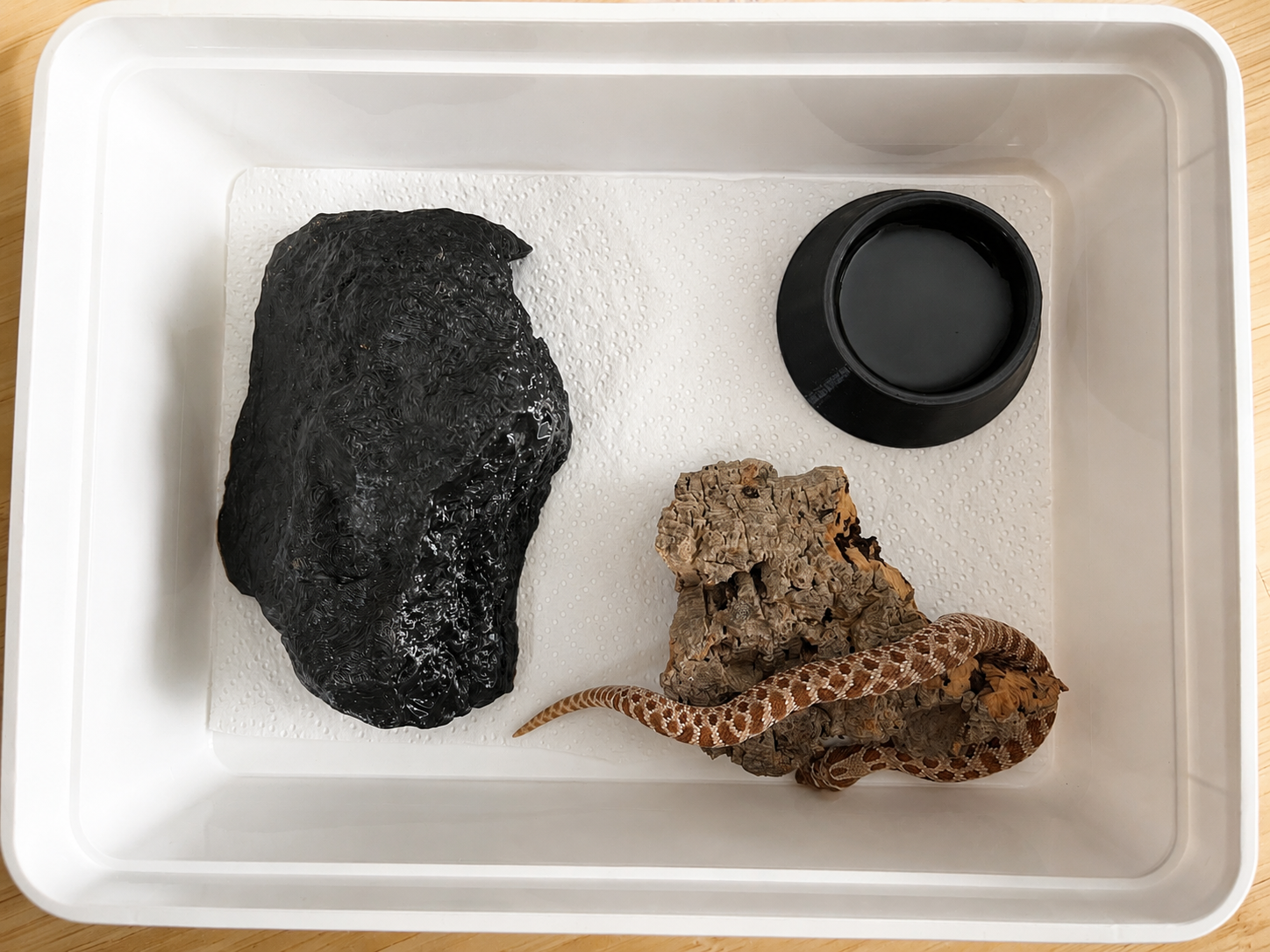
This part is where quarantine either works or doesn't, and it requires genuine discipline.
Every piece of equipment used with the quarantine animal (feeding tongs, water dish, cleaning tools, the enclosure itself) stays dedicated to that animal for the duration. Nothing moves between the quarantine setup and your main collection. If you're handling multiple animals in a session, the quarantine snake is handled last, after everything else, and your hands are washed thoroughly before and after.
Your clothing matters too. Pathogens can travel on fabric, particularly if you've been holding the snake or cleaning its enclosure. Some keepers keep a designated set of clothes or an apron for quarantine handling — it sounds excessive until you've had a collection-wide health issue that traced back to something avoidable.
Disinfect the enclosure regularly throughout quarantine, not just at the beginning and end. Paper substrate makes this straightforward — waste is spotted quickly, removed immediately, and the surface cleaned before fresh substrate goes down.
The minimum that's widely recommended is 30 days. Realistically, 60 to 90 days is better. And for animals coming from unknown backgrounds, or if you have any reason to be cautious, the longer end of that range is worth it.
The reason for the extended period is that some conditions take time to manifest. An animal that appears completely healthy at day 14 may show early signs of something at day 45. A 30-day quarantine would have missed it. A 90-day quarantine catches it before it ever reaches your other snakes.
It feels like a long time when you're eager to get a new animal settled. It feels like nothing compared to dealing with a sick collection.
Daily observation is the point of quarantine. It's what separates a genuine health screening from just keeping an animal in a separate box for a month.
Feeding: offer food on a normal schedule and track the response carefully. Is the animal striking confidently? Eating without hesitation? Any regurgitation after feeding is worth noting immediately. Repeated regurgitation is a veterinary concern. Refusal in the first week or two of a new environment is common and not inherently alarming, but refusal that persists beyond that, particularly combined with other symptoms, warrants closer attention.
Waste: check every time you see it. Healthy hognose waste has a formed dark fecal component and a separate chalky urate portion, with minimal fluid. Very liquid stool, unusually frequent passing, or any visible blood are all reasons to contact a vet. Partially undigested prey in the waste can indicate digestive issues.
Behavior: is the animal alert and responsive when disturbed, or unusually lethargic? Does it investigate its environment with normal curiosity, or does it seem withdrawn in a way that goes beyond normal adjustment stress? There's a difference between a new snake that's hiding and decompressing and one that seems genuinely unwell. The more time you spend observing, the easier that distinction becomes.
Shedding: note when the animal goes into blue phase and when the shed completes. A clean, single piece shed is a good sign. Retained shed, particularly around the eye caps, should be addressed. Repeated incomplete sheds can indicate husbandry issues or underlying health problems.
Weight: if you have a small digital scale, weigh the animal weekly. A gradual decline in weight over multiple weeks is one of the clearest early signals that something is wrong. Particularly in cases where the snake is eating but not absorbing properly.
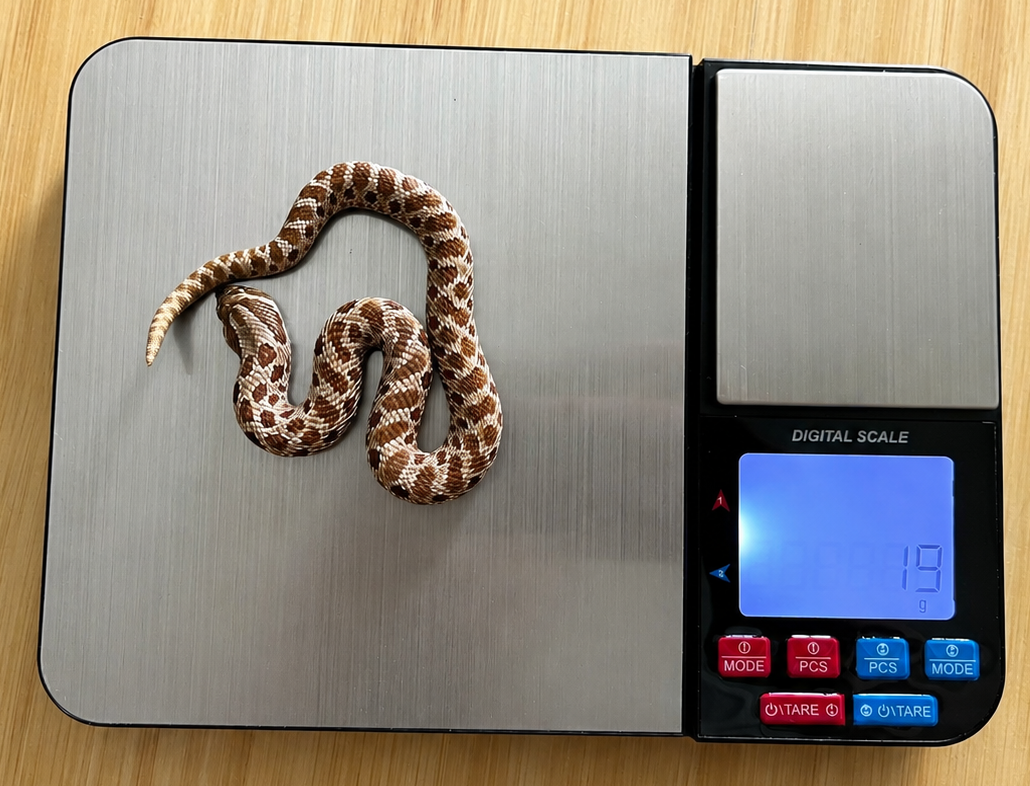
Some things shouldn't wait for the quarantine period to end. If you observe any of the following, contact a reptile experienced veterinarian promptly:
Respiratory symptoms: clicking or wheezing sounds during breathing, open mouth breathing, holding the head at an unusual angle, excess mucus around the mouth or nostrils. Respiratory infections progress — they don't resolve without intervention.
Skin issues: blistering, unusual discoloration, wounds that aren't healing, or a shed that reveals significant retained patches across large portions of the body.
Digestive concerns: repeated regurgitation, very liquid or bloody stool persisting beyond the first week, visible undigested prey in waste over multiple feeding cycles.
Neurological signs: spinning, stargazing (holding the head back at an extreme angle), loss of coordination, or any movement that doesn't look like normal hognose behavior.
Weight loss: a snake that's eating and still losing weight consistently is telling you something important. Get a fecal exam at minimum.
A vet visit — ideally including a fecal exam — is worth scheduling proactively for any new animal, regardless of whether you're seeing concerning symptoms. A baseline health check at the start of quarantine gives you something to compare against if things change, and catches parasites that might not produce obvious symptoms for weeks.
Before the quarantine period ends and your new snake moves into its permanent setup, do a thorough final assessment. Has it been eating consistently? Is its weight stable or increasing? Is the waste normal? Has it completed at least one shed cleanly?
If everything checks out — ideally with a vet's confirmation following a fecal exam — the animal can move into its long term enclosure. Continue monitoring closely for several weeks after the transition. A new permanent setup is another environmental change, and behavioral shifts around feeding or activity in the first few weeks after moving are worth watching even if quarantine passed without incident.
Quarantine isn't a bureaucratic formality. It's the practice that, more than almost anything else in multi-animal keeping, separates collections that stay consistently healthy from those that periodically deal with problems that spread through multiple animals before anyone knows what's happening.
Every snake we've ever brought in has gone through it. Some arrived completely healthy and sailed through without a single concern, and that's the best possible outcome. Some arrived with things we caught during quarantine that would have been considerably more complicated to deal with had they reached the rest of the collection.
You never know which one you're getting until quarantine tells you. That's the whole point.

No comments yet — be the first.