
We thought we were done for the season.
Bajsa had already given us a beautiful clutch of 20 eggs back in May, 19 of which were developing beautifully in the incubator. The hard part was over. We were in full waiting mode — monitoring temps, checking humidity, counting down to hatch day. Bajsa was eating well, behaving normally, and we had mentally moved on to the next phase.
And then she started getting round again.
Not dramatically, not overnight, but noticeably. The kind of roundness that makes you look twice, then look again an hour later, then quietly mention it to whoever else is in the room. She hadn't been paired with a male since the original breeding session, so a second clutch wasn't even on our radar. We told ourselves she was probably just eating well. That she'd had a big meal. That we were seeing things.
We weren't seeing things.
When we suspected something might be going on, we tried palpating her — gently pressing along her belly to feel for eggs. It's a useful technique with fertile clutches, where the eggs are firm and relatively easy to detect. But we felt nothing obvious, which actually made us less worried rather than more. Surely if there were eggs in there, we'd feel them.
Here's the thing about slug eggs: they're soft. Much softer than fertile eggs, with less structural integrity, which makes them genuinely difficult to detect by touch alone. A belly full of slugs can feel surprisingly unremarkable from the outside, especially compared to the firm, distinct shapes of a viable clutch. So we put our concerns aside and kept watching.
Then one morning, after a recent meal, Bajsa did something that immediately got our attention. She looked like she was about to pass waste — the posture, the positioning, everything pointed that way — and then out came a slug egg instead. That changed things immediately.
We set up a lay box the same way we had for her first clutch: enclosed, humid, filled with moist sphagnum moss, with an entrance hole sized for easy access. The logic is the same as before — creating the kind of sheltered, humid micro environment that encourages a female to feel safe enough to deposit eggs.
Bajsa started going in and before she'd even made it fully through the entrance of laybox, another egg appeared. Right there, halfway in and halfway out of the box, she laid it.
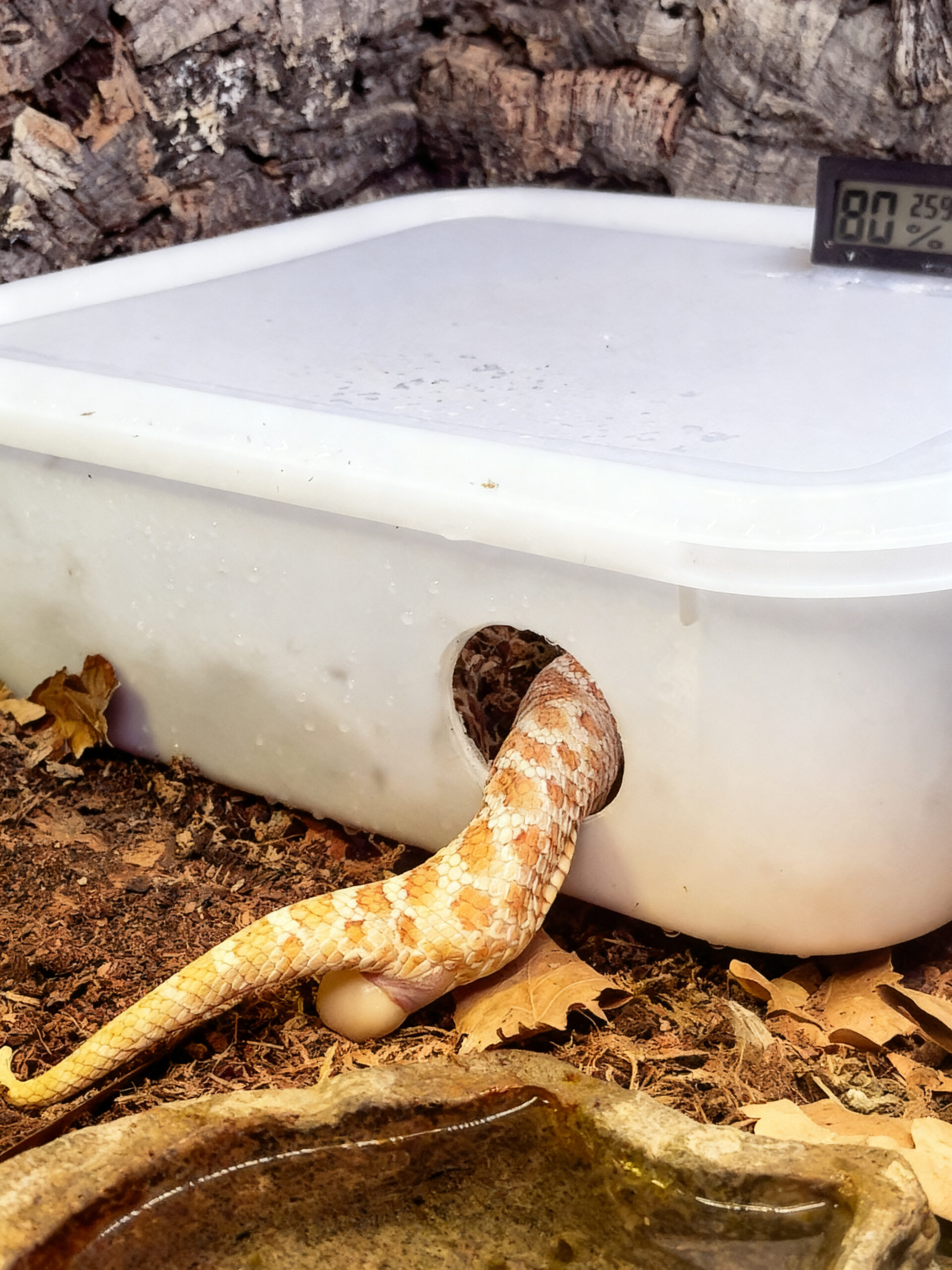
After that, nothing. She settled inside the box, and we waited for the rest to follow.
An hour passed. Then several more. The afternoon went by. The sun went down, and Bajsa was still in the lay box but not producing anything. That slow creep of worry that every reptile keeper knows was beginning to make itself felt. By nightfall, we were genuinely concerned.
Egg binding — or dystocia, to use the clinical term — is one of the more serious complications that can arise during egg laying. It occurs when a female is unable to pass her eggs on her own, and it can happen for several reasons: eggs that are too large, a female who is too dehydrated or calcium-deficient, physical obstruction, or simply a lack of the muscular contractions needed to move things along.
Left untreated, dystocia can be fatal. The timeline matters. A female who hasn't made progress for 12 to 24 hours after beginning the laying process, or who passed one egg and then stalled completely, warrants serious attention. This isn't a situation where waiting it out indefinitely is a safe option.
We knew this. And by morning, with no additional eggs and Bajsa looking visibly more bloated than the night before, we weren't waiting any longer.
Before heading to the clinic, we tried one thing first: a warm soak. Soaking a gravid female in shallow, comfortably warm water can sometimes stimulate the muscle contractions needed to pass eggs. The warmth promotes relaxation, and the combination of hydration and gentle physical sensation occasionally gets things moving. We gave her a full hour.
Nothing.
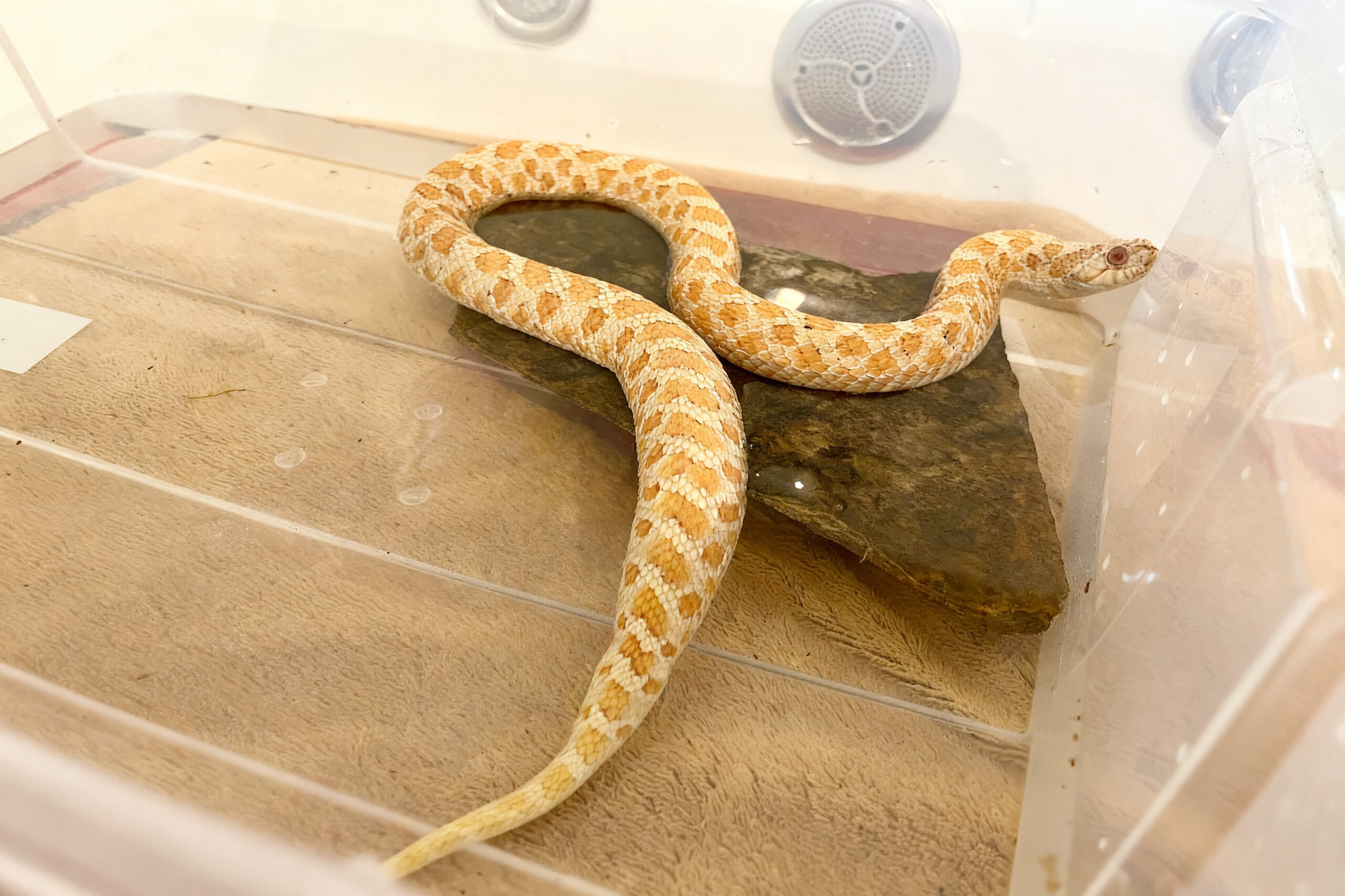
We packed Bajsa carefully into a travel container lined with damp moss — keeping her warm and comfortable for the journey — and headed to the vet.
At the clinic, they took an X-ray to assess the situation. This is the standard first step when egg binding is suspected, and it gives the vet a clear picture of how many eggs are present, where they're sitting, and whether any obvious physical obstruction is causing the problem. In Bajsa's case, the results were inconclusive — as we'd suspected, slug eggs don't image clearly. Their low density and lack of firm structure means they don't show up on X-ray the way fertile eggs do, which made it difficult to know exactly what we were dealing with in terms of numbers.
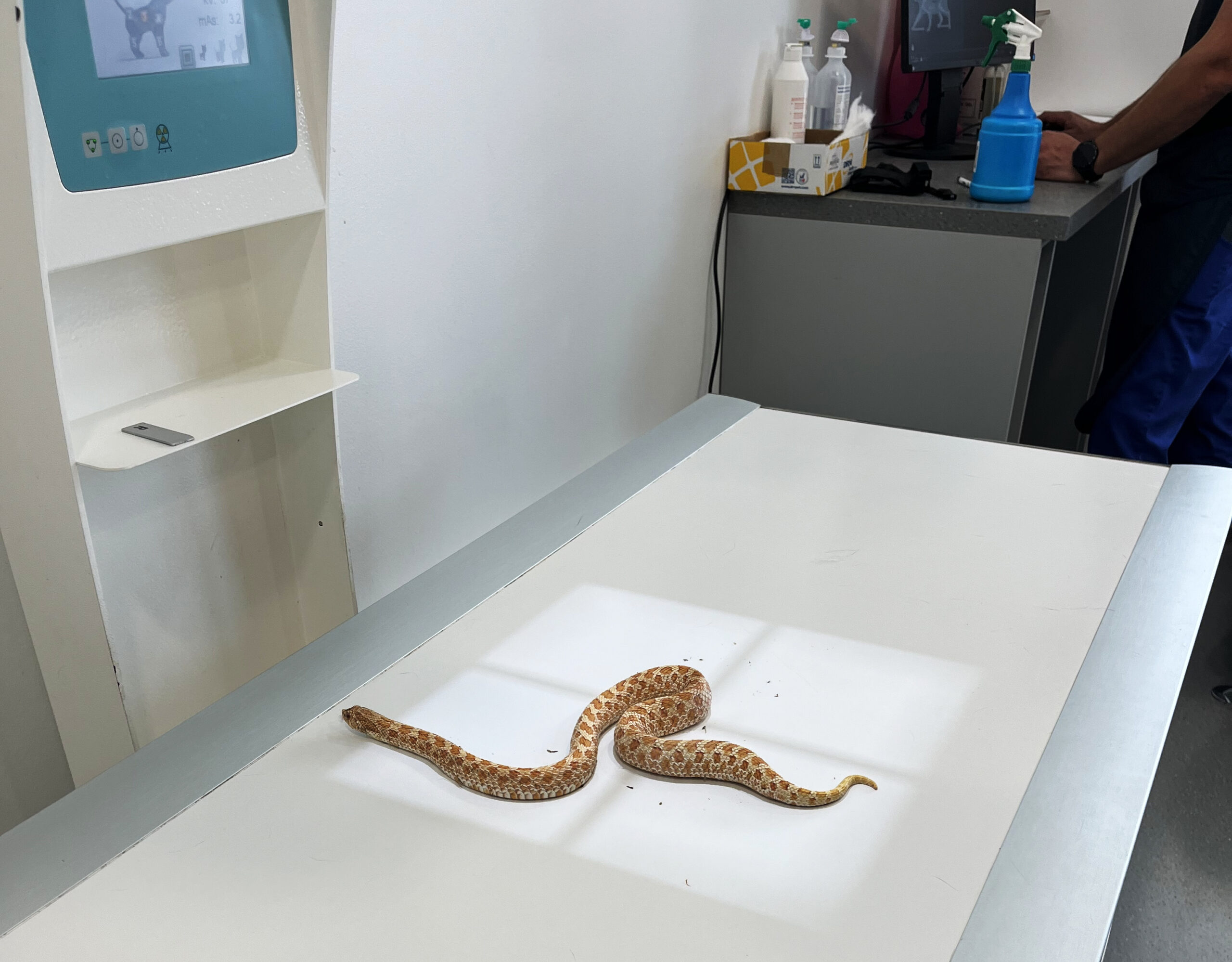
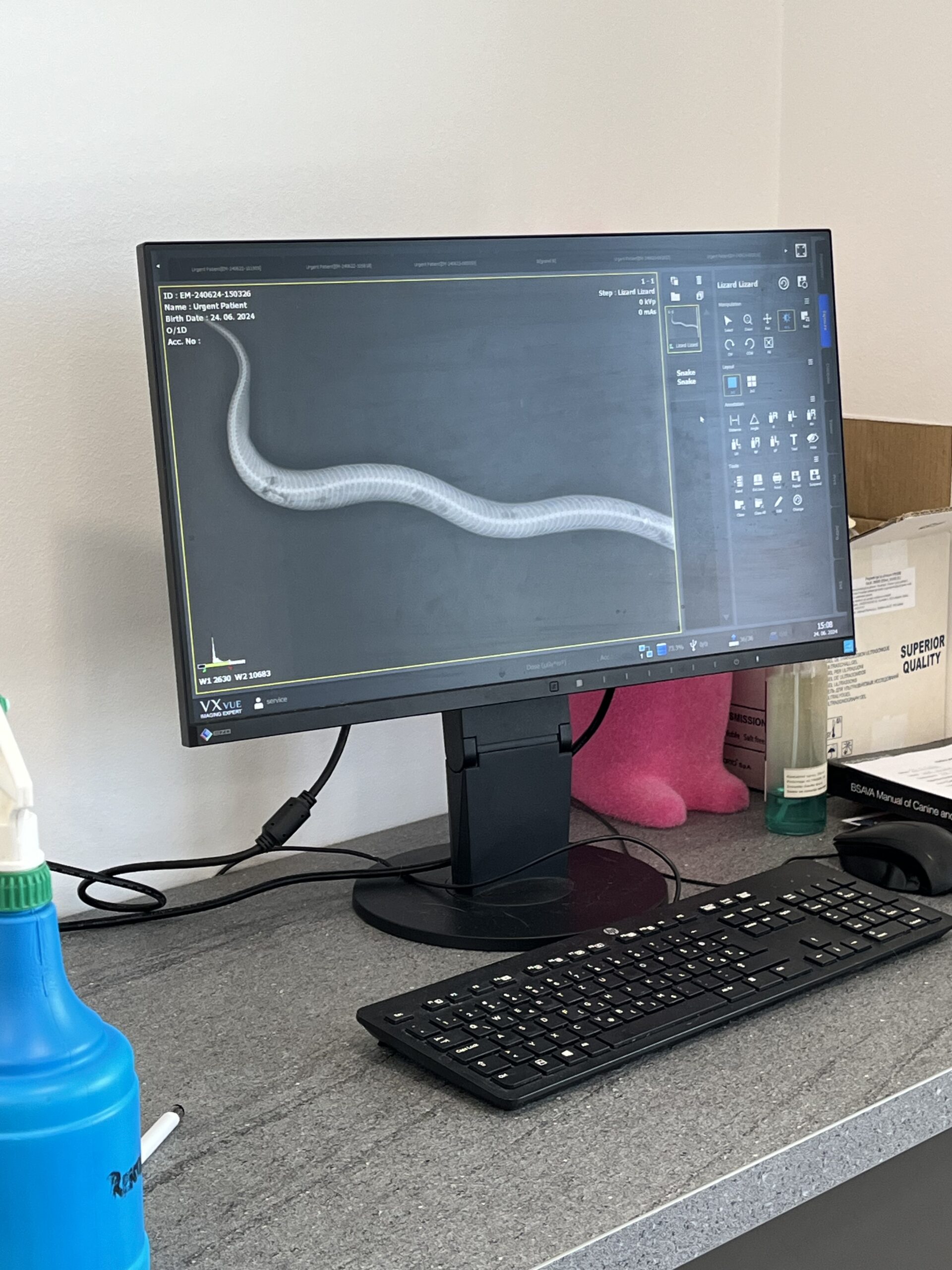
The vet's recommendation was oxytocin. A hormone that promotes uterine muscle contractions and is commonly used in reptile medicine to assist with egg laying when a female has stalled. It's essentially giving the body a targeted signal to do what it's been struggling to do on its own.
The dose was small and carefully administered. And before we had even made it home, we found an egg in Bajsa's travel container.
We settled Bajsa back into her lay box, kept the room quiet, and let her work. By the end of the day, she had laid ten more eggs, bringing the total second clutch to thirteen.
Every single one was a slug.
We won't pretend that wasn't a little deflating to see, even knowing it was likely from the beginning. But the honest truth is that by that point, the eggs themselves were almost secondary. What mattered was that Bajsa had passed everything, that the dystocia had resolved without surgical intervention, and that she was now resting comfortably rather than struggling.
She ate again within the week. She was fine.
It's a fair question, and one we got from a few people when we mentioned this was happening. Bajsa hadn't been paired with a male since the original breeding session. So where did a second clutch come from?
There are two possible explanations, and in this case it was almost certainly the second one.
The first is sperm retention. Female snakes are capable of storing viable sperm for extended periods — sometimes well over a year — and can use it to fertilize a second clutch without any additional mating. It's a well-documented reproductive strategy in snakes, and it's one of the reasons that a female who has been bred can sometimes produce fertile eggs in a subsequent season without being paired again.
The second explanation, which applies to Bajsa's situation, is that females can produce and deposit slugs entirely independently of mating. Slugs are essentially eggs that never became fertile — follicles that developed hormonally but were never fertilized. A female's body can go through the motions of clutch production without sperm being involved at all, particularly if she had a successful breeding season earlier in the year and her hormones are still cycling. It's not common, but it happens — and when it does, it can look a lot like a second gravid period from the outside.
Reptile keeping has a way of humbling you exactly when you think you've got things figured out. We went into the second half of this season feeling confident — proven breeding pair, healthy clutch in the incubator, smooth process start to finish. And then Bajsa quietly reminded us that there's always more to learn.
A few things we'd take from this for anyone who might face something similar:
Watch your females even after a successful clutch. A female who has bred once in a season isn't necessarily done, and changes in body shape or behavior are always worth paying attention to.
Know the difference between "waiting it out" and waiting too long. A warm soak is a reasonable first response when laying stalls. Waiting 24 hours with no progress and a visibly uncomfortable animal is not. Reptile vets exist for exactly these situations. Find one before you need one, not during the emergency.
Slugs are normal, but a stalled slug clutch isn't automatically fine. The softness that makes slugs hard to detect is also the reason they can sometimes be more difficult for a female to pass than firm, fertile eggs. Don't assume a slug clutch will resolve itself without monitoring.
Bajsa handled all of it with more composure than we did, honestly. She's back to her usual confident, food-motivated self, and as we write this, her first clutch of 19 eggs is sitting in the incubator with hatch day getting closer by the day. Whatever comes next, we'll be ready. Or at least, we'll think we're ready. Which is apparently the best any of us can do.
If you've dealt with a surprise second clutch or egg binding in your own animals, we'd genuinely love to hear about it in the comments. These are the experiences that don't always make it into care guides, and sharing them matters.
And as always - stay happy, stay curious, and give your hoggie a gentle boop from me.
You must be logged in to post a comment.

No comments yet — be the first.