
If you've spent any time in reptile keeping communities, you've probably seen listings or posts that describe animals using a notation like 1.0, 0.1, or 2.4.1 — and wondered what it means. You've also probably wondered at some point whether the hognose snake you're looking at is male or female, and how confident you can actually be in the answer.
This post covers both. They belong together because one leads naturally into the other — once you understand how sex is determined, the labeling system that breeders and keepers use to describe their collections makes immediate sense.
For pet keepers, knowing the sex of your snake affects how you manage feeding and weight expectations — adult females grow significantly larger than males — and whether you're thinking about future breeding. For breeders, accurate sexing is fundamental to pairing decisions and record keeping.
The challenge is that hognose snakes don't make this particularly easy, especially when they're young. Unlike some animals where sex is immediately obvious, snakes require either observation, counting, or a hands-on technique to determine reliably — and even then, some methods are more accurate than others.
The most accessible method for any keeper, and the one to start with before anything else.
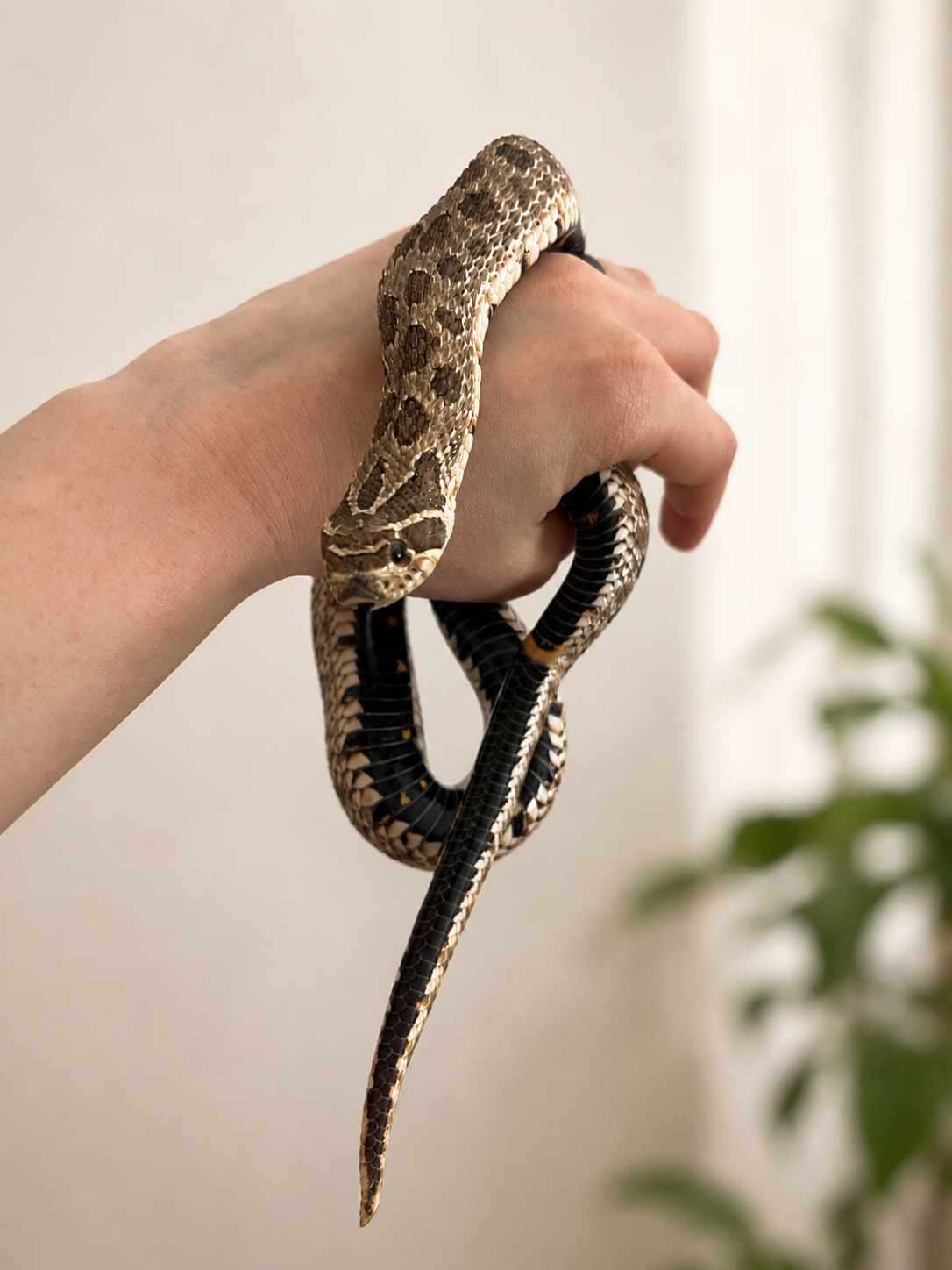
Male and female western hognose snakes have distinctly different tail shapes, and once you know what you're looking for it becomes fairly easy to read at a glance in adult animals.
Males have a tail that is noticeably longer and more gradually tapering. The base of the tail — the section just behind the cloaca — is wider than you'd expect relative to the rest of the tail, and the taper from that base to the tip is slow and gradual. This is because the hemipenes are stored inverted inside the tail, and the space they occupy creates that characteristic shape.
Females have a shorter tail that tapers much more quickly after the cloaca. The base doesn't have that same widening, and the overall tail looks proportionally shorter and more abruptly narrowed.
In adult animals, this difference is usually quite clear. In juveniles — particularly hatchlings and animals under three to four months old — the difference is subtle enough that tail shape alone can be misleading. Younger animals are simply harder to sex accurately, and anyone who tells you otherwise with absolute confidence about a very young hognose is probably overconfident.
A more precise method that takes a little more patience but gives you a more reliable read than tail shape alone.
The subcaudal scales are the scales on the underside of the tail, from the cloaca to the very tip. Counting them requires a calm snake and good lighting, but it's non-invasive and can be done by any keeper willing to take the time.
Males typically have 35 or more subcaudal scales. Females typically have fewer than 35.
This isn't an absolute rule — there's natural variation in any population — but it's a useful secondary confirmation alongside tail shape. If your tail shape assessment and your scale count agree, you can be reasonably confident in the sex. If they disagree, that's a signal to try another method or consult someone with more experience.
Counting subcaudal scales on a very young or small hognose is genuinely difficult and the accuracy drops considerably. For hatchlings, this method is better reserved until the animal has grown enough to count reliably.
Probing is the gold standard for sex determination in snakes and produces the most reliable results across all ages and sizes. It involves inserting a smooth, lubricated probe — a specifically designed tool, not anything improvised — into the cloaca and gently directing it toward the tail.
In males, the probe will travel a significant distance into the tail because it enters the inverted hemipenis. In females, the probe travels only a short distance before meeting resistance. The difference is measured in subcaudal scales — typically 9 to 15 scales deep in males, 2 to 4 scales in females for western hognose snakes.
This technique should not be attempted without proper training or hands-on guidance from an experienced keeper or veterinarian.
That's not a disclaimer added for legal reasons — it's genuinely important. An incorrectly sized probe, too much pressure, the wrong angle, or a snake that moves unexpectedly can cause internal injury that isn't always visible from the outside and can be serious. The technique is simple when done correctly by someone who knows what they're doing, and potentially harmful when done incorrectly by someone who doesn't. If you want probing done on your snake, ask an experienced breeder or reptile vet to do it rather than attempting it yourself based on a written description.
Popping is a technique used primarily on hatchlings and very young snakes, where gentle pressure applied to the base of the tail causes the hemipenes to evert temporarily in males. In females, nothing everts.
It's faster than probing and doesn't require equipment, which is why experienced breeders often use it for sexing hatchlings immediately after they emerge. However, it requires the right technique and the right amount of pressure — too much force can cause injury, and the technique is less reliable in older animals.
Again — this is a technique for experienced hands, not a first attempt. If you're curious about the sex of a young snake and don't have access to an experienced keeper, probing by a vet or reptile specialist is a safer option than attempting popping without guidance.
Honestly, it depends on the animal's age and your experience level.
| Method | Accuracy in adults | Accuracy in juveniles | Requires experience? |
|---|---|---|---|
| Tail shape | Good | Moderate | No |
| Scale count | Good | Moderate | No |
| Probing | Excellent | Excellent | Yes |
| Popping | Good | Good | Yes |
For most pet keepers, tail shape combined with scale counting is sufficient for adult animals. For hatchlings, or if you need certainty for breeding purposes, probing by someone experienced is the most reliable path.
You've just read about tail shape and scale count, now see if you can apply it.
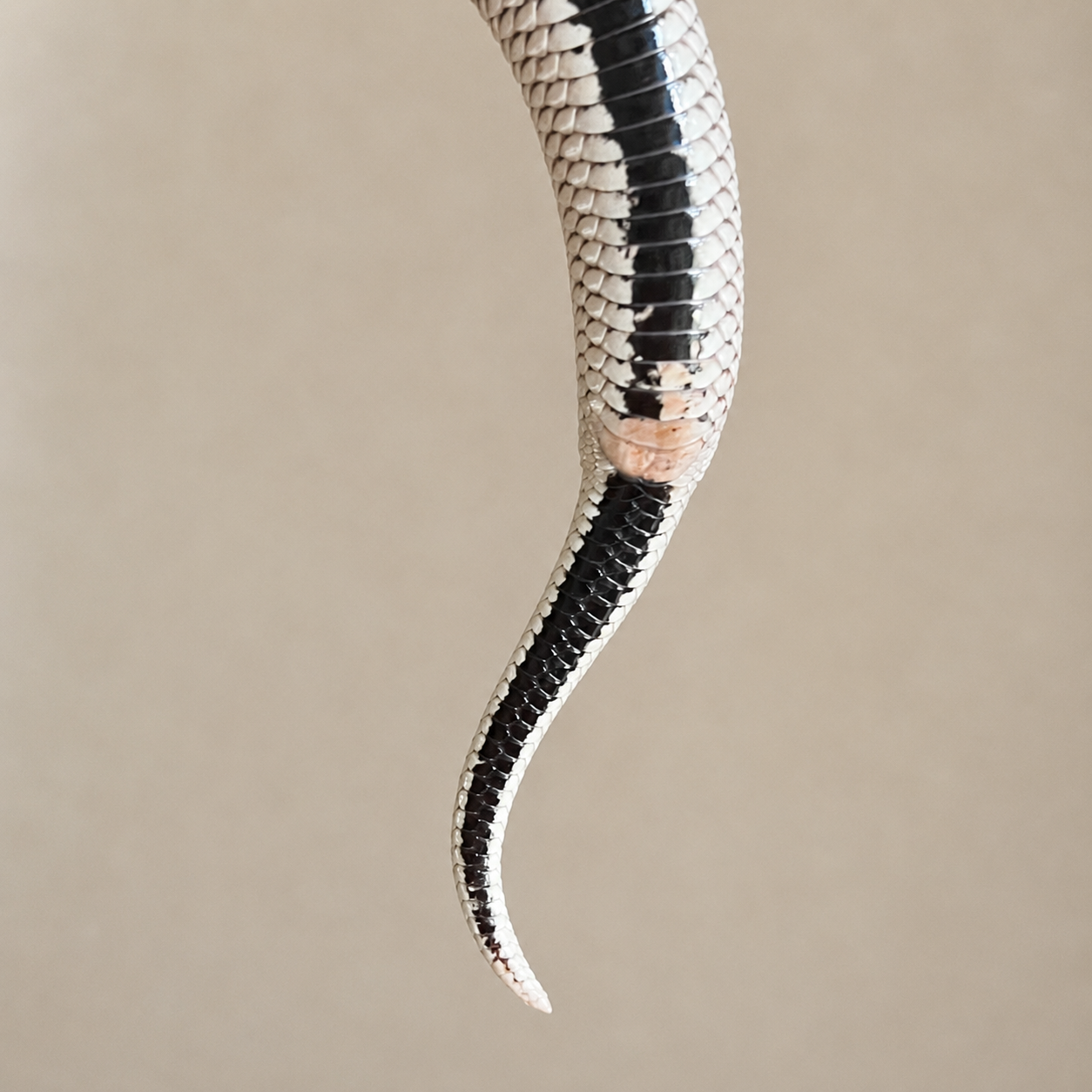
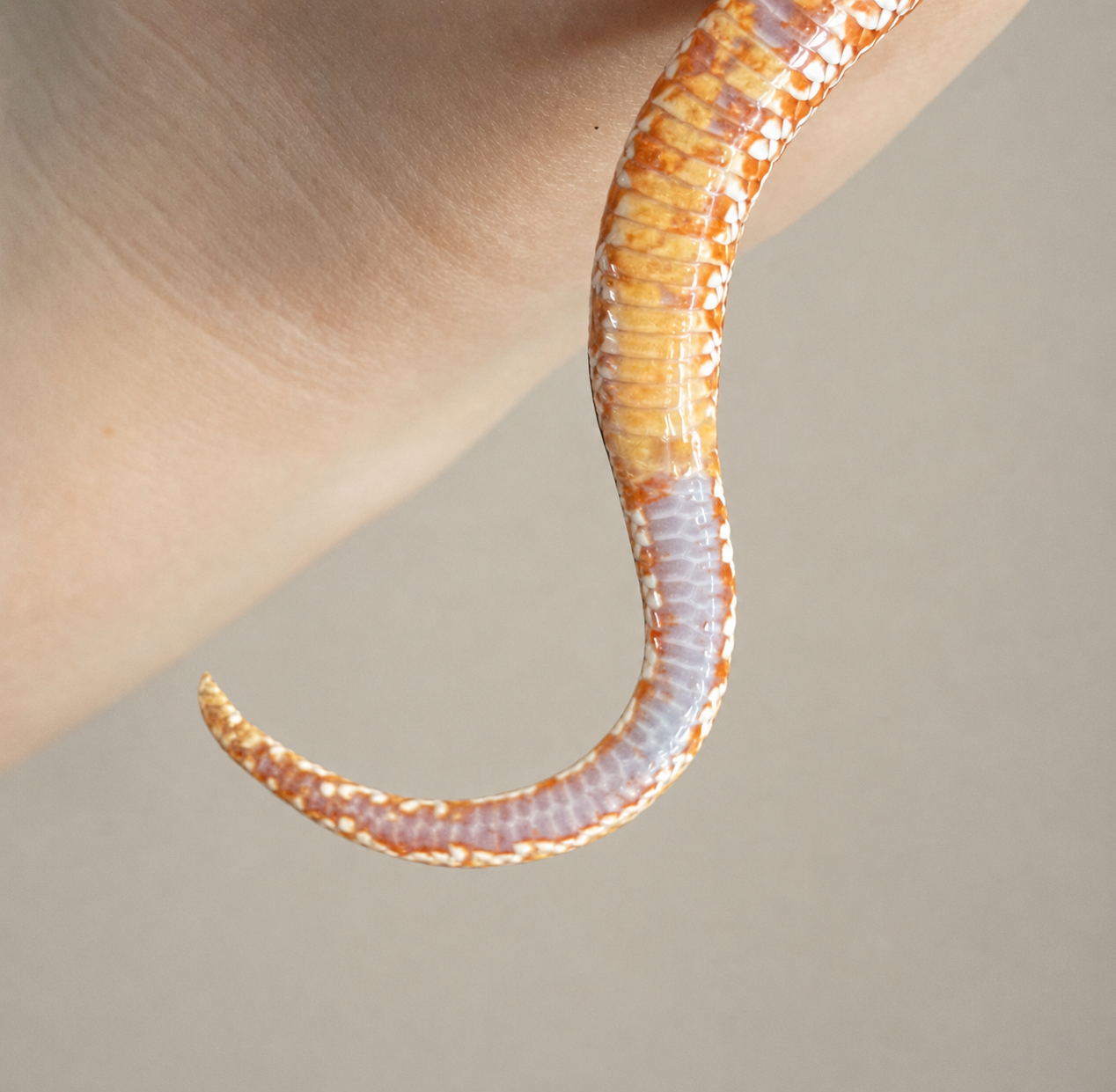
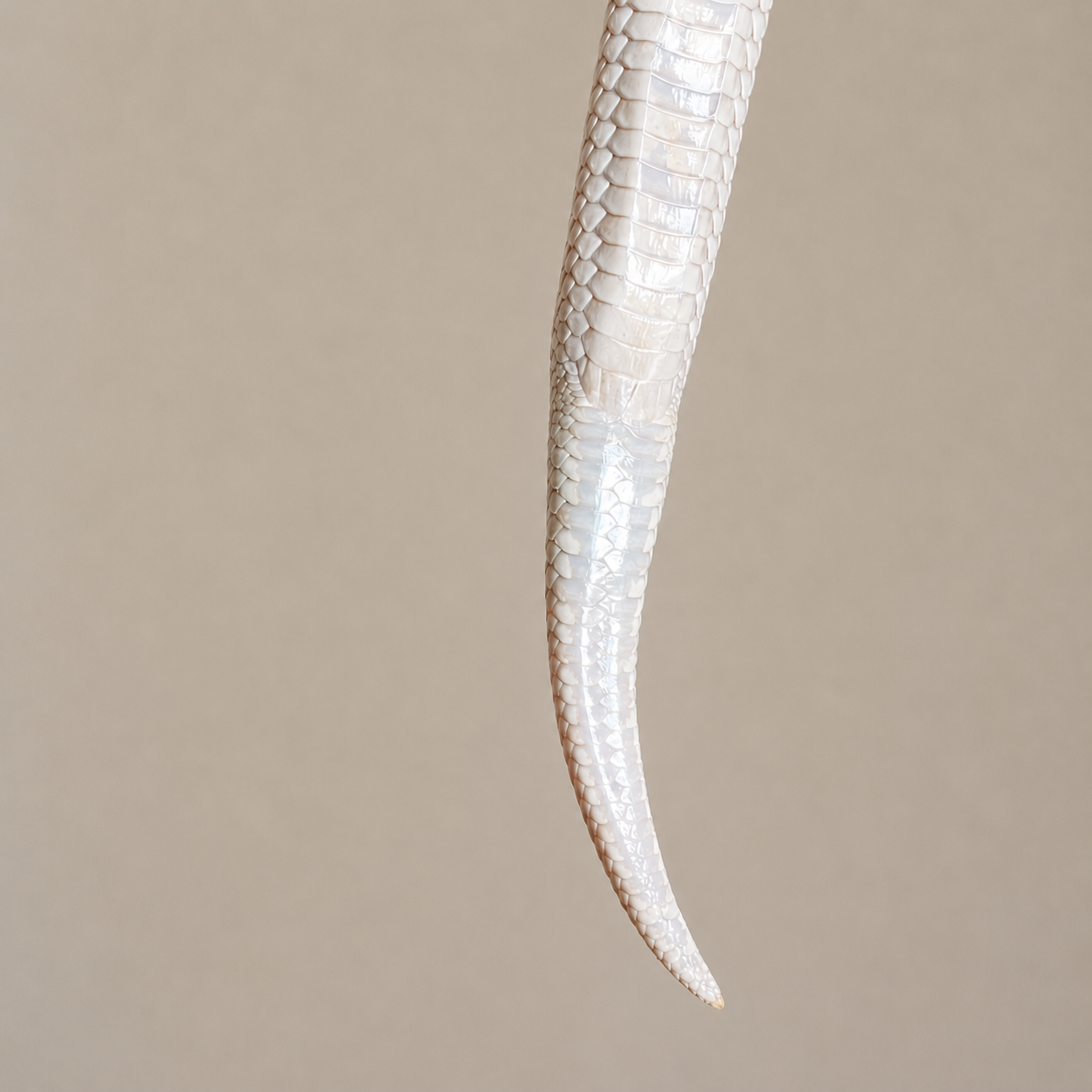
Below are six tail photos from real western hognose snakes in our collection. They're not all the same age, and they're not all the same morph — because in real life, you don't always get ideal conditions. Some are hatchlings or juveniles, where the difference is subtler than in adults. Some are in pre-shed, where the skin dulls and details become harder to read. A couple are adults with very different colorations.
For each one, decide: male or female? Pay attention to the shape of the tail just behind the cloaca, how quickly it narrows, and how gradually or abruptly the taper moves toward the tip.
No labels, no hints. Just the tails.
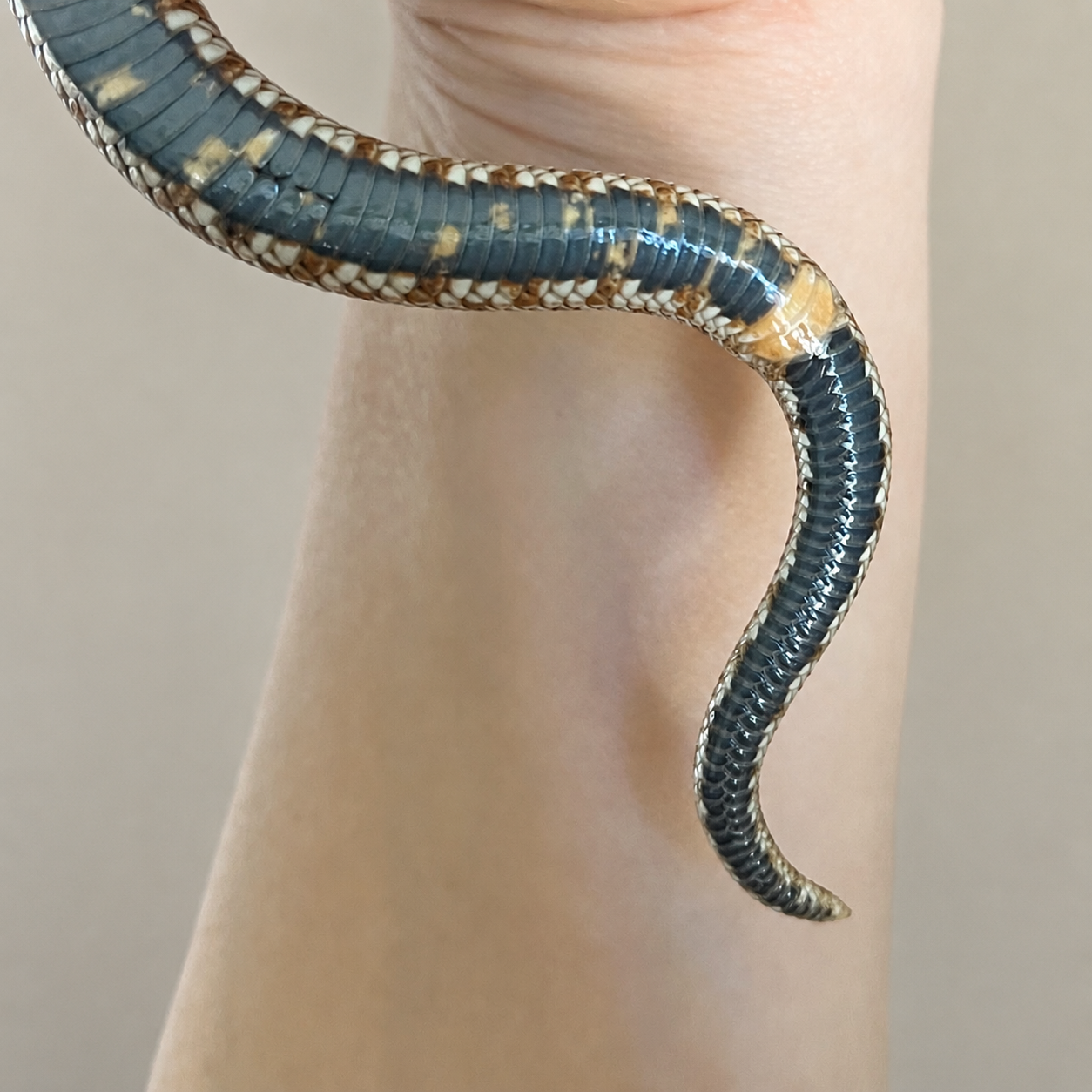
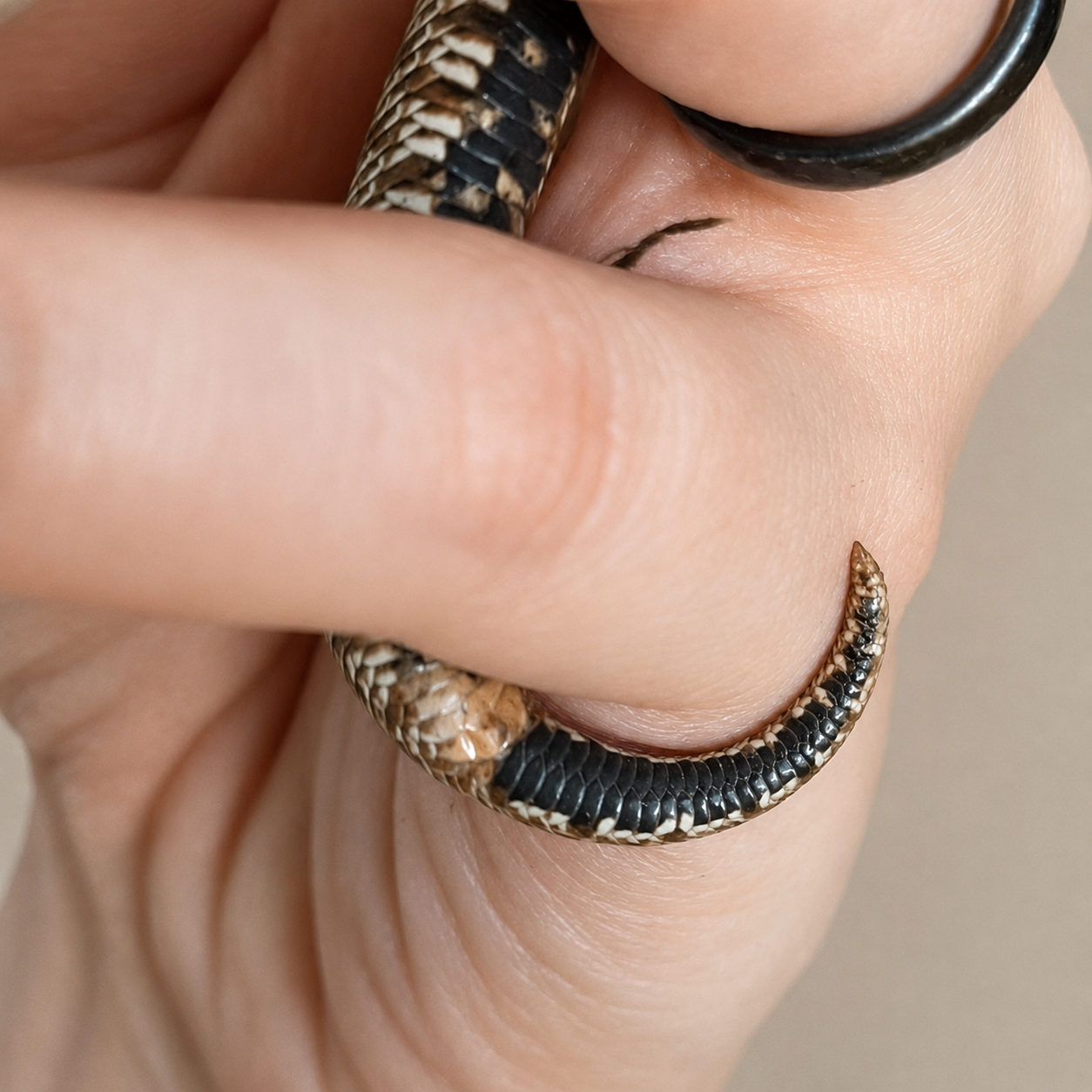
Made your guesses? The answers are at the bottom of the post.
Once you start keeping or breeding multiple animals, you need a shorthand way to describe the composition of a group.
The reptile hobby uses a notation system that's elegant once you understand the structure.
The format is always: males . females . unsexed
Each number represents how many animals of that sex (or unknown sex) are in the group.
1.0 — one male, zero females, zero unsexed. A single male.
0.1 — zero males, one female, zero unsexed. A single female.
0.0.1 — zero males, zero females, one unsexed animal. A single animal whose sex hasn't been determined.
1.1 — one male and one female. A breeding pair.
2.4 — two males and four females. Six animals total, all sexed.
2.4.1 — two males, four females, and one animal of unknown sex. Seven animals total.
The third number (unsexed) is often dropped when all animals in the group have been sexed — so a listing that says 1.2 means one male and two females with no ambiguity.
It communicates a lot of information very efficiently. When a breeder lists a clutch as producing 3.5.2, you immediately know there were ten hatchlings — three males, five females, and two not yet sexed. When someone describes their collection as 1.3, you know they have one male and three females without needing a sentence to explain it.
It also makes breeding records cleaner. Rather than writing "one male albino and two female het albinos," a breeder can write 1.0 albino, 0.2 het albino — compact, unambiguous, and universally understood within the hobby.
If you bought a snake that was sold to you as a particular sex and you want to verify it, start with tail shape and scale count. If they confirm what you were told, you can be reasonably confident. If something doesn't add up — the tail shape doesn't match the stated sex, or the scale count is borderline — contact the breeder or a reptile vet for a probing.
Reputable breeders sex their animals carefully before sale, but mistakes happen, particularly with young animals. It's always worth verifying yourself, and knowing how to do so is a basic skill worth developing.
This tail is from Diamond (Super Arctic Super Conda Het Albino), and this is one of the clearest female tails in the set. The tail narrows quickly and decisively after the cloaca. There's no sustained wider base, just a prompt, clean taper to a relatively fine tip. If you count the subcaudal scales you'll comfortably land under 35. The high contrast black and white pattern actually works in your favour here, making the scale edges easy to count. A textbook female tail.
This one is genuinely harder to read from the photo and that's intentional. This is one of our 2025 albino hatchlings, and in the image the S-curve of the tail obscure the feature you'd normally rely on. The tail looks shorter and more abruptly tapered than it actually is in person.
What gives it away is the scale count. If you count carefully from the cloaca to the tip, you'll reach 35 or more — firmly in male territory. In real life, held next to a female the same age and size, the difference in base width and overall length is visible. From a photo alone, this one requires counting rather than shape assessment. That's a useful lesson in itself. Visual assessment has limits, and scale counting exists precisely for cases like this.
Nimbus (Snow), and another clean example. The tail is short, tapers quickly, and the tip is relatively fine. Count the subcaudal scales and you're well under 35. The neutral background and the way the tail hangs naturally make this one of the most readable photos in the set. A clear female.
A 2025 hatchling in pre shed. The dark, slightly muted colouring is the giveaway that this one is in blue phase. The tail is noticeably longer than Snake 3 and Snake 5, and the base is wider before it begins to taper. The taper itself is gradual rather than abrupt. Count the subcaudal scales and you'll reach 40 and more.
Pre shed does make this slightly harder to assess visually. The dulled, bluish skin tone reduces the contrast between scales and makes the edges harder to distinguish when counting. But the overall shape and length still point clearly male even before you count. In person the difference is more obvious than in the photo.
This is Hopper (Normal 50% Het Albino), also in pre shed. Place this image next to Snake 4 and the difference becomes immediately obvious. The tail is shorter, the taper from the cloaca is more abrupt, and the overall length is proportionally less. Count the subcaudal scales and you land under 35.
The pre shed colouring affects both Snake 4 and Snake 5 equally, which makes the direct comparison between them especially useful. When the morph and lighting conditions are similar, the shape differences stand out more clearly. This is why experienced keepers often assess multiple animals together rather than in isolation. Comparison calibrates your eye faster than looking at single animals one at a time.
If some of these were harder than you expected, that's completely normal and it reflects a real limitation of photo based assessment. The curve of the tail, the angle of the shot, the lighting, and the morph pattern can all work together to make a tail look different from what it actually is. Diamond's tail was readable because the contrast was high and the position was ideal. The albino baby male was difficult precisely because none of those conditions were in his favour.
In real life, held in hand and compared directly to another animal, the differences become considerably more obvious. The goal of this quiz was to build your eye for the key features (base width, taper rate, overall length) so that when you're holding a snake and assessing it directly, you know exactly what you're looking for.
You must be logged in to post a comment.

No comments yet — be the first.