
There's a version of a care equipment list that reads like a shopping receipt — item, price, move on. This isn't that.
The tools you use in day-to-day hognose keeping aren't arbitrary. Each one solves a specific problem, fills a specific gap, or prevents a specific mistake that's easy to make without it. Understanding why a piece of equipment matters tends to change how consistently you actually use it — which is the part that makes the real difference in your snake's health over time.
Here's what we consider essential, and what each item is actually doing for you.
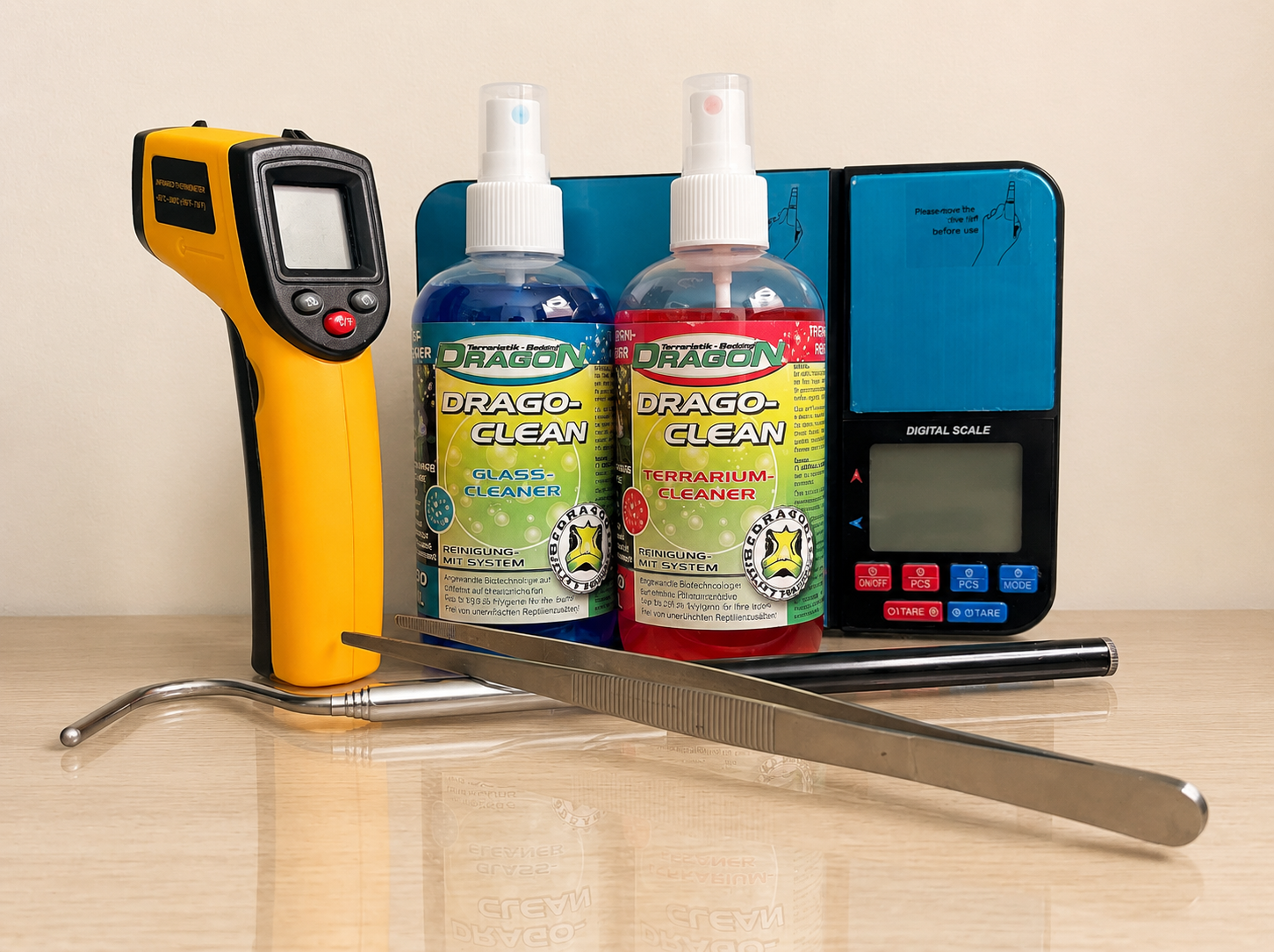
A snake hook is one of those tools that feels unnecessary until the moment it isn't.
Western hognose snakes are generally manageable and reasonably tolerant of handling once established, but "generally" covers a lot of individual variation. Some hognoses are bold from the start. Others are defensive for months. And even a fully tame snake that's comfortable with regular handling can be unpredictable at feeding time, when prey scent is in the air and their feeding response is primed.
A hook gives you a way to move, guide, or encourage your snake without introducing your hand into a situation where it might be misread as prey. It's also useful for gently moving a snake out of a hide during enclosure cleaning without forcing it — you're offering a surface to move onto rather than reaching in and grabbing.
The technique matters: slow, deliberate movements, supporting the snake's body rather than lifting it by a single point, and never using the hook in a way that restricts or frightens the animal. A hook used correctly makes interactions calmer for the snake and safer for you. A hook used as a grabbing tool accomplishes neither.
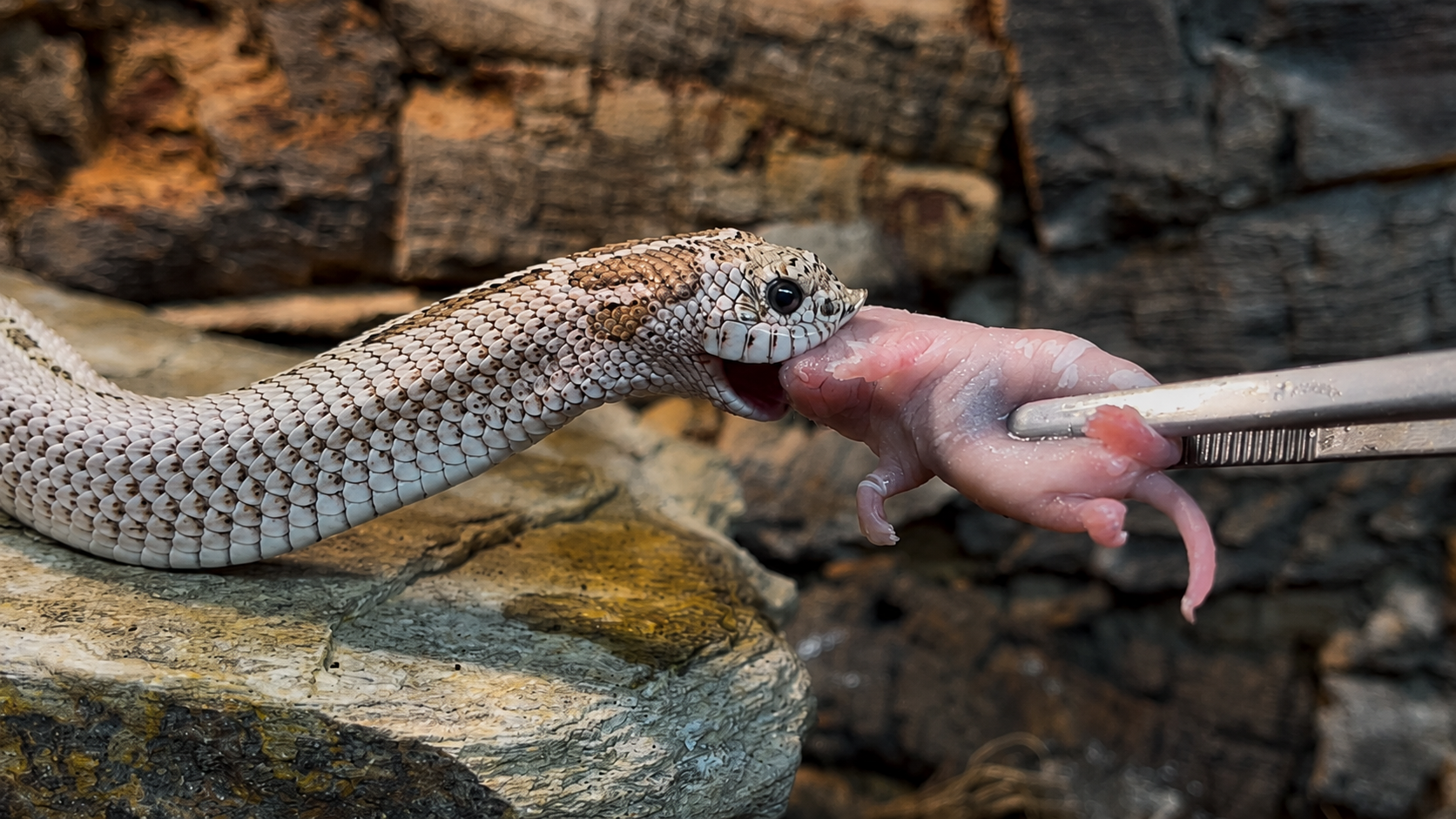
If you're offering prey items by hand — even frozen-thawed prey that poses no actual threat — you're training yourself into a habit that will eventually catch you off guard. Hognose snakes have a strong feeding response, and a hand that smells like prey is a hand that's going to get struck at sooner or later.
Feeding tongs solve this cleanly. They put distance between your hand and the prey item, remove your scent from the immediate vicinity of the food, and let you present the prey in a way that can mimic natural movement. A slight wiggle or repositioning is often enough to trigger a strike in a snake that's showing interest but hasn't committed yet.
Metal or sturdy plastic tongs both work. Length matters more than material — long enough that a confident strike from even a larger hognose doesn't reach your fingers. Clean them after every use. Bacteria from prey items left on tongs between feeding sessions is a contamination risk you don't need.
Regular cleaning isn't optional, and the cleaner you use matters. Standard household disinfectants often contain compounds — certain phenols in particular — that are toxic to reptiles even at low concentrations and even after they appear dry. A cleaner that's marketed as reptile-safe has been formulated and tested to avoid these compounds.
The cleaning routine for a hognose enclosure involves more than wiping visible waste. Bacteria and mold can establish in substrate, on hide surfaces, in water dish residue, and in enclosure corners that don't get checked regularly. Scale rot and respiratory infections are among the most common health issues in captive snakes, and inadequate enclosure hygiene is a leading contributing factor in both.
Remove the snake and any removable décor before cleaning, spray and wipe all surfaces including hides and the water dish, allow everything to dry completely before putting it back together, and return the snake last. The "dry completely" step is the one most often skipped in the interest of speed — residual moisture from cleaning products sitting against a snake's skin is worth taking an extra ten minutes to avoid.
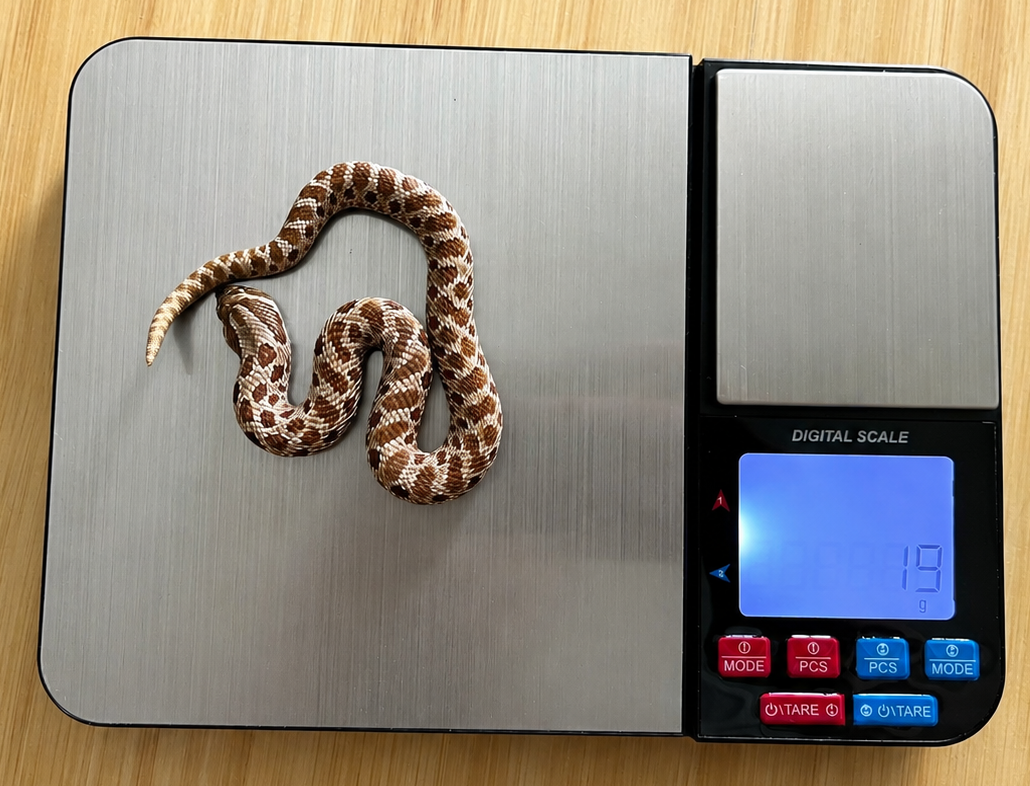
Weight is one of the most objective health indicators available to a reptile keeper, and it costs almost nothing to track if you have a basic digital scale.
The value isn't in a single reading, it's in the pattern over time. A hognose that's eating well and growing steadily produces a clear, consistent upward trend. A hognose that's eating but not gaining weight, or losing weight between meals, is telling you something that behavioral observation alone might not catch until the problem is significantly more advanced.
We've had animals in our own collection where weight tracking caught a developing issue weeks before any behavioral symptoms appeared. We've also seen what happens when weight isn't tracked and the first obvious sign of a problem is an animal that's already in significant decline. The scale wins every time.
Weigh monthly as a baseline for healthy established animals, and weekly for hatchlings, animals recovering from illness, or any snake you have concerns about. Use a small container on the scale to contain the snake during weighing — subtract the container weight for the actual reading. Record everything. The record is only useful if it exists.
This is the one item on this list that isn't optional under any interpretation. Every heat source in a hognose enclosure needs to be connected to a thermostat. No exceptions.
An unregulated heat mat or heat tape left running without temperature control will eventually overheat — not might, will. Surface temperatures can climb well beyond what's safe for a snake, and a snake that's trapped against a heat source it can't escape will be burned. Burns on reptiles are serious injuries that are slow to heal and prone to infection.
A thermostat prevents this by cutting power to the heat source when the target temperature is reached and restoring it when temperature drops below the threshold. Set the probe as close to the heat source as possible without direct contact, verify the actual surface temperature with your heat gun against what the thermostat is reporting, and check calibration periodically. A thermostat that's drifted out of calibration is worse than a false sense of security — it's a real one.
On-off thermostats are the most basic and most affordable option and are adequate for heat mats and pads. Pulse-proportional or dimming thermostats are better suited to ceramic heat emitters and other overhead heat sources. Match the thermostat type to the heat source type.
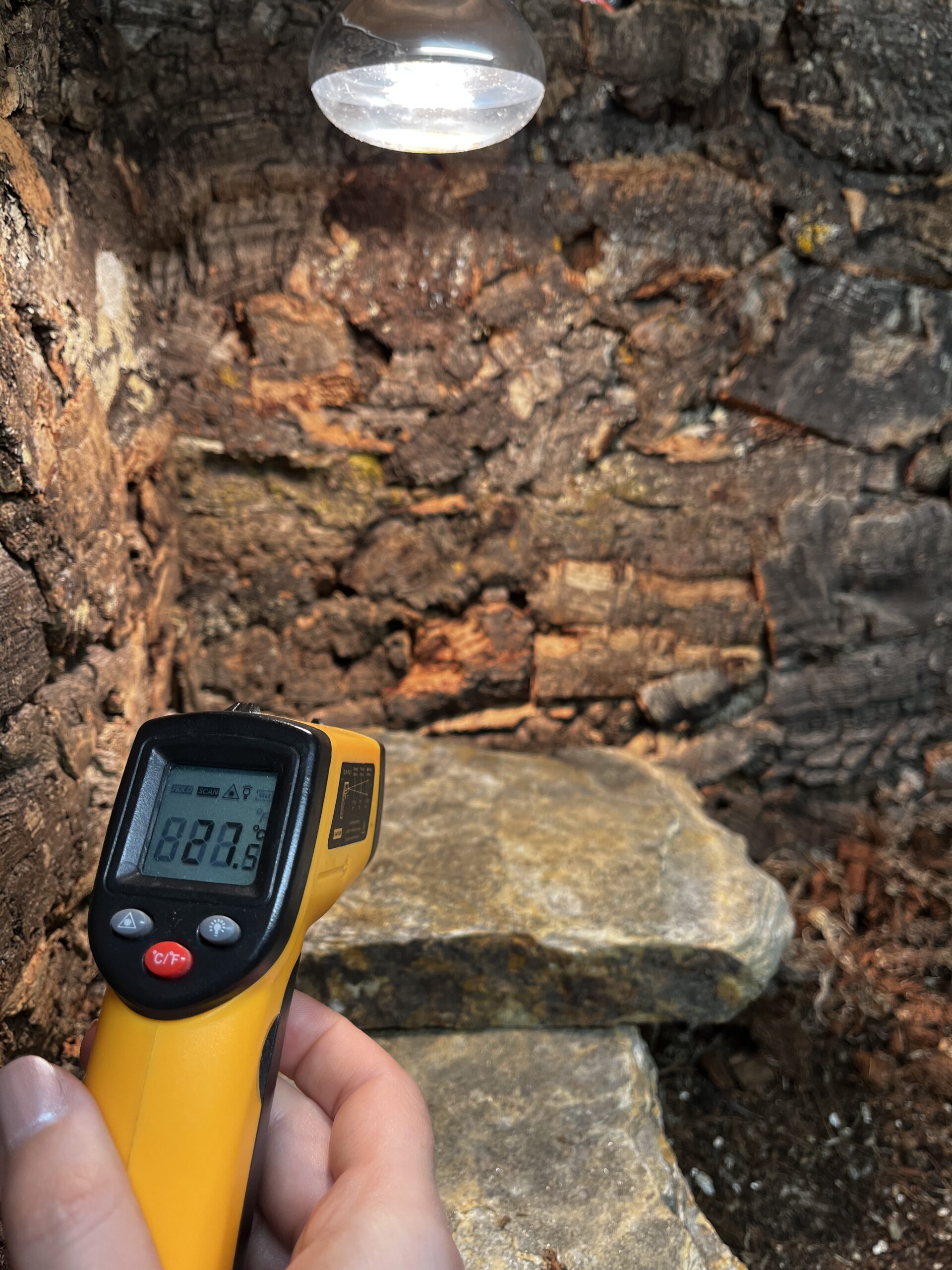
A thermostat tells you the temperature at its probe. An infrared heat gun tells you the temperature everywhere else — and those two things are often different in ways that matter.
The warm side surface under a hide might read differently from the surface in the open section of the enclosure. The substrate surface might be warmer or cooler than the air temperature at probe height. The cool end of the enclosure might have a cold spot near the glass that the thermostat probe isn't positioned to detect. None of these discrepancies are visible without a way to check surface temperatures directly.
A heat gun gives you that. Point it at any surface, get an instant reading, no contact required. Check the warm side, the cool side, inside the hides, and the substrate surface regularly — particularly after any change to your heating setup, and seasonally as ambient room temperature shifts. What works in summer may not work in winter in the same room.
Western hognose snakes are naturally found in drier, semi-arid environments. Their humidity requirements are lower than many other commonly kept species. The target range for a western hognose enclosure is typically 30–50% ambient humidity, with a slightly more humid hide available if the snake needs it, particularly during shedding.
A hygrometer lets you verify that you're actually hitting that range rather than assuming. Ambient humidity varies considerably with season, location, and enclosure type — what reads correctly in a plastic tub in summer might be significantly different in winter when indoor heating dries the air. Without measuring, you're guessing.
Too low: shedding problems become common, skin condition suffers over time, and dehydration risk increases. Too high: respiratory infections become significantly more likely, and substrate stays damp in ways that promote bacterial growth. The hygrometer is how you know which direction you're drifting before it becomes a health issue.
Place it at substrate level in the middle of the enclosure for the most representative reading. Digital hygrometers are more accurate than analog dials and don't require calibration as frequently — they're also inexpensive enough that there's no real argument for using the less accurate option.
None of the monitoring that the above equipment makes possible is worth much if you're relying on memory to track it. A simple feeding log — date, prey item, response, any observations — combined with a weight record and notes on shedding cycles gives you a baseline that makes problems visible before they become serious.
It doesn't need to be elaborate. A notes app, a spreadsheet, a physical notebook... whatever you'll actually use consistently is the right format. The value compounds over time: a year of consistent records gives you a picture of what's normal for your individual animal that no care guide can replicate.
Good equipment, used consistently and tracked properly, is the practical foundation of keeping snakes well. Everything else builds from there.
You must be logged in to post a comment.

No comments yet — be the first.