
The first time you find eggs in a lay box, there's a specific kind of excitement that's hard to describe to anyone who hasn't experienced it. And immediately following that excitement comes a wave of questions. Are these fertile? Are any of these slugs? That one looks different from the others. Should it look different? What do I do now?
This post is the reference I wished existed the first time I was crouching over a lay box trying to figure out what I was looking at. We'll cover what healthy fertile eggs look like, how to identify slugs, what candling tells you and when to do it, and a few things worth knowing about caring for eggs in those first critical hours after laying.
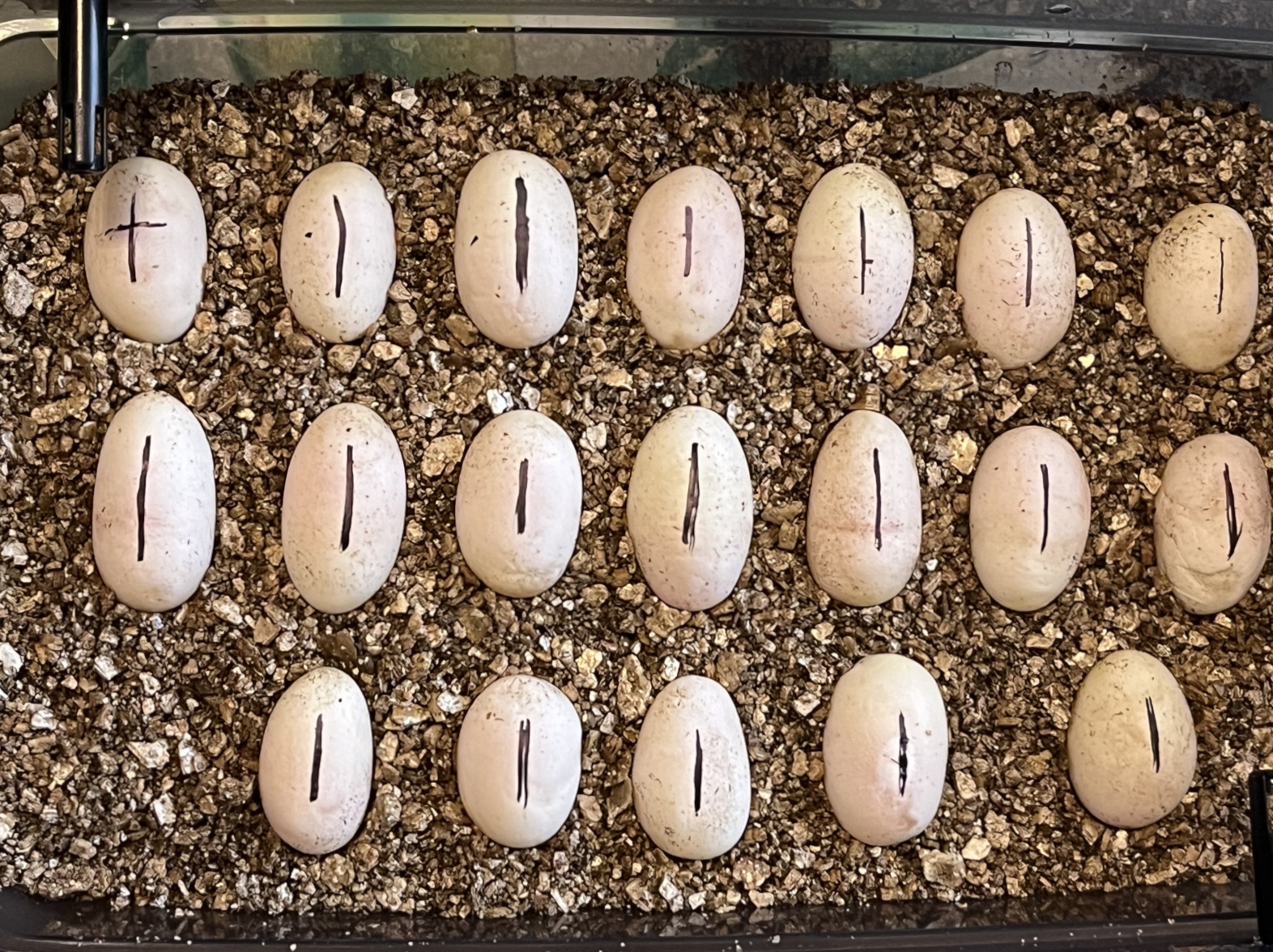
A healthy fertile egg has a consistent set of characteristics that become easy to recognize once you've seen them a few times.
Shape: elongated and oval. Not round, not irregular. A consistent oval that's noticeably longer than it is wide. If an egg looks spherical or oddly shaped, that's worth noting.
Shell: leathery rather than hard. Unlike a bird egg, a hognose egg has a flexible shell that gives slightly under gentle pressure while still feeling firm and structured. Think of a slightly flexible exterior over a full interior. There's resistance, but not rigidity. A healthy egg should never feel rock hard or hollow.
Color: creamy white to pale ivory. There's natural variation between females and even between eggs in the same clutch, but the color should always be in that white-to-pale range. Yellow, tan, or brownish coloration on a newly laid egg is a warning sign.
Size: typically 2.5 to 4 cm long (roughly 1 to 1.5 inches) and 1.5 to 2 cm wide, though this varies with the size and age of the female. Larger, older females tend to produce larger eggs.
Feel: full and slightly springy. A fertile egg feels like there's something substantial inside it. A light squeeze (genuinely light. You're assessing, not testing structural limits) should give you a sense of internal pressure and resilience. An egg that feels deflated, loose, or empty under gentle assessment is telling you something.
Clumping: hognose eggs often stick together where they were in contact during laying, forming a cluster. This is completely normal. The adhesive quality of the shell is a feature, not a problem. Don't try to separate stuck eggs unless there's a specific reason to do so, as forcing them apart risks damaging the shells.
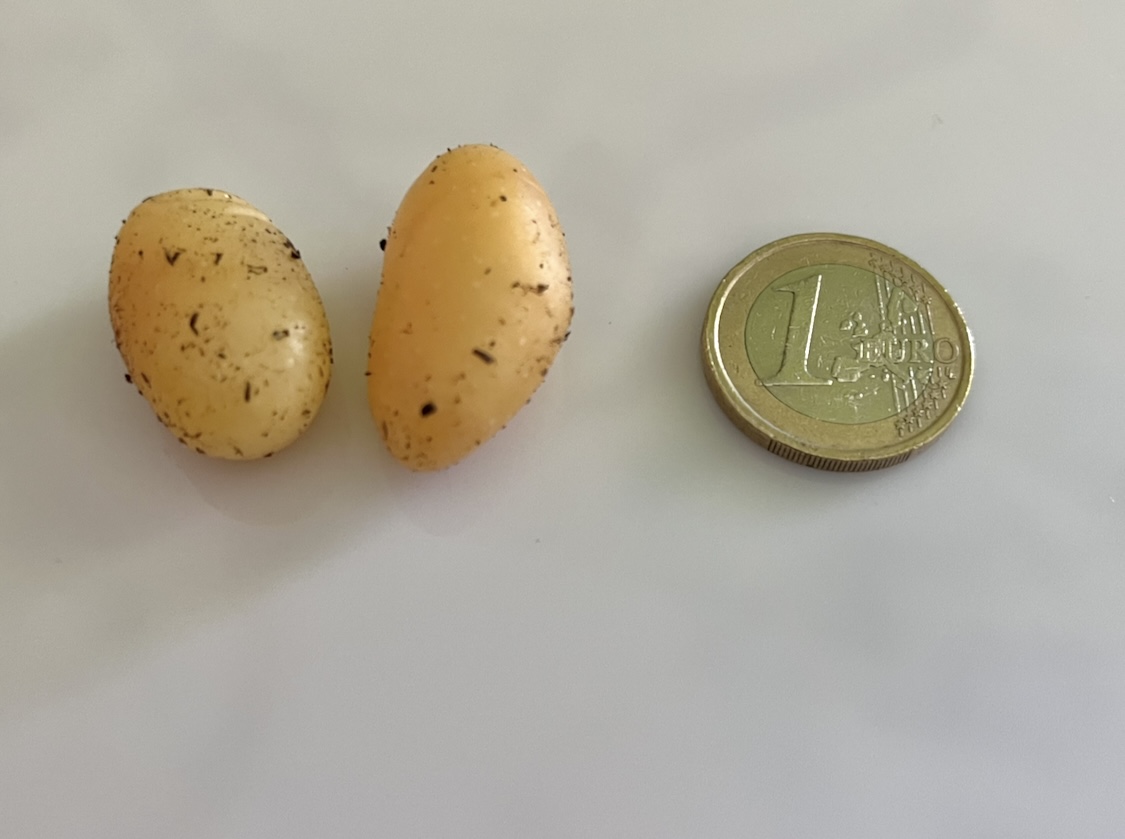
A slug is an infertile, unfertilized egg. The name is unflatteringly accurate: they tend to be softer, smaller, and less well-formed than fertile eggs, and they cannot develop or hatch regardless of incubation conditions.
Finding slugs in a clutch is normal and not a reflection of poor management. Most clutches include at least one, particularly from younger females or in the first breeding season. A clutch that's entirely or majority slugs is more notable and worth thinking about, but individual slugs in an otherwise healthy clutch are simply part of breeding.
Shape: more rounded and irregular than fertile eggs, often noticeably smaller.
Color: yellowish, off-white, or tan. The color difference from a fertile egg is usually visible immediately. Slugs tend toward that yellowish-beige range that fertile eggs don't have.
Shell: softer and more pliable than a fertile egg, sometimes almost rubbery. A slug may feel deflated or dented even when freshly laid.
Size: consistently smaller than the fertile eggs in the same clutch. A very small egg in a clutch of otherwise normal sized eggs is almost certainly a slug.
Feel: loose or empty. Where a fertile egg has a sense of internal pressure and resilience, a slug feels like the interior doesn't match the exterior. Soft, squishy, or with no real structure inside.
Slugs should be removed from the incubation container promptly. They won't develop, and as they break down they can introduce mold and bacteria that threaten the fertile eggs nearby. If a slug is stuck to fertile eggs, separate carefully and monitor the contact point on the fertile egg closely.
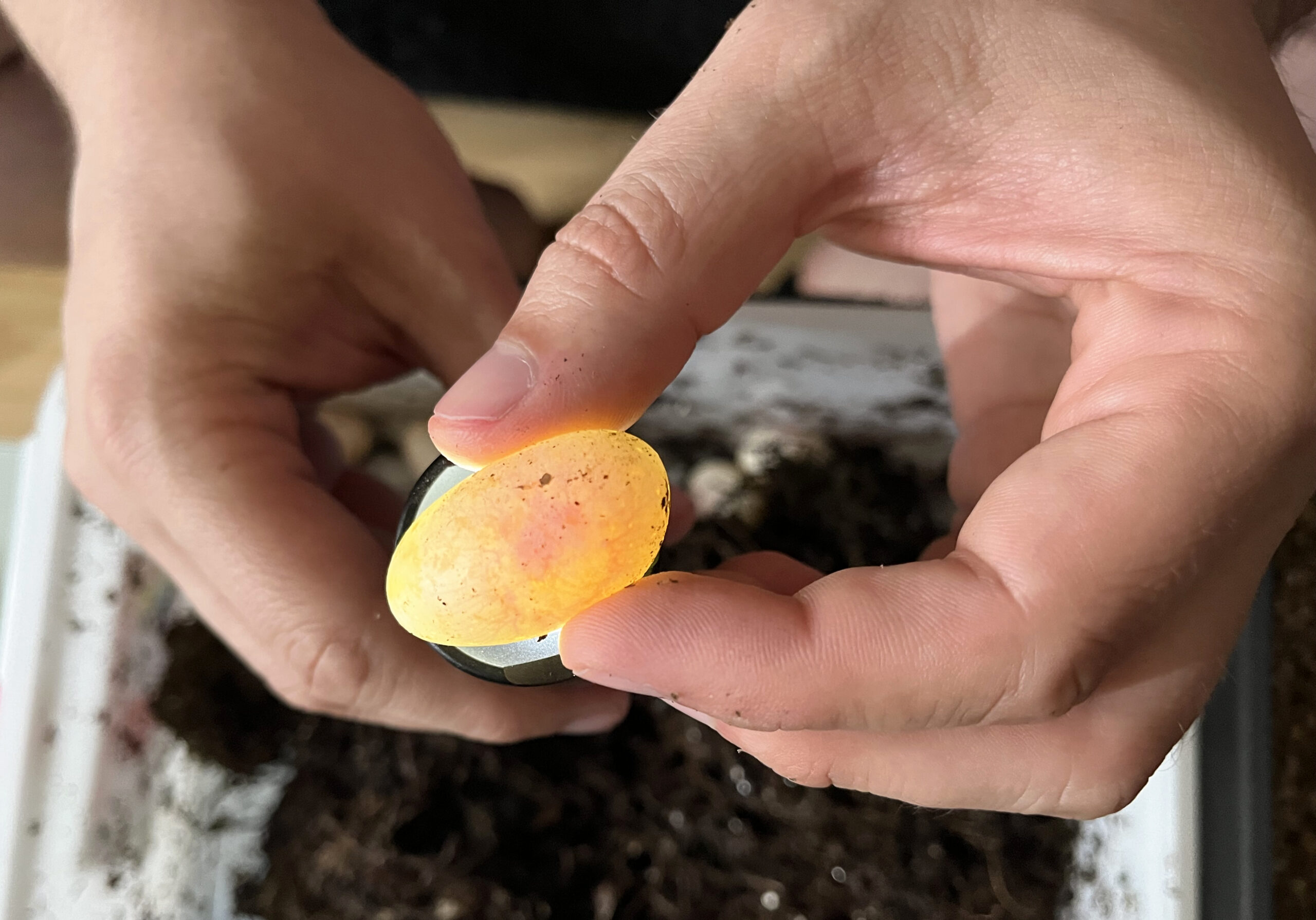
Candling is the practice of shining a focused light through an egg in a darkened room to see what's developing inside. It works because light passes through the shell and the internal contents of the egg interact with it differently depending on what's there.
What you're looking for in a fertile egg: a reddish network of blood vessels, often most visible near the top of the egg where the embryo is positioned. As development progresses, the embryo itself may be visible as a darker shape or shadow. The interior of the egg will appear increasingly opaque as the embryo grows.
What you're looking for in a slug: a uniform, largely featureless interior — clear or yellowish, with no vascular development visible. No structure, no shadow, no red network.
How to candle without causing harm: use a bright, narrow LED light, a small flashlight or purpose-built candling light. Hold the egg gently from below without changing its orientation (the embryo is settled against the upper surface and flipping the egg can be fatal in early development). In a dark room, press the light against the shell from below or the side and observe. Keep handling time minimal. The information you gain is only useful if the embryo survives the process.
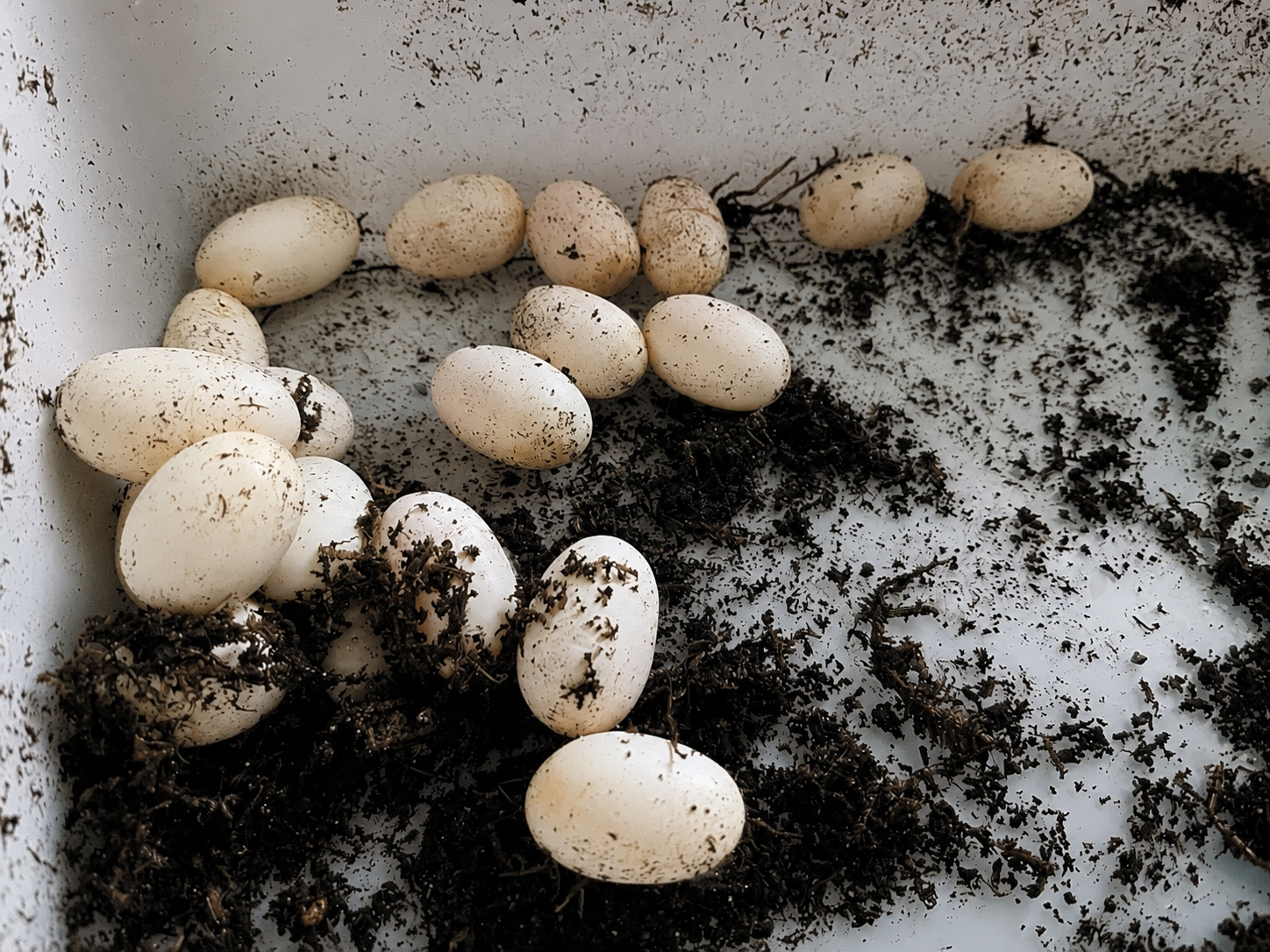
Western hognose clutch sizes typically range from 5 to 25 eggs, with most falling somewhere in the middle of that range. Several factors influence where a specific female lands:
Age and size: larger, older females generally produce larger clutches. A female in her first or second breeding season will typically produce fewer eggs than a well established adult.
Body condition: a female who went into the breeding season in excellent body condition (well fed, at a healthy weight, properly conditioned through brumation) will generally produce a better clutch than one who was nutritionally compromised going in. This is one of the arguments for taking breeding condition seriously year-round rather than only in the weeks immediately before pairing.
First-time layers: first clutches are often smaller and may include a higher proportion of slugs. This isn't a problem. It's a normal part of a female establishing her reproductive pattern, and subsequent seasons typically improve.
Second clutches: some females will produce a second clutch in the same season. This is more likely when the female has had adequate recovery time, good nutrition, and is in strong enough body condition to support a second egg production cycle. We had an unexpected second clutch from Bajsa, which is covered in its own post if you want the full story.
The window between the eggs being laid and being transferred to the incubator is when they're most vulnerable, and what happens in this period matters more than most guides acknowledge.
Embryo orientation: from the moment an egg is laid, the embryo begins to settle against the inside of the upper shell surface. Within hours, this position becomes fixed. Once fixed, rotating the egg (turning it so the embryo is no longer at the top) can cause the embryo to detach from the blood vessel network it's developed against the shell, which is quickly fatal. This is why marking the top of each egg immediately after collection and maintaining that orientation through transfer and for the entire incubation period is non-negotiable.
Temperature stability: significant temperature drops or fluctuations in those first hours stress the embryo before it's had a chance to establish. Keep the eggs warm during the transfer process, ideally in a container that maintains close to incubation temperature during the short time between lay box removal and incubator placement.
Minimal handling: the less the eggs are moved, rotated, or physically stressed in the first 24 to 48 hours, the better. Candling can wait until day 7 to 10 when the vascular development will actually show clearly. Handling them extensively to assess fertility immediately after laying achieves little and introduces unnecessary risk.
Bacteria: avoid handling eggs with bare, unwashed hands. The shell has a natural protective coating that helps resist bacterial colonization, and oils, bacteria, and other contaminants from hands can compromise that coating. Wash thoroughly before any handling, and if you're processing a large clutch, clean gloves are worth considering.
Once eggs are in the incubator, the monitoring shifts from assessment to observation.
Healthy development: a healthy egg remains firm and may increase slightly in size over the incubation period as the embryo absorbs moisture from the substrate. Color stays pale and consistent.
Denting: if an egg begins to dimple or dent inward, it's losing moisture faster than it's absorbing it. The substrate may be too dry, or the egg's position in the substrate may be keeping it from absorbing adequately. Slightly increasing substrate moisture often corrects this. Don't overcompensate dramatically, gradual adjustment is better than swinging from too dry to too wet.
Mold: mold on one egg doesn't automatically mean the clutch is lost. Remove the affected egg carefully, assess whether it's still viable (candling will tell you if vascular development is still visible), and monitor the remaining eggs closely. A light dusting of antibacterial foot powder around the affected area can help arrest spread to neighboring eggs — a technique that's been used reliably by reptile breeders for years. We've dealt with this in our own clutches and it's manageable when caught early.
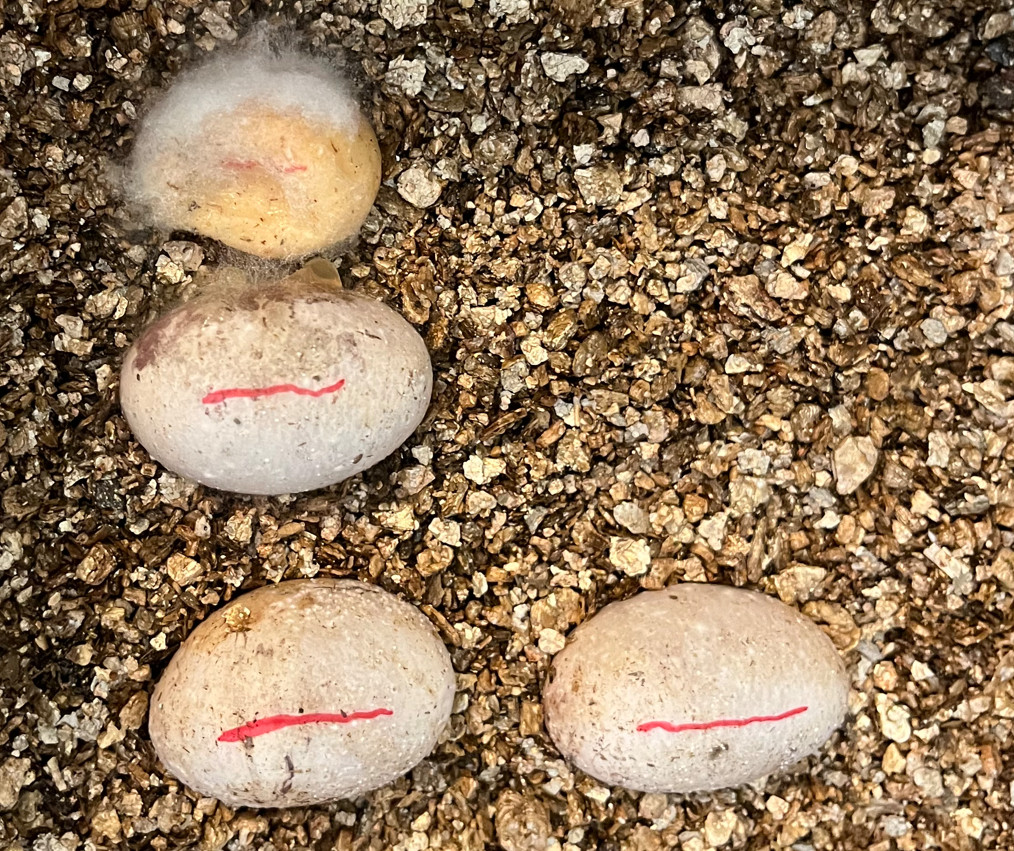
Yellowing or collapse: an egg that begins yellowing significantly or collapsing inward over multiple days is likely no longer viable. Remove it before it deteriorates further and affects surrounding eggs.
Fertile eggs: oval, creamy white, leathery but firm, full and springy to gentle touch.
Slugs: rounder, yellowish, softer, smaller, empty-feeling.
Candling: most informative at 7 to 14 days, look for red vascular network in fertile eggs.
Most important rule: mark the top of every egg immediately and never change its orientation.
Everything else is monitoring and adjustment. The eggs will do the developing on their own. Your job is to keep conditions stable and catch problems early enough to address them.

No comments yet — be the first.