
It's probably the most common question people ask when they find out we keep western hognose snakes. Sometimes it comes with genuine concern, sometimes with curiosity, and occasionally with the kind of theatrical alarm that suggests the person has been watching too many wildlife documentaries.
The honest answer is: technically yes, they're venomous. And also, it almost certainly doesn't matter in any practical sense for the vast majority of people who keep them. Both of those things are true, and understanding why requires a little context.
Western hognose snakes (Heterodon nasicus) are classified as rear-fanged colubrids. A category that covers a significant number of snake species and is very different from the front-fanged, high-pressure venom delivery systems of vipers and elapids like cobras.
Here's what rear-fanged means in practice: rather than hollow, forward-facing fangs connected to large venom glands and powerful muscles designed to inject venom quickly and deeply, hognose snakes have enlarged teeth positioned toward the back of the upper jaw. Venom is introduced not through a single rapid strike but through chewing. The snake needs to work the prey item toward the back of its mouth and maintain contact for a period of time for meaningful envenomation to occur.
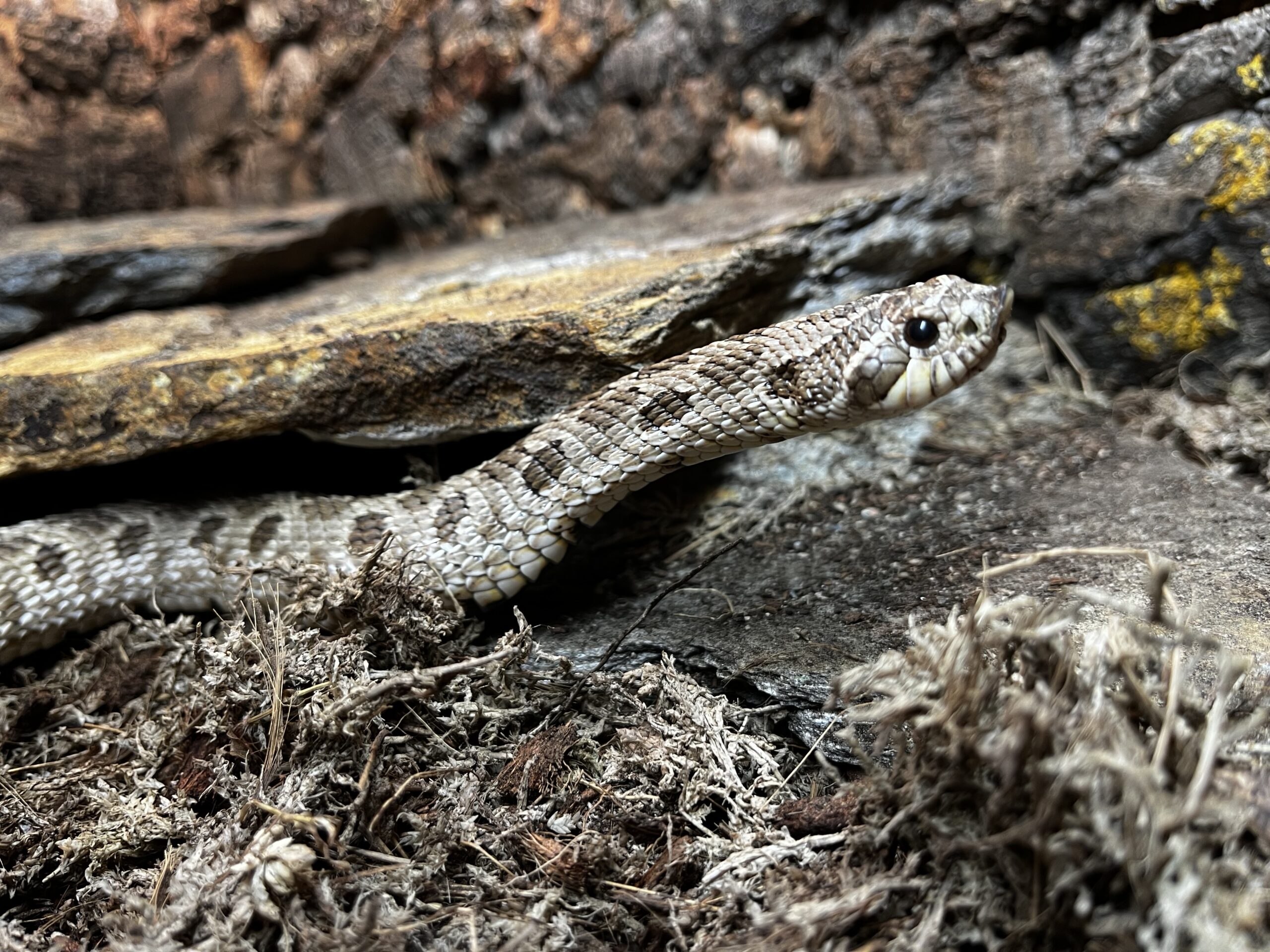
The venom itself is adapted for their natural prey, primarily amphibians, particularly toads, which have significant physiological defenses against being eaten. The compounds in hognose venom are effective at subduing a toad. They are not designed for, and not particularly effective against, large mammals. The delivery mechanism and the venom composition together mean that a hognose snake biting a human and meaningfully envenomating that person is a genuinely uncommon event. Even when the bite itself is not.
This places them in a very different category from medically significant venomous snakes, and that distinction matters.
I can answer this one from firsthand experience, because one of our hognoses did her best to eat my hand during a routine enclosure cleaning.
The setup: I was cleaning her enclosure, moving a bit faster than usual, and she was out of her tub and in hand. At some point — and I still don't know exactly what triggered it, whether it was warmth, a lingering food scent, or simply timing — she latched onto my palm and started chewing.
The first sensation is pressure rather than sharp pain. Hognose teeth are small, and the initial bite isn't the dramatic event you might imagine. What follows is a sustained chewing motion as the snake works to maintain and improve its grip. Which, if you've never experienced it, is a strange thing to watch calmly while it's happening to your own hand. She wasn't being aggressive. She was doing what made complete sense from her perspective, which was attempting to eat something that had presented itself.
The important thing I reminded myself of in that moment: do not pull a latched hognose off. Their teeth are small and angled, and yanking against that angle risks injuring the snake — breaking teeth or damaging the jaw — more than it risks any meaningful harm to you. The correct response is patience and gentle technique: apply light pressure toward the snake's mouth rather than pulling away, and wait for it to open to reposition. Each time it opens, encourage it gently back. It takes a few minutes and requires staying calm, but it works without harm to either party.
Once she released, I washed the area thoroughly with soap and water, disinfected with an alcohol-based antiseptic, and monitored for the next hour or so.
The result: a small amount of blood from the teeth marks, a patch of redness, mild itching, and very minor localized swelling. All of it was gone within an hour. She had been chewing for long enough that some venom exposure almost certainly occurred, and that was the extent of it.
It's genuinely one of the funnier things that has happened in this hobby. She looked entirely unbothered afterward.
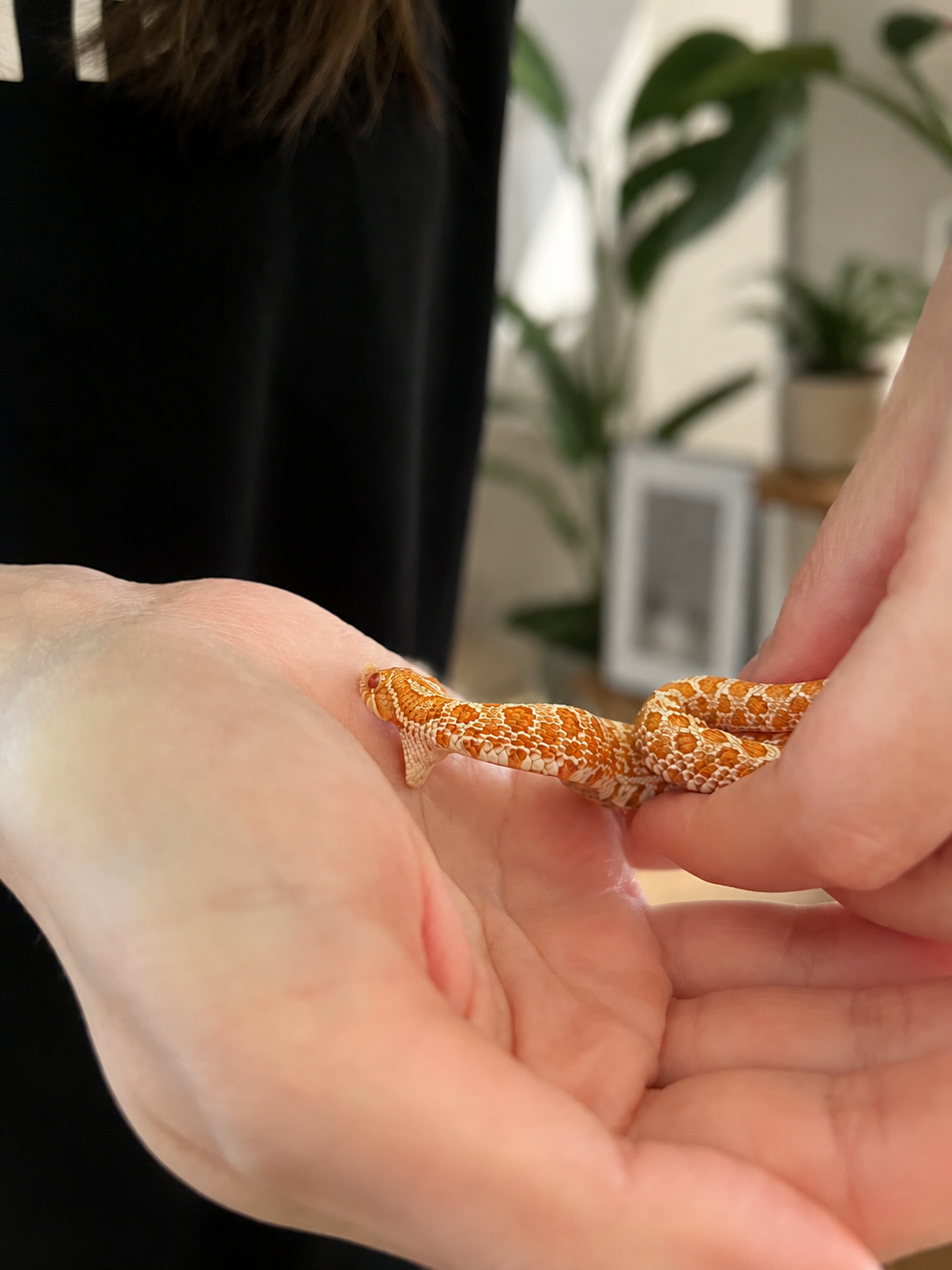
For most people, a hognose bite that delivers venom produces localized symptoms: redness, mild swelling, itching, a mild burning sensation. These are similar in character to a bee sting reaction and typically resolve within an hour or two without any treatment beyond basic wound care.
The key word there is most. As with bee stings, a small number of people have immune responses that go beyond the expected localized reaction. These are rare, but they're real, and they're worth knowing about before you dismiss venom exposure entirely.
Symptoms that should prompt immediate medical attention:
Rapid or spreading swelling — particularly if it moves beyond the immediate bite site or involves the face or throat.
Difficulty breathing — any respiratory change after a bite should be treated as an emergency.
Dizziness, fainting, or a sudden drop in how you feel — systemic reactions can develop quickly and should be evaluated without delay.
Nausea, racing heart, or hives elsewhere on the body — these suggest a broader immune response rather than a localized one.
If any of these occur, call emergency services or get to an emergency room. In practice this is extremely unlikely. The vast majority of hognose bite reports, including those involving prolonged chewing, result in nothing more than the localized symptoms described above. But "extremely unlikely" is not the same as "impossible," and knowing the warning signs costs nothing.
The steps are straightforward and don't require any specialized knowledge:
Don't pull the snake off. If it's latched, apply gentle pressure toward the mouth and wait for it to release on its own. Patience here protects the snake and doesn't meaningfully affect you.
Wash the bite site immediately with soap and water. Snake mouths harbor bacteria, and the primary infection risk from a hognose bite comes from bacteria rather than venom. Thorough washing is the most important step.
Disinfect with an antiseptic — alcohol, iodine, or whatever you have on hand.
Apply a cold compress if there's localized swelling or itching. This helps with both and is generally more comfortable.
Monitor for 30 to 60 minutes. If symptoms stay localized and begin resolving rather than worsening, you're almost certainly fine. If anything unusual develops — anything beyond expected local reaction — get medical attention and make sure to tell the treating doctor that it was a rear-fanged colubrid, not a medically significant venomous snake. That distinction affects how they'll assess and manage the situation.
The word "venomous" carries a weight that's disproportionate to the actual risk profile of western hognose snakes. For the overwhelming majority of keepers, a bite from a hognose is a minor event. More memorable for the comedy of the situation than for any physical consequence.
What matters more than venom status is handling correctly, reading the animal's behavior, and understanding why bites happen in the first place. The most common cause of a hognose bite in captivity isn't aggression, it's prey confusion. A hand that smells like rodent, moves like prey, or approaches at feeding time is a hand that might get struck at by an animal acting on instinct rather than intent. Use feeding tongs, wash your hands before handling, and don't reach in when the animal is in active feeding mode.
A hognose that feels genuinely threatened may also bluff. Flattening its neck, hissing dramatically, rolling onto its back and playing dead. This theatrical display is almost always exactly that: theater. A snake that's going through the full hognose drama routine is usually not about to bite. One that's calm and oriented is the one to watch more carefully in a feeding context.
Treat them with the same awareness and respect you'd bring to any animal, and the odds of experiencing anything more than a funny story are very low.
Yes, hognose snakes are technically venomous. No, it's not something that should concern a typical keeper. Wash any bite thoroughly, monitor for unusual reactions, and get medical attention if anything beyond mild local symptoms develops.
And if one does latch on, stay calm, don't pull, and file it under "things that make great stories later."

No comments yet — be the first.