
There's a specific kind of morning in reptile keeping that you don't forget. You walk into the room, open the incubator for the usual check, and instead of sixteen still, quiet eggs — there's a tiny face looking back at you. That was day 57.
We'd been watching this clutch since early May, monitoring temps and humidity, candling occasionally, trying not to obsess over the calendar. And then, almost exactly on schedule, the waiting was over. One hatchling had already pipped and was sitting with its head out of the shell, tongue flickering, taking in the world for the first time. Completely alert. Completely unbothered. As if it had been doing this for years.
We closed the incubator and stepped back. The rest would happen on its own time.
Pipping is the moment a hatchling uses its egg tooth to cut through the shell — the first physical break between the snake and the egg it's been developing inside for nearly two months. It sounds simple, but it's actually the beginning of a process that can take anywhere from a few hours to more than a day to complete.
The egg tooth is a small, sharp projection on the tip of the hatchling's snout. Not a real tooth in any functional sense, just a temporary structure that exists for this single purpose. It's shed shortly after hatching, once the job is done. Without it, cutting through a leathery snake eggshell would be nearly impossible for an animal that has never used its muscles before.
Here's the part that surprises a lot of first time breeders: pipping doesn't mean the hatchling is ready to come out. After making the initial cut, most hatchlings rest inside the egg for many more hours — sometimes the better part of a day — while they finish absorbing the yolk sac. The yolk provides the nutrients that will sustain them through their first days of life before they're ready to feed. Pulling a hatchling out of the egg before this process is complete can cause the yolk sac to rupture, which is serious and often fatal.
So when we saw that first head poking out on day 57, we did what every instinct was pushing us not to do — we left it alone and walked away.
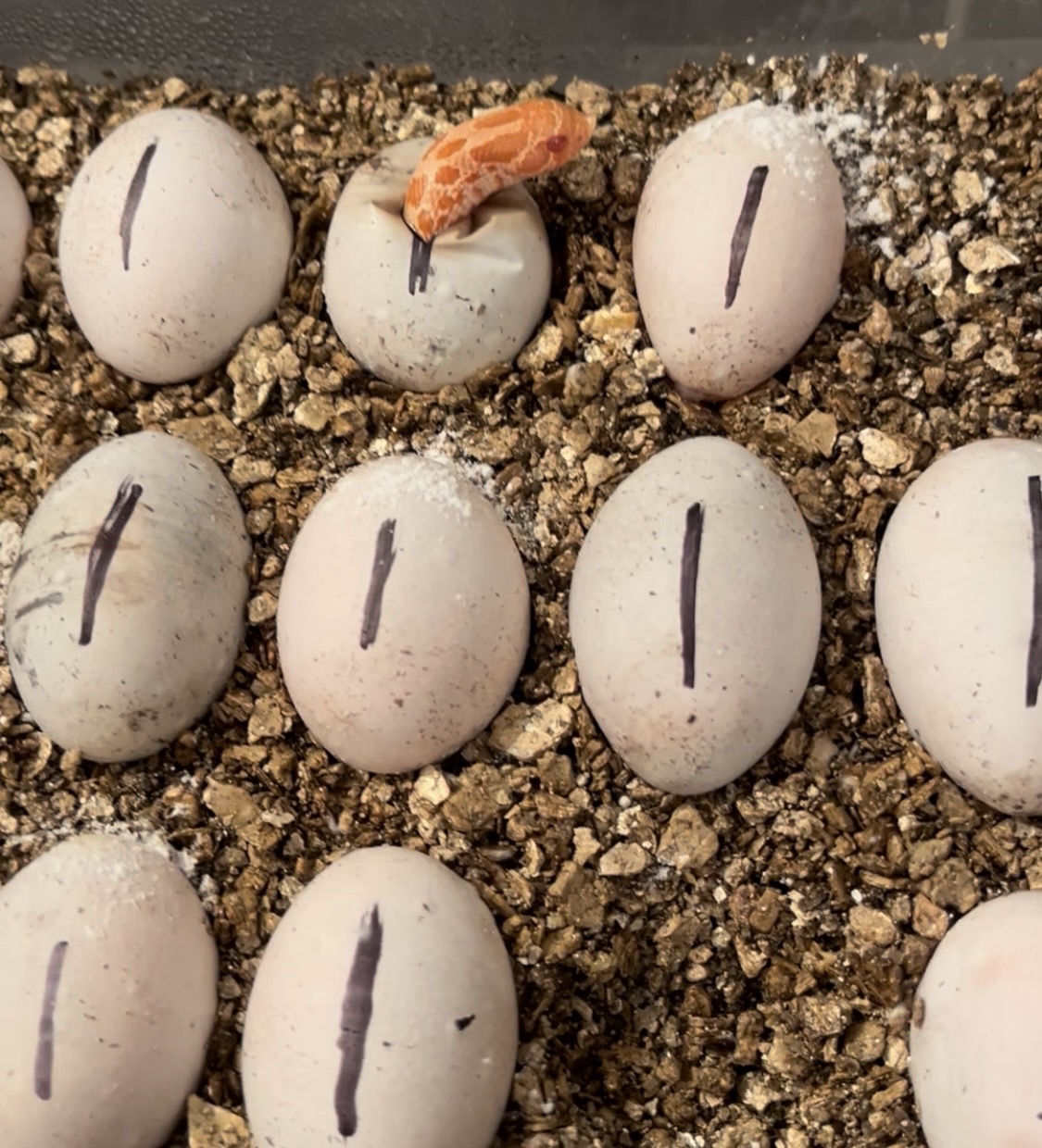
By evening of day 57, several more eggs had pipped. And among the new faces peering out was our first snow morph of the clutch — which, if we're being honest, produced an embarrassing amount of excitement in this household.
Snow western hognose snakes are double recessive animals, carrying both the albino and axanthic genes. Producing them requires both parents to carry the right genetics, and even then, statistically only a portion of the clutch will express the morph. Every snow in a clutch is a small genetic lottery win, and seeing that first one was the moment the season really felt complete.
By the morning of day 58, the incubator had transformed entirely. What had been a quiet container of eggs was now a tangle of tiny snakes in various stages of emergence — tongues flickering, heads raised, some still half-in and half-out of their shells. The final count from the first wave: eleven hatchlings out or actively emerging, including three snows.
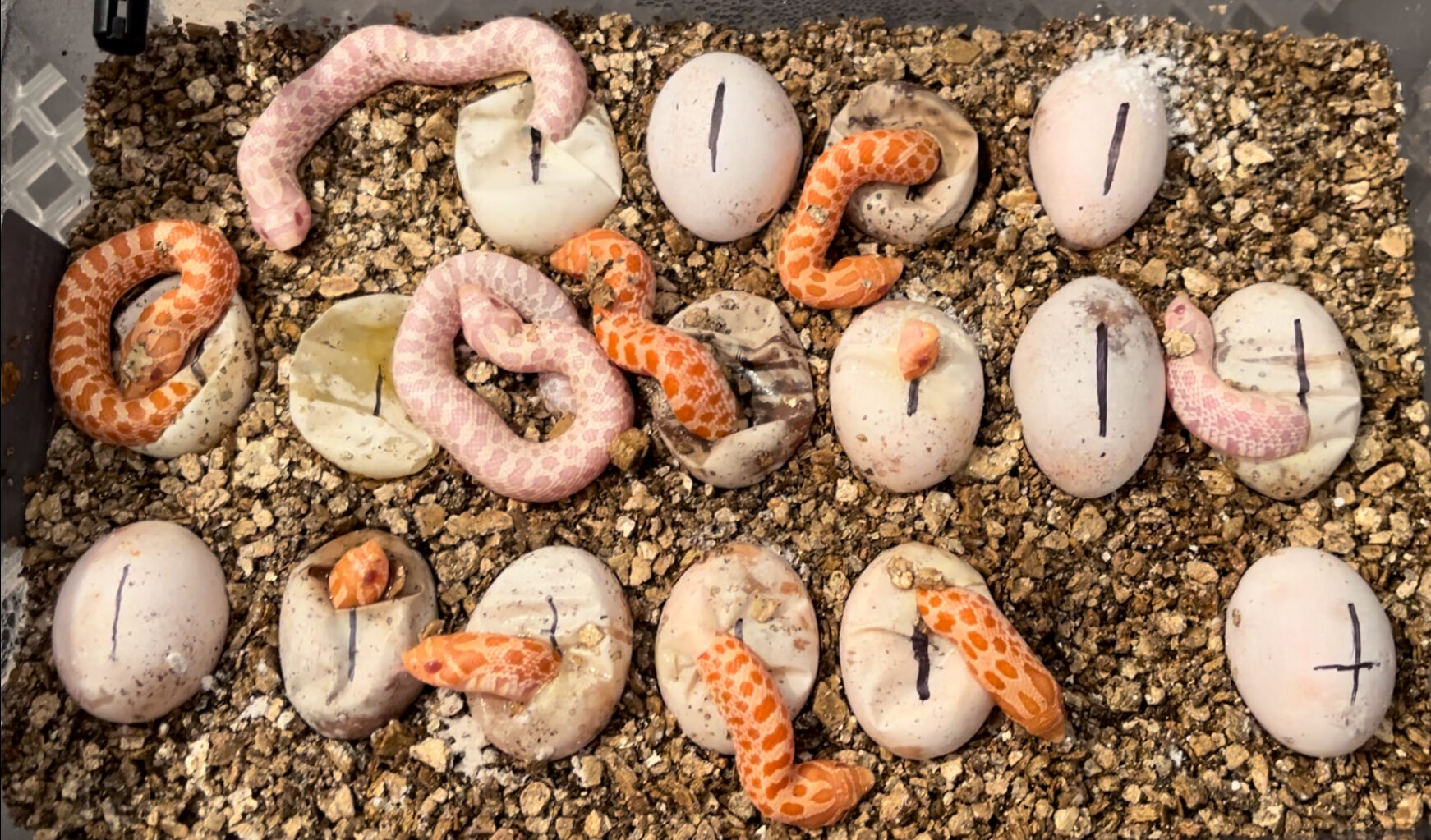
That afternoon, we assessed the remaining five eggs. No pipping. No movement visible through the shell. No sign that anything was happening inside.
In the wild, this is where natural selection takes over. Not every egg hatches, and not every hatchling that struggles to pip will make it. That's simply the reality of reptile reproduction. But in captivity, we have options, and we made the decision to intervene.
Assisted hatching is exactly what it sounds like: carefully making a small incision in the eggshell to give a hatchling that can't pip on its own a way out. It's not something to do casually or early. You wait until you're confident the clutch should be completing and that these particular eggs are genuinely stalled, not just slower than the others. But when the timing is right and you have reason to believe a live animal is inside, it's a reasonable and often successful intervention.
There are a few reasons a hatchling might fail to pip without help. The egg tooth may not have formed correctly. It may have shed prematurely — which occasionally happens, leaving the hatchling without its primary exit tool. The shell itself might be too tough or slightly drier than ideal. Whatever the cause, the result is the same: a hatchling that's ready to emerge but physically can't get through.
We made careful cuts in each of the five shells, opened them just enough to give the hatchlings room, and placed the eggs back in the incubator. From there, we waited again — and, one by one, they came out on their own. There's an interesting dynamic that seems to help in these moments: hatchlings appear to respond to the movement and activity of their siblings. Whether it's vibration, scent, or something else entirely, clutchmates emerging nearby seems to encourage the remaining ones to push through.
By the morning of day 59, every single hatchling had fully emerged or was in the final stages of absorbing the last of their yolk. Sixteen animals. All alive, all alert, all doing exactly what newborn hognose snakes are supposed to do. Exploring, tongue-flicking, figuring out the world.
One of the first things you notice with freshly hatched western hognose snakes is how quickly they shed. Unlike most snake species, which may wait weeks before their first shed, hognose hatchlings often shed within days of hatching. Sometimes within the first 24 to 48 hours. This early shed is thought to help remove any remaining egg membranes and prepare the skin for the outside environment. It's completely normal, and it means your hatchling setup needs to support shedding from the very beginning.
Once fully emerged, the babies were moved into a temporary setup while they complete their yolk absorption and prepare for their first shed. The arrangement is intentionally simple: a small, secure container with a damp paper towel as substrate and a small water bowl. A heating mat underneath one side provides a gentle temperature gradient.
This kind of stripped-down setup has real advantages at this stage. It's easy to monitor, easy to keep clean, and the damp paper towel helps maintain the humidity that supports a smooth first shed. There's no need for hides or complex enrichment yet. Hatchlings at this age are primarily focused on stabilizing, absorbing their remaining yolk, and shedding. Everything else comes later.
We'll house them in pairs for now, two per container, before transitioning them into more permanent individual setups as they grow and begin feeding consistently. The first feeding attempt typically comes after the first week or two.
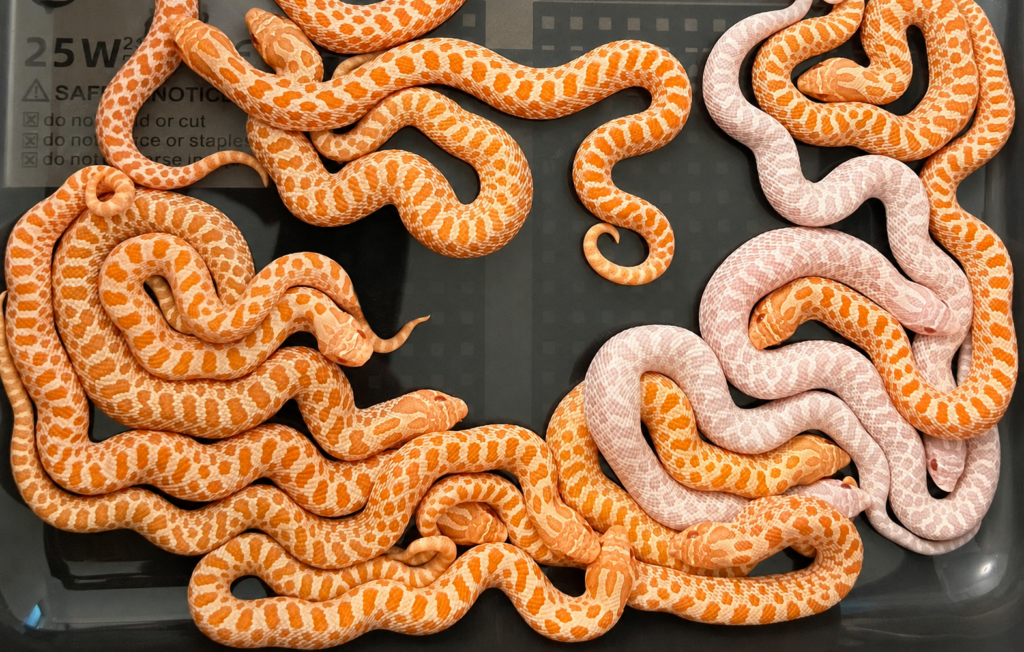
Sixteen hatchlings, three of them snows, all healthy as of day 59. It's a result we're genuinely proud of, and one that honestly didn't feel guaranteed at several points along the way — the stalled second clutch, the vet visit, the five assisted hatchlings at the end.
The next chapter is getting all sixteen onto a consistent feeding schedule, which with hognose hatchlings comes with its own set of challenges and quirks. Western hognose snakes have a reputation for being picky eaters as babies, and there are a handful of techniques that can make the difference between a hatchling that takes its first pinky confidently and one that requires weeks of coaxing. We'll cover all of that in the next post.
For now though, sixteen tiny snakes, all doing well. We'll take it.
And as always - stay happy, stay curious, and give your hoggie a gentle boop from me.
You must be logged in to post a comment.

No comments yet — be the first.