
After everything this clutch put us through we walked into the incubator room on the morning of July 14th the same way we had every morning for the past two months. Expecting nothing. Hoping, but expecting nothing.
And then there was a tiny head sticking out of one of the eggs. That moment genuinely does not get old.
Before getting to hatch day, it's worth briefly covering what the incubation period actually looked like, because it wasn't entirely smooth.
Two of the ten eggs we'd started with began deteriorating partway through. The first signs were a change in color and texture, followed by visible mold beginning to form on the shell surface. Mold during incubation is one of those things that requires immediate attention, because left unchecked it spreads. Not just across the affected egg, but to the healthy ones sitting nearby.
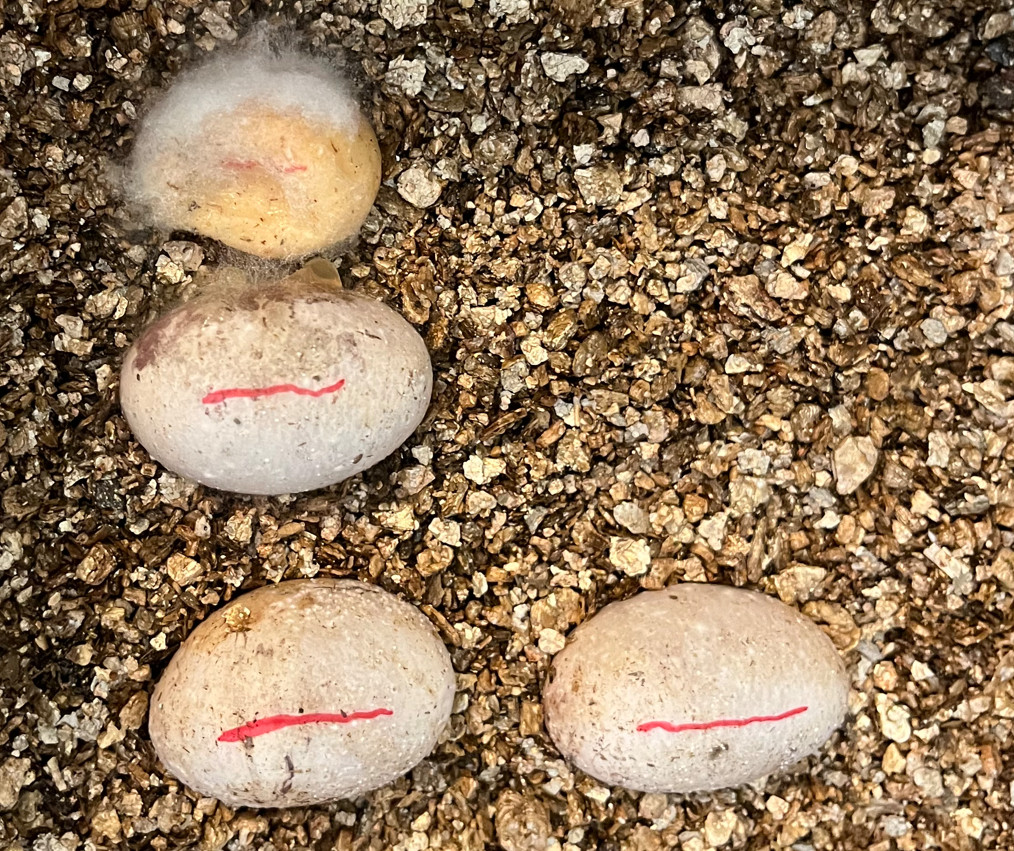
Our approach when we caught it: carefully remove as much visible mold as possible without disturbing the egg's orientation, then apply a light dusting of antibacterial foot powder around the affected area. It's a low-tech solution, but it's been used reliably by reptile breeders for years. The antifungal properties help arrest the spread without introducing anything that would affect the developing embryos in the surrounding eggs. The other critical factor is catching it early. A small patch of mold managed quickly is a very different situation from one that's been left for several days.
Despite the intervention, both affected eggs continued to decline and didn't make it through. That left us with eight eggs going into the final weeks, all of which were looking good, holding their shape, and showing clear development on candling.
Eight eggs. We went into hatch day with eight.
The first hatchling had pipped sometime before our morning check and was sitting with its head out of the shell, calm and alert, doing exactly what a hognose hatchling should be doing on day one of its life.
We looked at it for a moment.
And then we both said the same thing at roughly the same time, because the answer to the question we'd been sitting with since March was suddenly obvious.
The hatchling was normal coloration. This wasn't Albi's baby. These were Hoggy's babies! His first ever clutch, from his first ever confirmed breeding, hatching on a Tuesday morning in July while we stood in the doorway trying to process it.
We were, to put it simply, pretty happy about that.
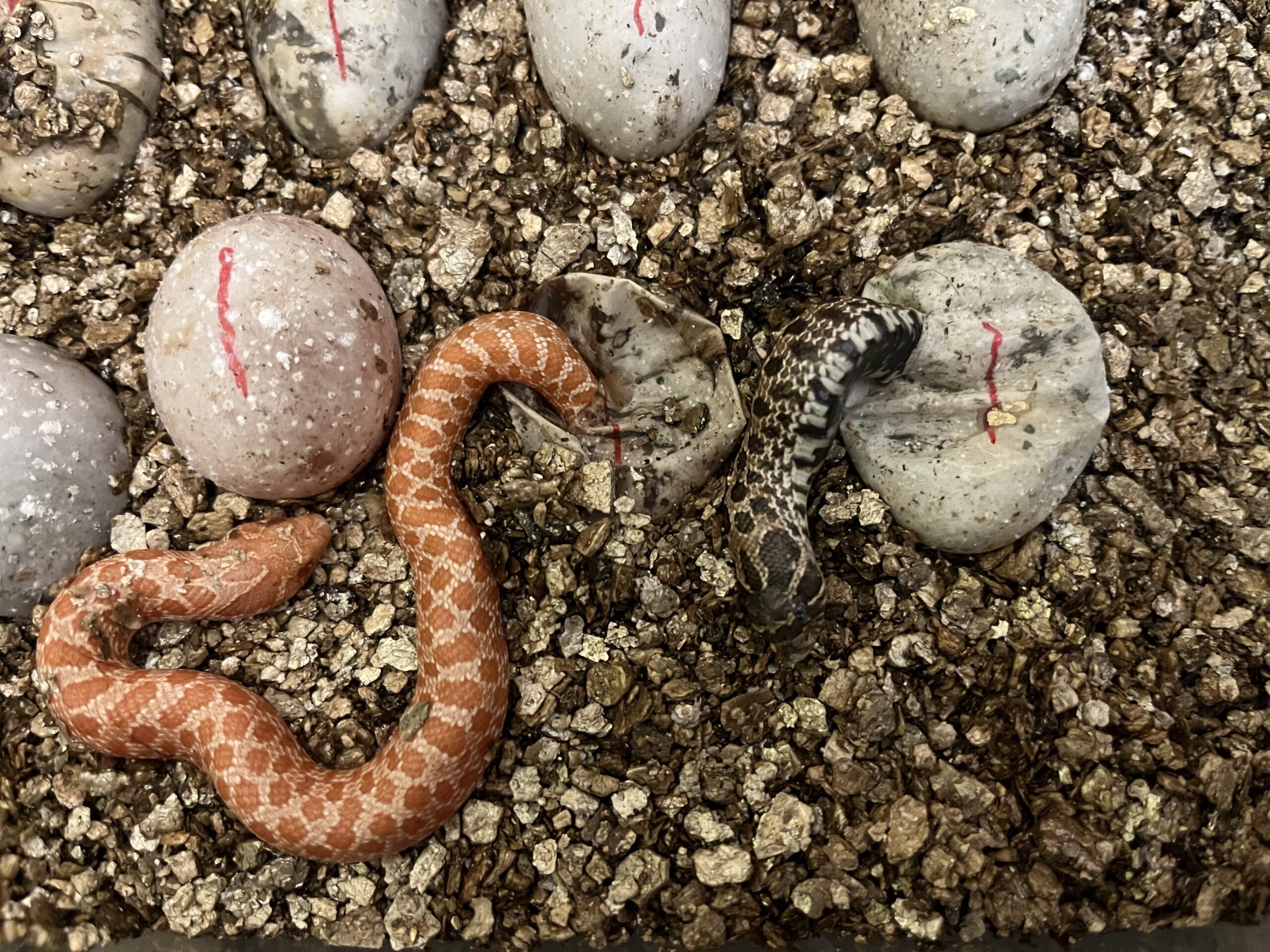
Once the first hatchling pipped, the others followed gradually across the next day and a half, which is completely standard for a hognose clutch. It's tempting, especially the first time you watch this happen, to expect all the eggs to open at roughly the same time. They don't. Each hatchling works on its own schedule, and the gaps between the first pip and the last can stretch to 24 hours or more without anything being wrong.
The process for each one looks roughly the same: the egg tooth (that small, temporary structure on the tip of the snout) cuts through the leathery shell, creating the initial pip. The hatchling then rests, often for many hours, with just its head out while it absorbs the last of the yolk sac. This rest period is not optional and should not be shortened. The yolk provides the nutrients that will carry the hatchling through its first days before it's ready to feed, and a hatchling pulled from the egg before this absorption is complete can struggle significantly in those early days.
The only correct response during this phase is patience. Watch, monitor conditions, and let them finish.
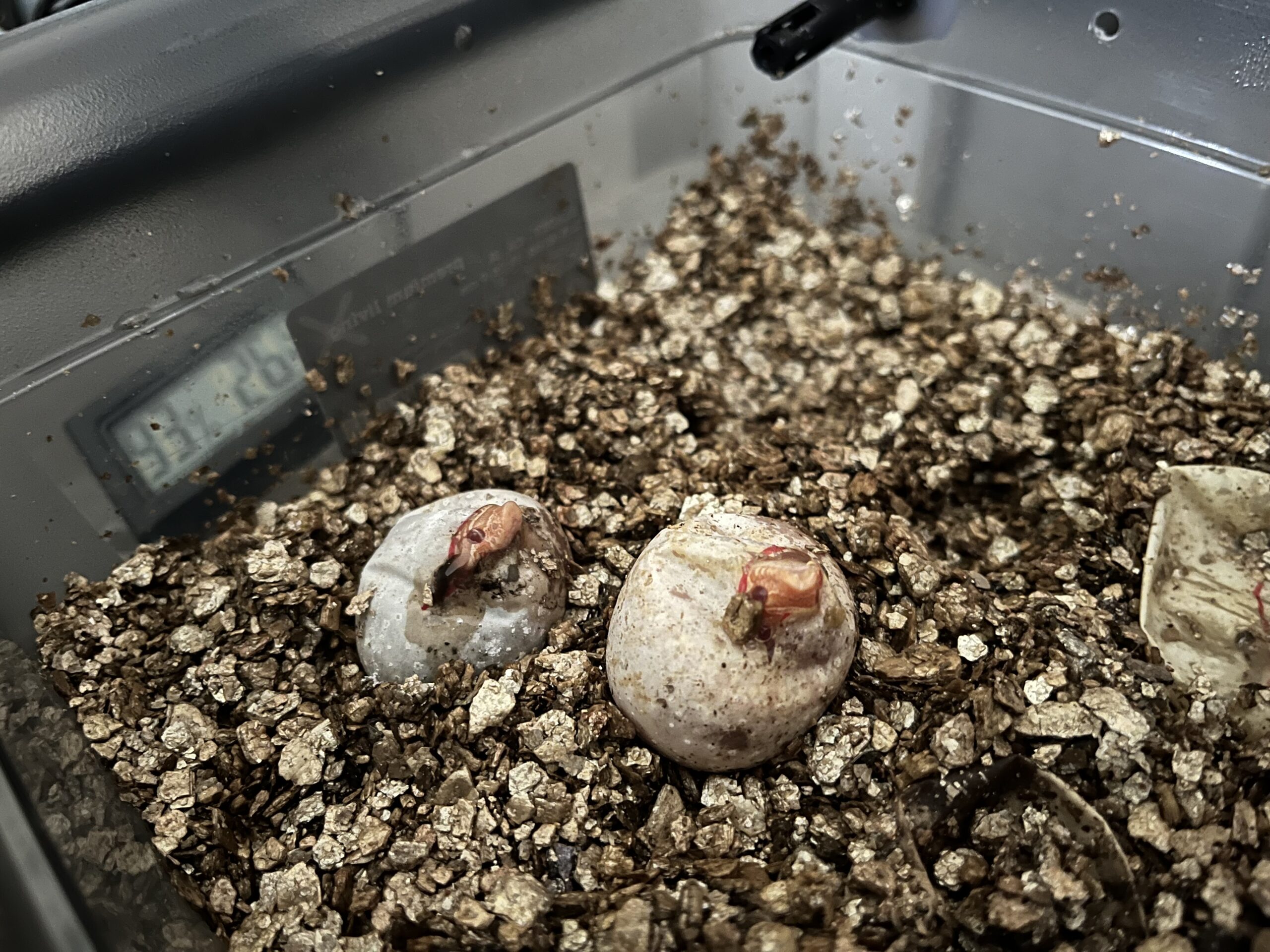
After approximately 24 hours, two eggs had still not pipped. The rest of the clutch was either fully out or in the late stages of emerging, which put the remaining two eggs clearly outside the expected window.
Assisted hatching is not a first response, it's a last one, used when you have good reason to believe a hatchling is alive inside but unable to pip on its own. The same causes apply as in any clutch: the egg tooth may not have formed properly, it may have shed prematurely, or the shell may be too tough or slightly drier than ideal.
We made a careful incision in each shell, just enough to create an opening, and placed them back in the incubator. Both hatchlings responded well. Neither appeared to need further help once given a starting point, and both emerged on their own from there.
Eight eggs, eight hatchlings. Every single one of them out.
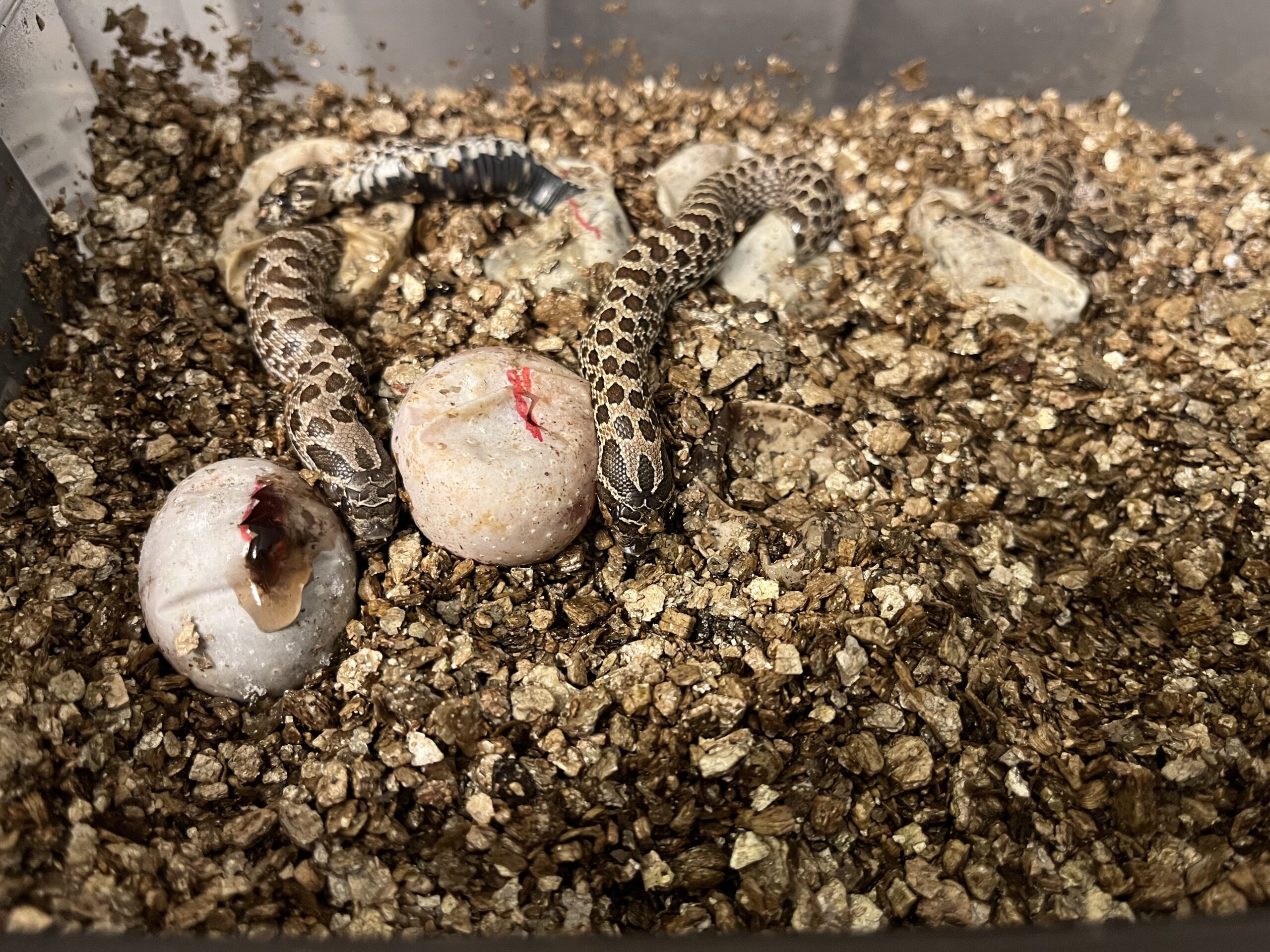
All eight looked strong from the moment they fully emerged, alert, tongues flickering immediately as they took in their surroundings for the first time. The size variation between them was minimal, which is a good sign across the clutch as a whole. A significant size gap between hatchlings from the same clutch can sometimes indicate uneven development or nutritional issues during incubation; this group was reassuringly consistent.
And they were, as hognose hatchlings invariably are, immediately and unreasonably cute. There is something specific about the moment a hognose hatchling first looks at you. That slightly upturned snout, the oversized eyes relative to the head, the way they're already trying to figure out what you are and whether you're worth investigating. Hoggy's first offspring, and from that first look, very much his in temperament.
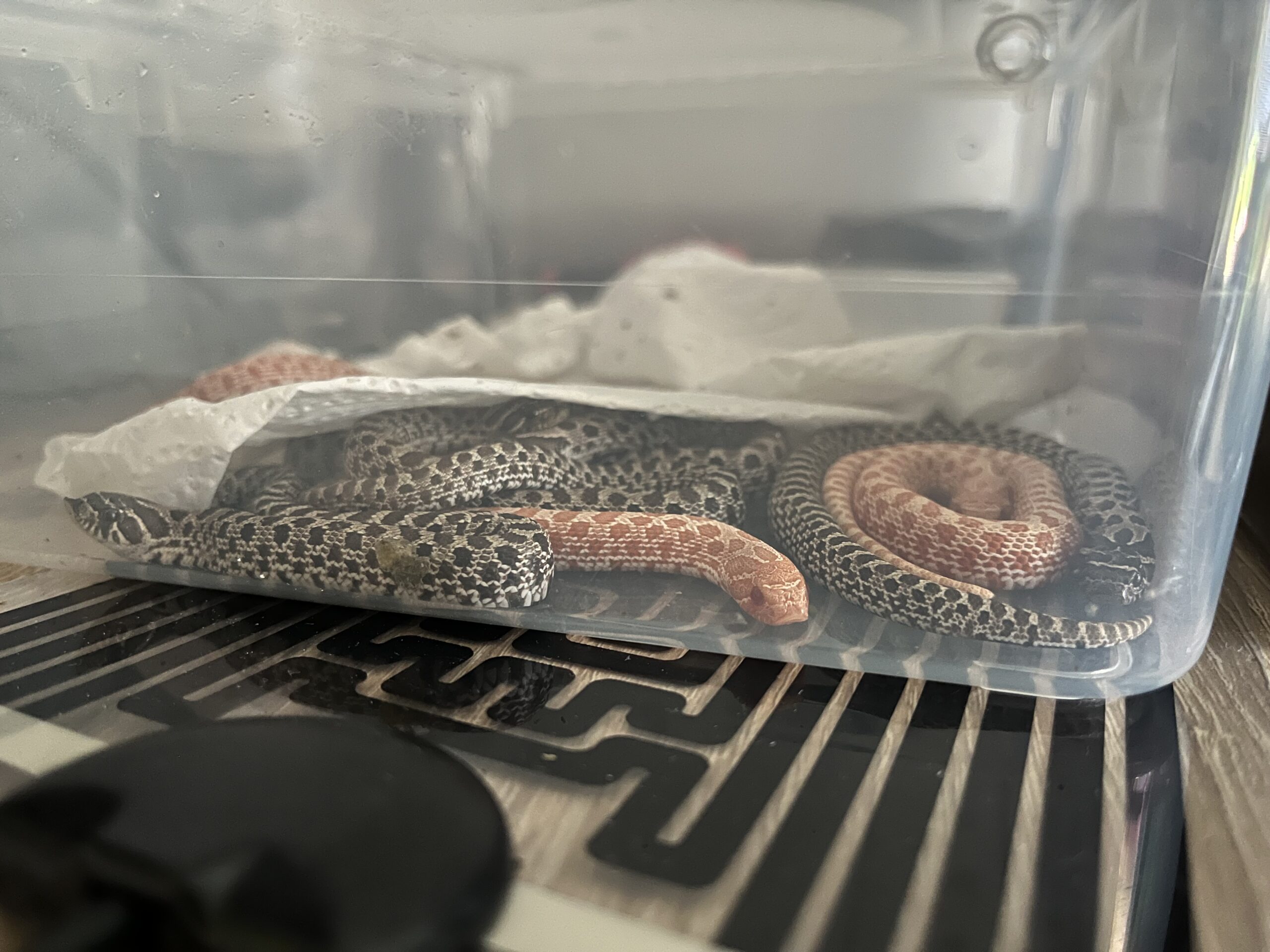
For anyone currently incubating eggs or planning to: the two eggs we lost were ones we'd flagged as uncertain from the moment we candled them. One was undersized, one had a slightly translucent appearance that suggested shell quality issues. Neither was a surprise when they declined, but the mold management around them was a useful reminder of a few things.
Check your eggs regularly, and when you check them, actually look at each one rather than just confirming the incubator is running at the right temperature. Early intervention on a mold issue takes five minutes. A mold problem that's been developing for a week is a much more serious situation. Keep humidity consistent. Eggs in substrate that's too wet are significantly more vulnerable than those in properly calibrated conditions. And if you do find mold, act the same day.
The eight eggs that made it through did so in part because we caught the problem early enough that it stayed contained.
Eight hatchlings means the familiar rhythm of the early weeks begins again — first sheds, first feeding attempts, weight tracking, the gradual process of getting each individual onto a reliable food schedule. Hognose hatchlings come with their own particular feeding quirks, as anyone who has raised them before knows well, and Hoggy's babies will get the same patient, individualized approach as last year's clutch.
For now: a clutch that started with real uncertainty, went through a genuinely stressful middle period, and ended with eight healthy animals and a paternity mystery solved on the first morning of hatch day.
Hoggy is a father. We couldn't be more happy.

No comments yet — be the first.