
Every year, as the days get shorter and the temperature outside starts to drop, the rhythm of our reptile room shifts. Feeding slows down. Activity levels decrease. And eventually, it's time to do something that still feels a little counterintuitive no matter how many times you've done it — deliberately cooling your snakes down and essentially putting them to sleep for several months.
This year, three of our adults went into brumation: Bajsa, Albi, and for the first time on this blog — Hoggy.
Bajsa and Albi need no introduction at this point. But Hoggy is a new face here, so: he's our original male, a normal het albino, and the most experienced animal in our collection. Calm, unhurried, and carrying the quiet authority of a snake who has simply been around longer than everyone else. We hadn't originally planned to brumate him this season, but with the question of this year's breeding pairings still open it made sense to give both males the same preparation and let the decision come later.
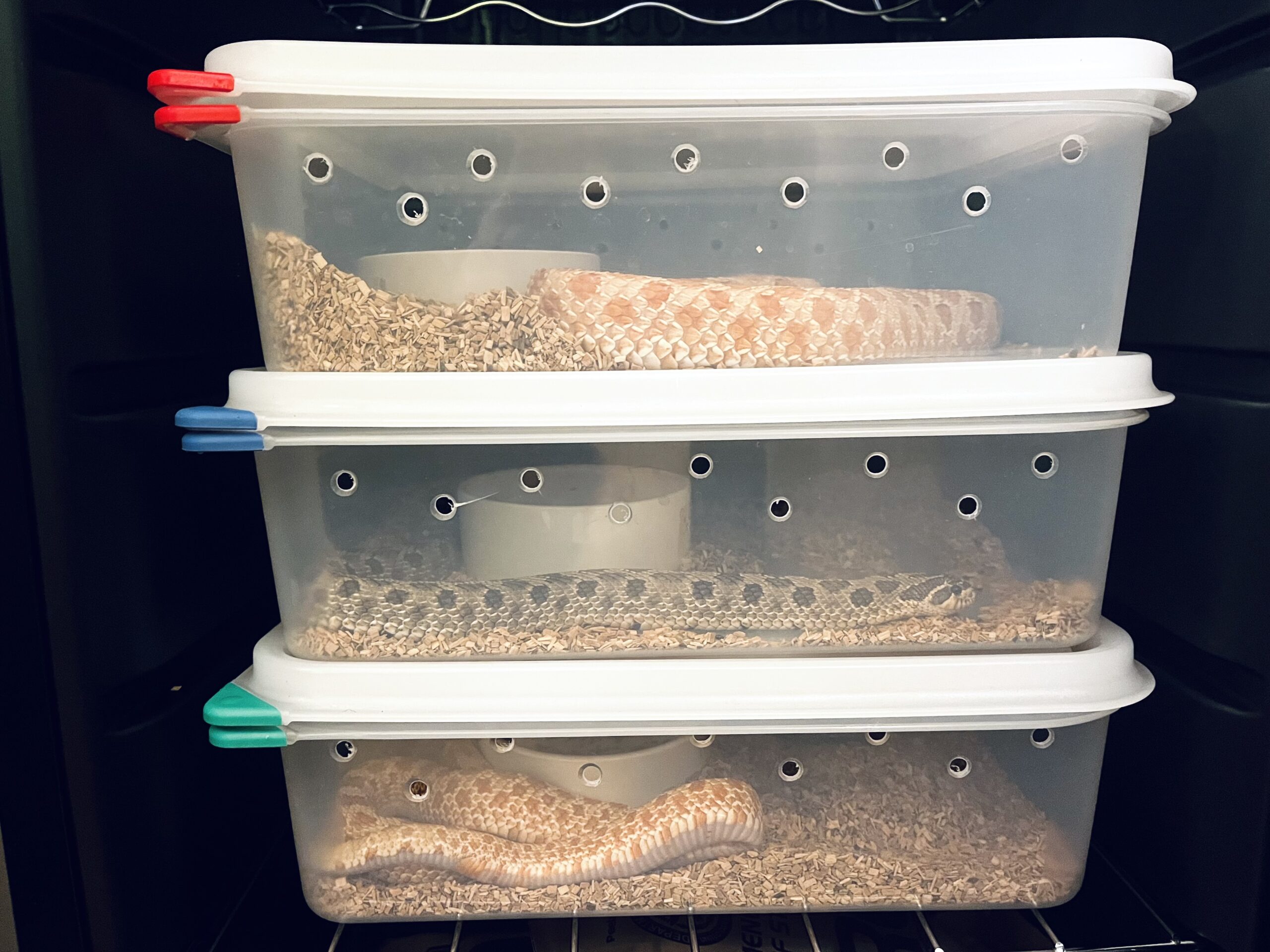
On November 23rd, 2024, all three went into the wine fridge.
The word most people reach for is hibernation, and it's close enough to be useful in conversation, but the biological reality is a bit different. What snakes and other reptiles experience is more accurately called brumation. It's a period of winter dormancy that's driven by the same environmental triggers (dropping temperatures, shorter daylight hours) but works differently under the hood.
Mammals that hibernate enter a state of true metabolic suspension. Heart rate, breathing, and body temperature all drop dramatically, and the animal is essentially unconscious for months. Brumating reptiles slow down considerably, but they don't go fully unconscious. Their metabolism drops, digestion essentially stops, and they become profoundly inactive, but they retain some awareness of their surroundings, will occasionally drink water, and can rouse themselves if disturbed or if temperatures change significantly.
The reason this matters isn't just semantic. Understanding that a brumating snake is slowed down rather than completely switched off affects how you manage them: why you make sure water is always available, why you check on them periodically rather than sealing the container and forgetting about it, and why a snake that moves sluggishly during brumation isn't necessarily cause for alarm.
For western hognose snakes specifically, brumation serves two important functions. The first is general health. Cycling through a natural rest period supports immune function and overall physiological wellbeing in a way that keeping snakes at constant warm temperatures year-round doesn't fully replicate. The second, and more immediately relevant for breeding purposes, is reproductive priming. In the wild, the hormonal cascade that triggers breeding behavior in spring is directly linked to the temperature drop and subsequent warming of brumation. In captivity, mimicking that cycle is one of the most reliable ways to encourage successful mating behavior and maximize reproductive success.
Put simply: snakes that brumate properly tend to breed better in the spring. It's not guaranteed, but the correlation is consistent enough that most serious breeders treat brumation as a non-negotiable part of their seasonal routine.
Here's the part that tends to surprise people: we don't have a climate controlled reptile room or purpose built brumation chambers. What we have is a wine fridge, and it works extremely well.
Wine fridges are designed to maintain stable, consistent temperatures across a range that happens to align almost perfectly with western hognose brumation requirements — roughly 5°C to 15°C (41°F to 59°F), with precise control and minimal fluctuation. They're quiet, well insulated, and designed to hold temperature steadily even when the ambient room temperature changes. For our purposes, they're essentially ideal.
Each snake goes into its own individual plastic container with ventilation holes, a layer of soft wood chip substrate, and a small water dish. The setup is deliberately minimal. During brumation, a snake doesn't need enrichment, hides, or a thermal gradient. It needs a stable cool temperature, darkness, and access to water. Everything else is unnecessary at this stage.
Before anyone went in, we weighed all three animals. Weight monitoring during brumation is important: a small amount of weight loss over the course of several months is normal and expected, but significant loss can indicate a health problem that needs attention. Having a baseline measurement means you can actually quantify what's happening rather than guessing.
We also draped a towel over the glass door of the fridge. This isn't just aesthetic. Blocking light exposure helps maintain the dark, burrow-like conditions that signal to the snakes that it's appropriate to stay dormant. Light fluctuations, even subtle ones, can disrupt the brumation state and cause unnecessary arousal.
One of the most important parts of brumation that doesn't get discussed enough is the cool-down phase — the gradual temperature drop that precedes full dormancy. You don't put a snake that was at 28°C yesterday into a 10°C environment today. The transition needs to happen slowly, over one to two weeks, to allow the animal's physiology to adjust properly.
There's also a critical step before the cool-down begins: fasting. Snakes should not enter brumation with food in their digestive system. At brumation temperatures, digestion essentially stops, which means undigested food sitting in the gut can rot rather than being processed, leading to serious digestive issues or infection. We stop feeding our animals two to three weeks before brumation begins, giving them time to fully clear their systems before temperatures start dropping.
Our cool-down schedule looked like this: starting temperature of around 20°C, dropping to 16°C after several days, and eventually settling at 13°C over the course of roughly two weeks. Once stable at 13°C, all three snakes entered full brumation. Minimal movement, no feeding interest, and a general quality of stillness that's always slightly surreal to observe when you're used to these animals at their active, food-motivated best.
We check on them approximately once a month during brumation: a visual inspection, a water refill if needed, and a quick weight check. Beyond that, we leave them alone. Unnecessary disturbance during brumation (excessive handling, temperature fluctuations, bright light) can pull a snake out of dormancy prematurely and waste the energy reserves they're trying to conserve.
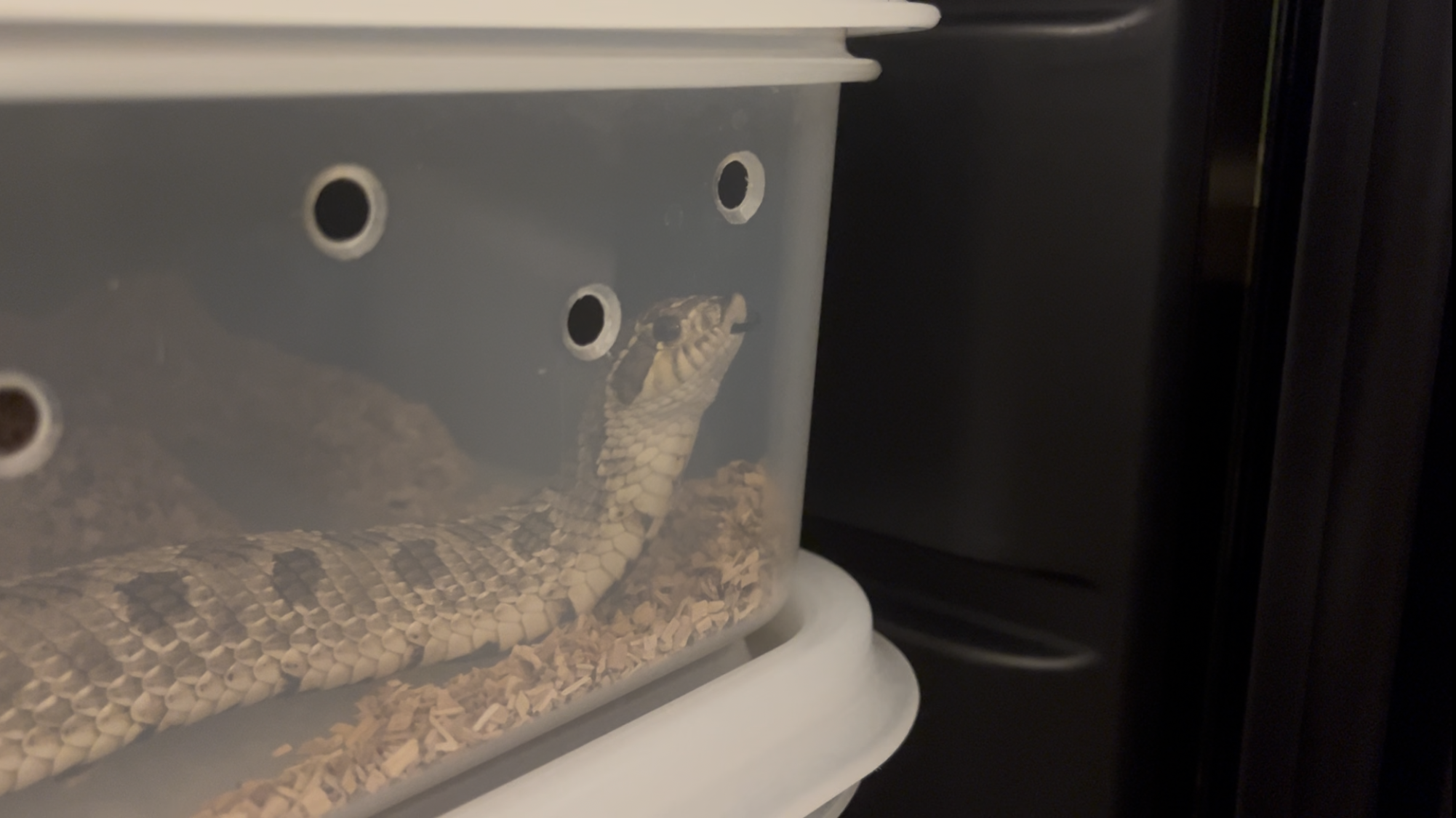
By mid-February, we started the process of bringing the trio back up to temperature. Just as the cool-down was gradual, the warm-up needs to be too. A few degrees every couple of days, letting the animals' metabolism slowly reactivate before they're returned to their normal enclosures.
By February 24th we switched the wine fridge off and let ambient room temperature take over. Within a day or two, all three were moving purposefully, investigating their containers, and showing the kind of alert, oriented behavior that tells you a snake is fully back online.
We weighed them again before transferring them back to their terrariums. All three had held their weight well. No significant loss across several months of dormancy is a sign that the animals went in healthy and that the brumation conditions were right throughout.
Bajsa, true to form, didn't need any encouragement. She was already moving with intent before the prey item had finished thawing — the same confident, purposeful energy she brings to every feeding, as if time off had simply sharpened her appetite rather than dulled it. One of the reliable pleasures of keeping a food-motivated snake is that the post-brumation feed is never a question with her.
Albi and Hoggy followed within the next feeding cycle. All three eating well after brumation is one of the cleaner health indicators we have. Appetite returning promptly and consistently after a multi-month cool-down suggests the animals came through the process in good condition and that their systems have properly reactivated.
With everyone awake, weighed, and back on food, attention turns to the next phase: breeding season. The question of which male pairs with Bajsa this year is still open. Albi, who proved himself last season, or Hoggy, the veteran with the genetics and the calm temperament to match. Both have had the same preparation. Both are ready.
We'll be making that call soon, and when we do, the next post will cover how the pairings went, what we saw, what worked, and what this season brought us. With hognose snakes, you think you know what's coming and then something surprises you anyway. That's not a complaint.
And as always - stay happy, stay curious, and give your hoggie a gentle boop from me.
You must be logged in to post a comment.

No comments yet — be the first.