The western hognose snake (Heterodon nasicus) is a colubrid species native to the central regions of North America, ranging from Texas north through the Great Plains into southern Canada. They're a plains animal, adapted to dry, open environments with sandy or loose soil and genuine seasonal temperature variation. Understanding where they come from shapes every practical decision in how you keep them.
The name comes from the snout. It's distinctly upturned. A hardened, specialized rostral scale that functions as a digging tool, allowing these snakes to root through loose soil in search of prey and shelter with surprising efficiency. It's the most immediately recognizable feature of the species and the one that makes them unmistakable at a glance.
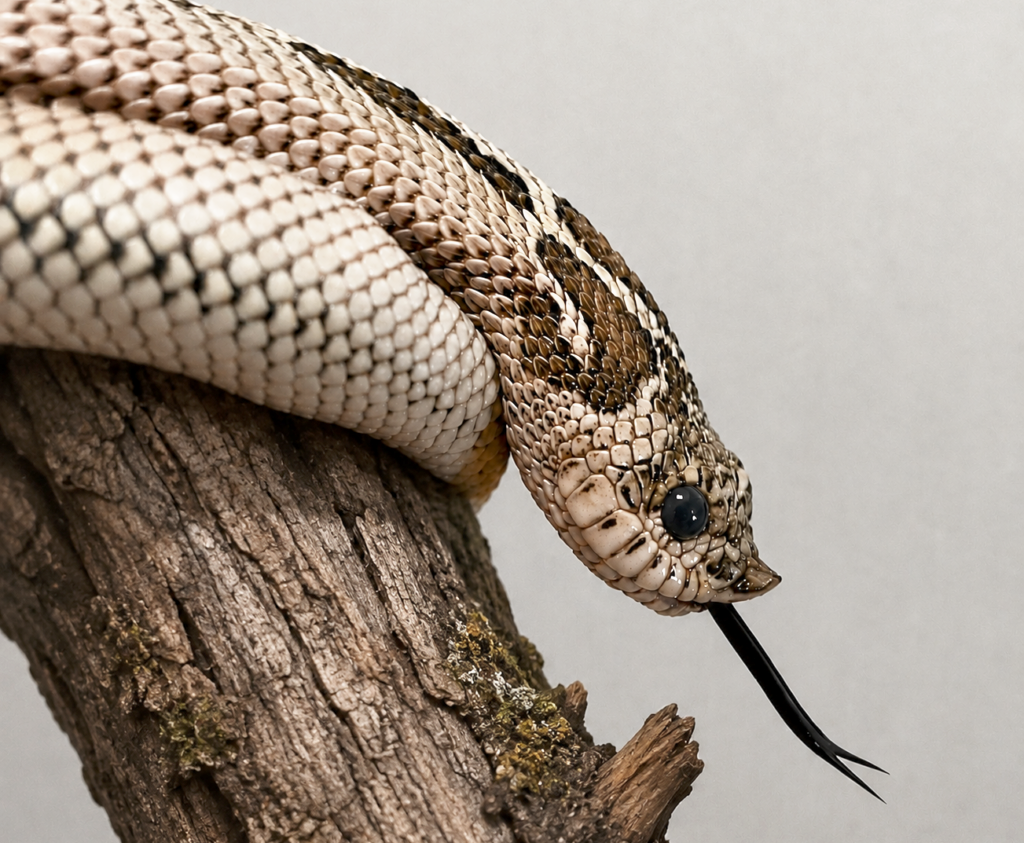
Adult females typically reach 60 to 90 cm (2 to 3 feet) in length. Males are noticeably smaller, usually 45 to 60 cm (18 to 24 inches), making western hognose snakes one of the more dramatically sexually dimorphic colubrid species in terms of size. A large female and a mature male from the same clutch can look like different animals side by side. Adult weight typically falls between 100 and 300 grams, though well fed females can exceed this.
In the wild, life expectancy is around 9 to 12 years. In captivity with appropriate care, 15 to 18 years is a reasonable expectation, and animals living past twenty are documented. This is a meaningful long term commitment. A hognose snake purchased today may still be with you when your life circumstances are quite different from what they are now.
In the wild, western hognoses are earth toned — tan, brown, grey, or olive with darker blotches along the back and smaller spots on the sides. Captive breeding has expanded this considerably. Dozens of recognized morphs now exist, from albino animals ranging from pale yellow to vivid orange, to snow morphs (combining albino and axanthic genetics) that are white with subtle pink patterning, to anacondas and supercondas with dramatically reduced or absent pattern.
A few of the morphs you'll encounter most frequently: albino, axanthic, snow, anaconda, superconda, arctic, toffee, lavender, and the many combination morphs that arise from pairing these together. The morph affects appearance only. Care requirements, temperament, and behavior are identical regardless of genetics.
Western hognose snakes are not aggressive, but they are among the most behaviorally expressive snakes in the pet trade. When threatened, particularly in younger or less handleable animals, the defensive display is theatrical: the snake flattens its body to appear wider, spreads its neck into a pseudo-hood, hisses loudly, and may strike — usually with a closed mouth, as bluff rather than genuine attack.
If this doesn't work, the hognose escalates to its signature behavior: thanatosis, or playing dead. The snake rolls onto its back, goes limp, opens its mouth, and allows its tongue to loll out. The commitment to the performance is genuine. Flip a playing-dead hognose back onto its belly and it will often roll back over again, apparently unwilling to break character.
In captivity with consistent, appropriate handling, this defensive behavior typically diminishes significantly. Most adult western hognose snakes that are regularly handled are calm, curious animals that investigate their surroundings with evident interest and rarely display defensively unless startled. The individual variation between animals is real, some are bold from the first interaction, others take months to fully settle. Learning the personality of your specific animal is part of what makes keeping them interesting.
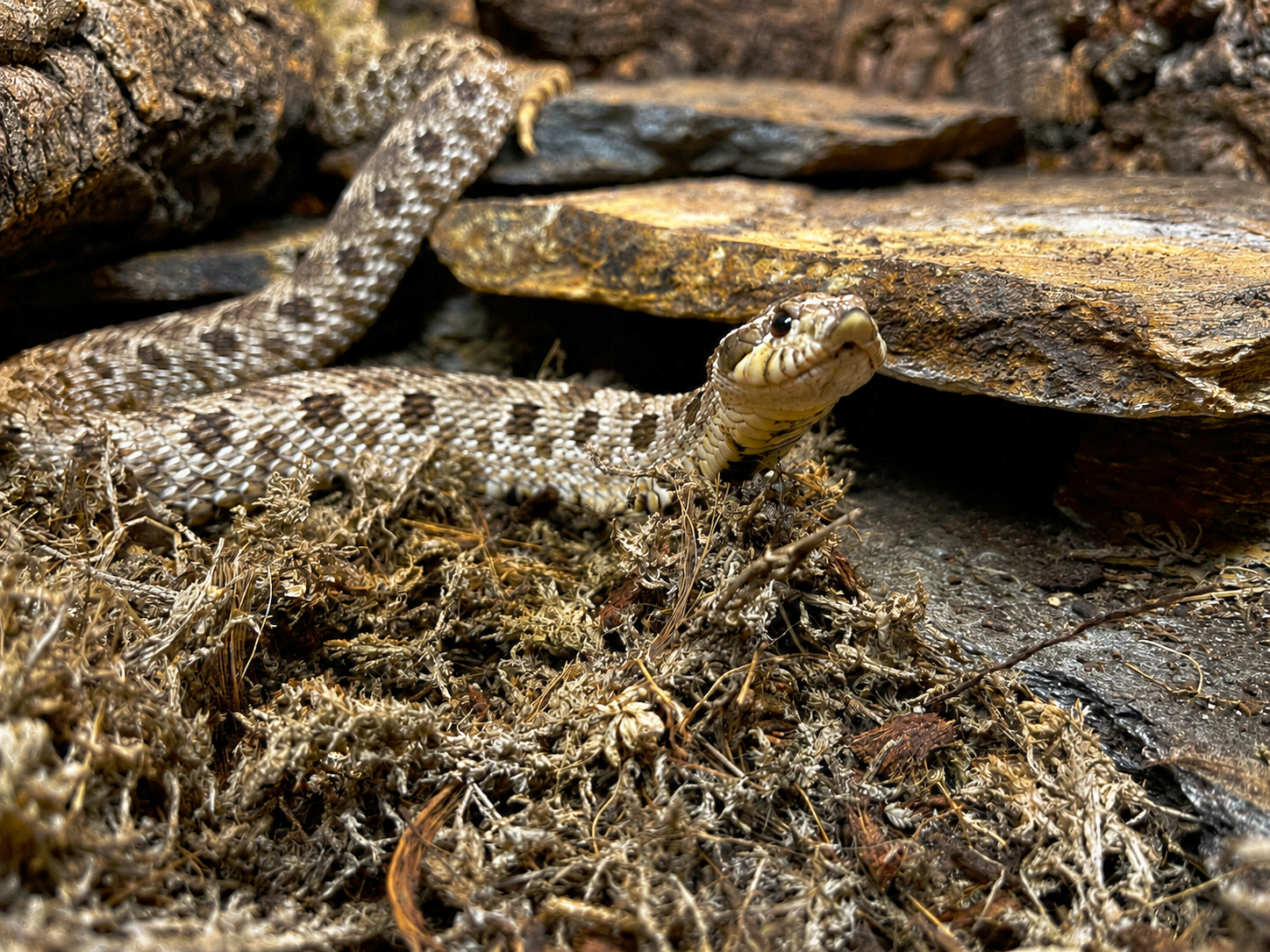
Enclosure size is one of the most common places new keepers cut corners, and it has real consequences. An undersized enclosure prevents proper thermal gradients, limits natural movement and burrowing behavior, and creates chronic low level stress that suppresses appetite and immune function over time.
For hatchlings and juveniles up to around 50 grams, a smaller enclosure is appropriate. Young snakes can feel exposed and insecure in too much space. A 10-gallon tank or equivalent plastic tub is suitable for the first several months of life.
For adults, the minimum is a 20-gallon long footprint (approximately 90 x 45 cm / 36 x 18 inches). Larger is genuinely better. These snakes are more active than their reputation sometimes suggests, particularly at dawn and dusk, and they use the space provided to them. An enclosure that doesn't allow for a proper thermal gradient is also inadequate regardless of size.
Glass tanks are the most common and readily available option. They provide good visibility and are easy to source, but can be challenging to maintain humidity in and lose heat more readily than plastic alternatives.
Plastic tubs and rack systems retain humidity more effectively, are easier to clean, and the enclosed nature tends to make snakes feel more secure, particularly important for younger or more defensive animals. Rack systems are the standard choice for breeders managing multiple animals.
Custom vivariums offer the most control over environment and aesthetics but require more investment. Well built custom enclosures can be excellent long term solutions for display setups.
Proper air exchange is essential. A completely sealed enclosure accumulates moisture, allows bacterial growth, and creates respiratory risk. An enclosure with excessive ventilation, on the other hand, loses heat and humidity too quickly to maintain appropriate conditions. The goal is controlled airflow — enough to keep air fresh without undermining the environmental parameters you're trying to maintain.
Most commercially available reptile enclosures are designed with this balance in mind. If you're adapting a non reptile container, ensure adequate ventilation is built in before use.
Western hognose snakes are capable escape artists. Any gap in a lid or enclosure wall that is large enough for the snake's head is large enough for the snake. And a hognose that has found a gap will find it again. Ensure lids are secure, clips are functioning, and any modifications to the enclosure haven't introduced escape routes. Check regularly, because enclosure wear creates gaps over time.
Temperature is the single most important environmental variable in hognose husbandry. Reptiles are ectothermic which means they regulate their body temperature by moving between warmer and cooler areas of their environment rather than generating heat internally. A proper thermal gradient isn't a preference; it's a biological requirement. Without it, digestion is impaired, immune function suffers, and feeding problems become more likely.
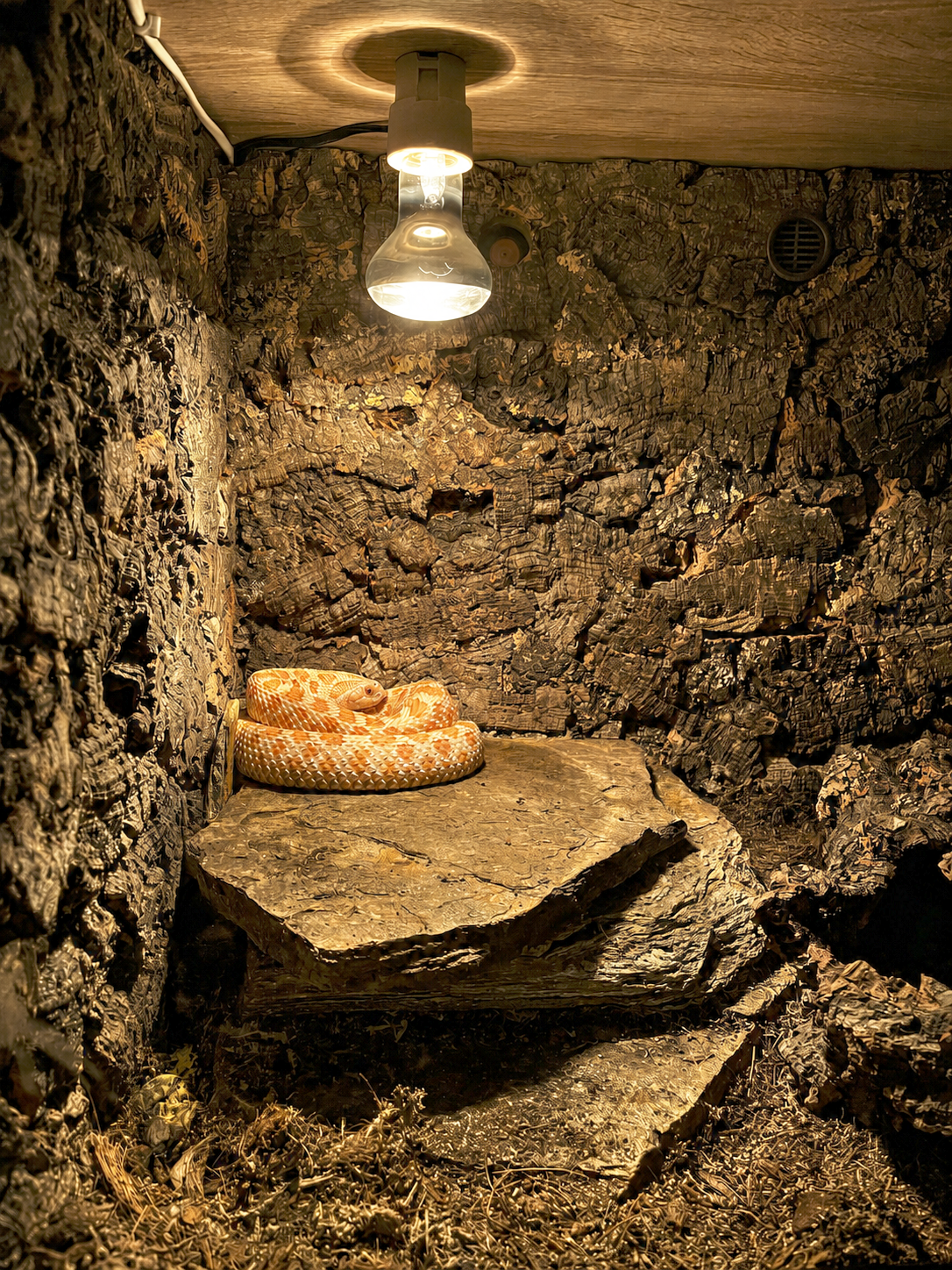
Warm side surface temperature: 30–32°C (86–90°F)
Cool side: 22–24°C (72–76°F)
Ambient air temperature: can sit between these values
The snake should be able to access both ends of this gradient freely at all times, moving between them as its thermoregulatory needs change throughout the day.
Under-tank heat mats are the standard choice for hognose snakes and work well when properly managed. Position the mat under one end of the enclosure covering roughly one third of the floor space. This creates the gradient naturally.
Heat bulbs (also called basking bulbs) are our preferred heat source for terrarium setups, and for good reason. In the wild, western hognose snakes are sun warmed animals. They bask to raise their body temperature, and overhead radiant heat from a bulb replicates that natural process more closely than any under tank solution can. A snake warming itself under a heat bulb is behaving the way it would in nature (seeking out a warm spot, absorbing heat from above, and moving away when it's warm enough). That behavioral element is genuinely enriching in a way that a heat mat isn't.
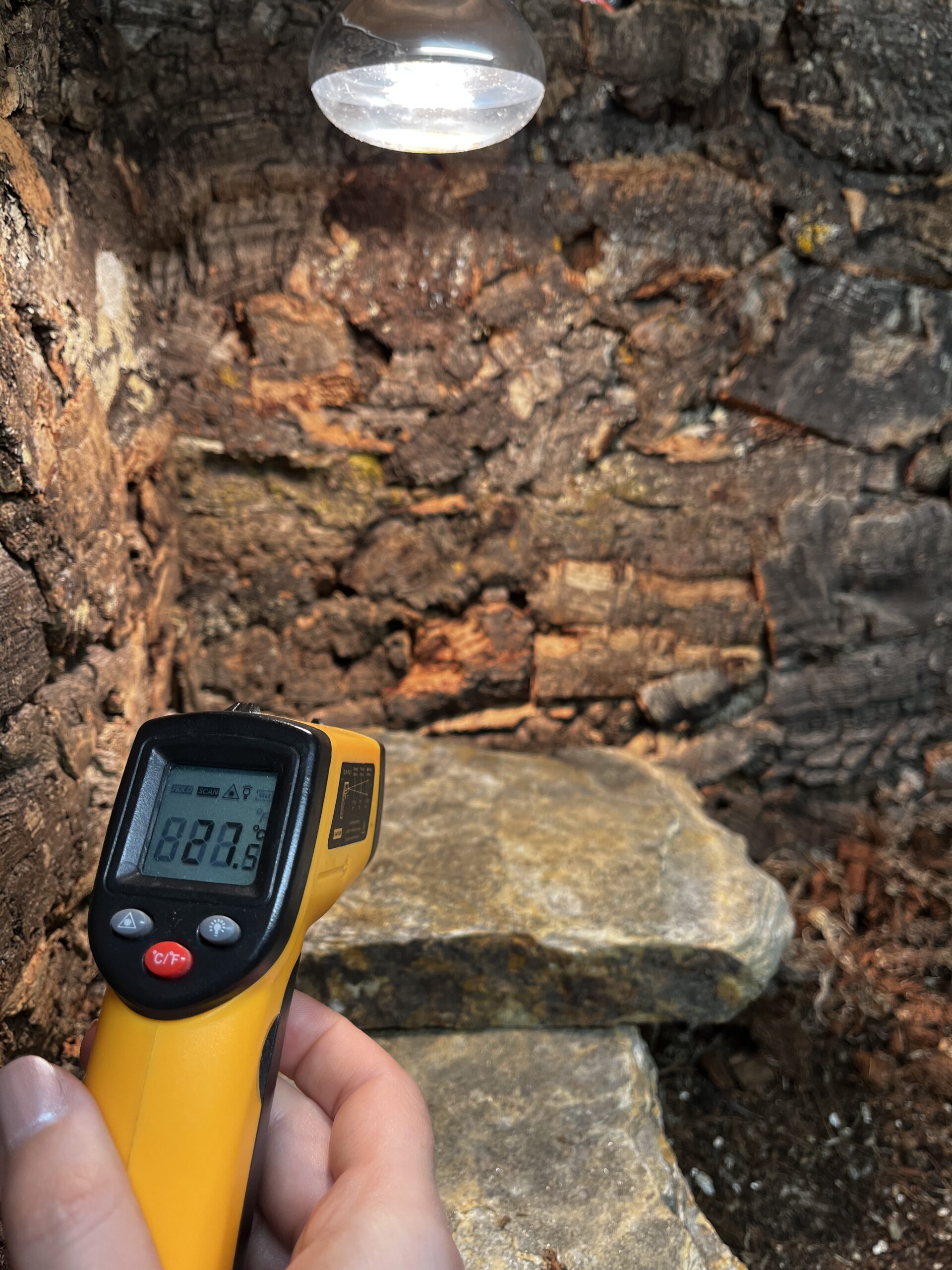
The key with heat bulbs is thermostat control, specifically a dimming thermostat, which regulates temperature by adjusting the brightness of the bulb rather than switching it on and off. This keeps temperatures stable, extends bulb life, and prevents the dangerous overheating that an unregulated bulb can cause. Always connect your heat bulb to a dimming thermostat and verify the basking spot temperature with a heat gun rather than relying on the thermostat reading alone.
Avoid heat rocks under any circumstances. They heat unevenly, have no thermostat integration, and cause thermal burns that are serious and slow to heal.
Every heat source must be connected to a thermostat. This is not optional. An unregulated heat mat will eventually overheat. The surface temperature can climb to levels that cause severe burns on a snake that cannot escape the heat source. A thermostat prevents this by cutting power when the target temperature is reached and restoring it when temperature drops.
Place the thermostat probe as close to the heat source as possible without direct contact. Verify the actual surface temperature with an infrared heat gun regularly. A thermostat that has drifted out of calibration gives false confidence, not real safety.
Use an infrared heat gun to check surface temperatures at multiple points: the warm side surface, inside hides, the cool end, and anywhere the snake spends significant time. The thermostat tells you the temperature at its probe. The heat gun tells you what's actually happening everywhere else.
Western hognose snakes come from arid environments and have lower humidity requirements than many commonly kept snake species. The target ambient humidity is 30–50%.
This relatively low range suits their natural habitat and reduces the risk of respiratory infections, which become significantly more likely in consistently humid conditions. At the same time, humidity that's too low (particularly in winter when indoor heating dries the air) causes shedding problems, skin condition issues, and increases dehydration risk.
Use a digital hygrometer placed at substrate level in the middle of the enclosure for the most representative reading. Analog dial hygrometers are less accurate and require frequent calibration. Digital units are inexpensive enough that there's no good argument for using the less accurate option.
During shed cycles, humidity requirements increase temporarily. The moisture content of the old skin layer determines how cleanly it separates from the new skin beneath — too dry, and the shed sticks rather than sliding off. During pre shed, nudge ambient humidity upward slightly through light misting, and add a humid hide (an enclosed space lined with damp sphagnum moss) to give the snake access to elevated local humidity whenever it needs it.
The humid hide approach is better than raising the entire enclosure humidity to shed-supporting levels, because it avoids creating the sustained elevated humidity that respiratory infections thrive in.
Substrate choice affects burrowing behavior, humidity regulation, ease of cleaning, and ingestion risk. Western hognose snakes are natural burrowers. The substrate should be deep enough to allow this behavior, ideally at least 7 to 10 cm (3 to 4 inches), and have a texture that holds tunnel structure rather than collapsing immediately.
Aspen shavings: absorbent, allows burrowing, easy to spot clean, and widely available. One of the most practical choices for most keepers. Doesn't hold humidity well, which is appropriate for this species.
Coconut fiber (coco coir): holds humidity well and provides a natural appearance. Good for burrowing. May require more attention to prevent moisture buildup becoming excessive.
Bioactive mixes: combinations of topsoil, sand, and organic material that support natural burrowing behavior and, in a properly established bioactive setup, reduce cleaning requirements through the biological activity of the substrate itself. More complex to set up correctly but excellent long-term environments.
Paper towel: appropriate for quarantine, hatchlings being monitored closely, and sick animals. Waste is immediately visible, the enclosure is easy to clean thoroughly, and there's no substrate variable complicating health monitoring. Not suitable as a permanent substrate because it provides no burrowing opportunity and does nothing for humidity regulation.
Avoid: pine and cedar shavings, which contain aromatic compounds toxic to reptiles; sand alone, which presents impaction risk and doesn't support burrowing structure; and any substrate treated with pesticides or other chemicals.
At minimum, two hides: one on the warm end, one on the cool end. This is not a preference, it's a requirement. A snake that can only hide at one temperature can't thermoregulate AND feel secure simultaneously, which means it will chronically choose between the two. The result is a stressed animal that spends most of its time in one hide regardless of its actual thermal needs.
Hides should be snug enough that the snake fills the space. A hide that's too large doesn't provide the sense of security that the snake is seeking. Dark, enclosed, with a single entrance. Commercially available hides work well; so do repurposed containers of appropriate size with an entrance hole cut in one side.
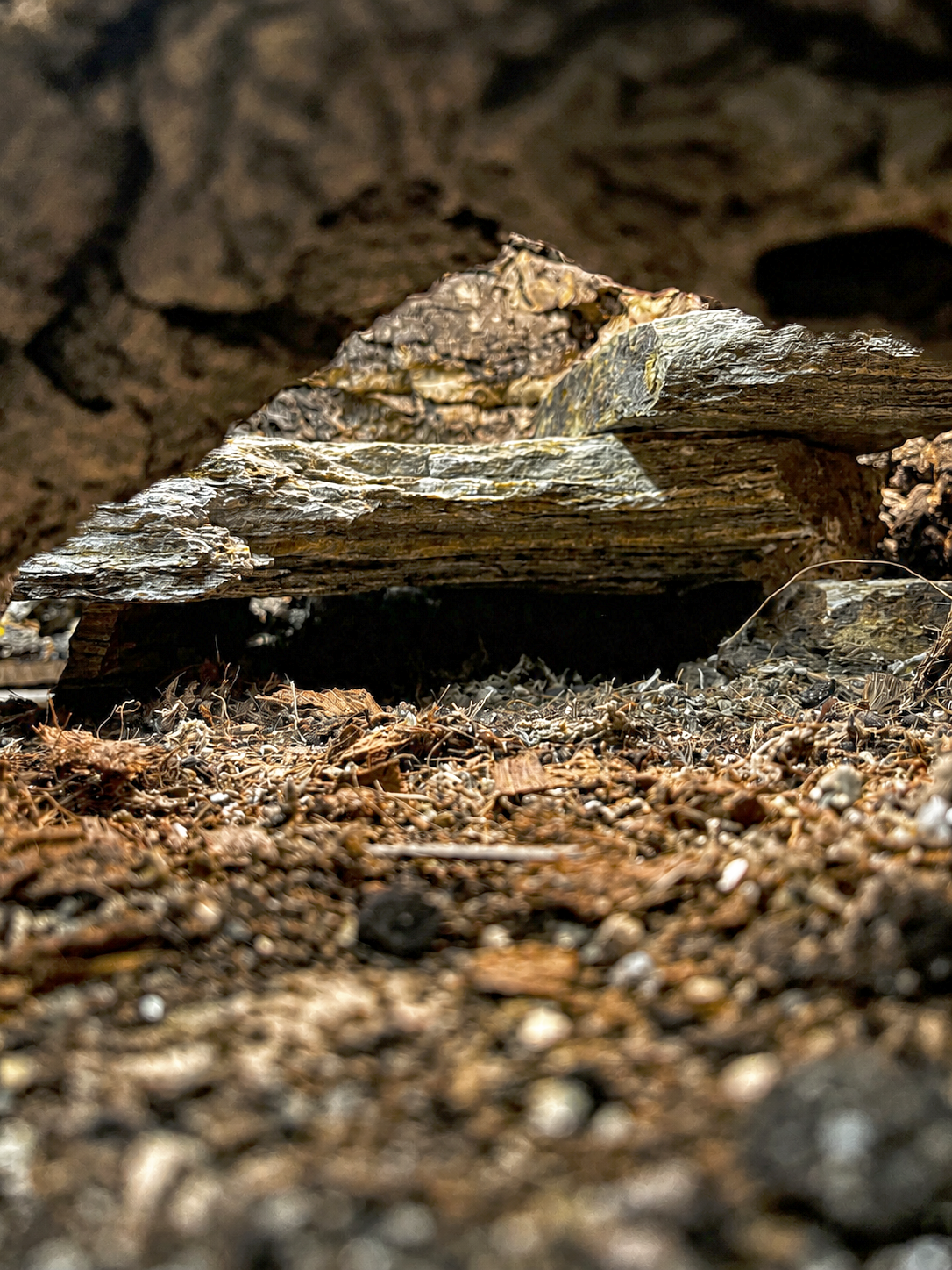
Enrichment in a hognose enclosure doesn't need to be elaborate, but it matters. Cork bark provides climbing opportunities and additional shelter. Branches give the snake surfaces to rub against during shedding. Different hide shapes and sizes provide novelty.
Occasional rearrangement of enclosure furniture (not the whole setup, just elements of it) gives the snake something new to investigate. The most important enrichment for a western hognose is adequate burrowing depth. This is their primary behavioral outlet, and a substrate layer that's too shallow denies it regardless of everything else in the enclosure.
Always provide fresh water in a shallow dish accessible to the snake. Change it regularly (ideally every two to three days) and clean the dish before refilling. A snake that defecates in its water bowl (not uncommon) needs the dish cleaned and refilled immediately.
Bacterial growth in standing water is a health risk. The dish should be shallow enough that the snake can drink without difficulty and, if it chooses to soak, can do so safely. Some snakes soak occasionally, particularly in pre shed. This is normal and not a sign of mites unless combined with other indicators.
In the wild, western hognose snakes eat primarily amphibians (frogs and toads are their preferred prey) along with lizards and occasional small rodents. Their mild rear fanged venom evolved specifically for subduing toad prey, which has physiological defenses against being eaten. This natural diet preference is why hatchlings sometimes require encouragement to recognize mice as food, and why scenting techniques that mimic amphibian scent are effective feeding aids.
In captivity, the standard diet is frozen-thawed mice. Mice are nutritionally complete, safe compared to live prey, available in sizes covering every stage of the snake's development, and widely accessible from reptile suppliers. The vast majority of captive hognose snakes thrive on a mouse only diet throughout their lives.
Prey should be approximately the same width as the snake's widest point. This isn't a rigid rule, but it's a reliable starting point. A correctly sized meal produces a visible but not dramatic lump after feeding and is fully digested within two to three days.
Use this table as a starting reference:
| Snake Weight (grams) | Recommended Prey Type | Prey Weight (grams) |
|---|---|---|
| 8g - 14g (Hatchling) | Day-old pinky mouse | 1 - 1.5g |
| 15g - 25g | Pinky mouse | 2 - 3g |
| 26g - 50g | Small fuzzy mouse | 3 - 5g |
| 51g - 90g | Fuzzy mouse | 4 - 7g |
| 91g - 150g | Hopper mouse | 7 - 12g |
| 151g - 300g | Small adult mouse | 12 - 20g |
| 301g - 500g | Adult mouse | 20 - 30g |
Hatchlings: every 4–5 days
Juveniles: every 5–7 days
Adults: every 7–10 days
These are guidelines rather than fixed rules. A highly active juvenile in warm conditions may show interest more often; an adult in cooler winter conditions may go off food for short periods. Adjust based on the individual animal's body condition and behavior rather than rigidly following a schedule.
Always use frozen-thawed prey as the standard. Live prey can injure snakes. Even a small mouse can bite or scratch a snake that doesn't immediately subdue it, and any injury creates infection risk. Frozen-thawed prey is also safer, more convenient, and eliminates the welfare considerations of keeping live rodents.
Thaw prey in a sealed bag submerged in warm water, or at room temperature. Never use a microwave. It heats unevenly and can partially cook the prey, making it unsafe. Ensure prey is fully thawed and warmed to at least room temperature before offering. Warming to approximate body temperature (35–37°C) by briefly immersing in warmer water can improve feeding response, particularly in hesitant animals.
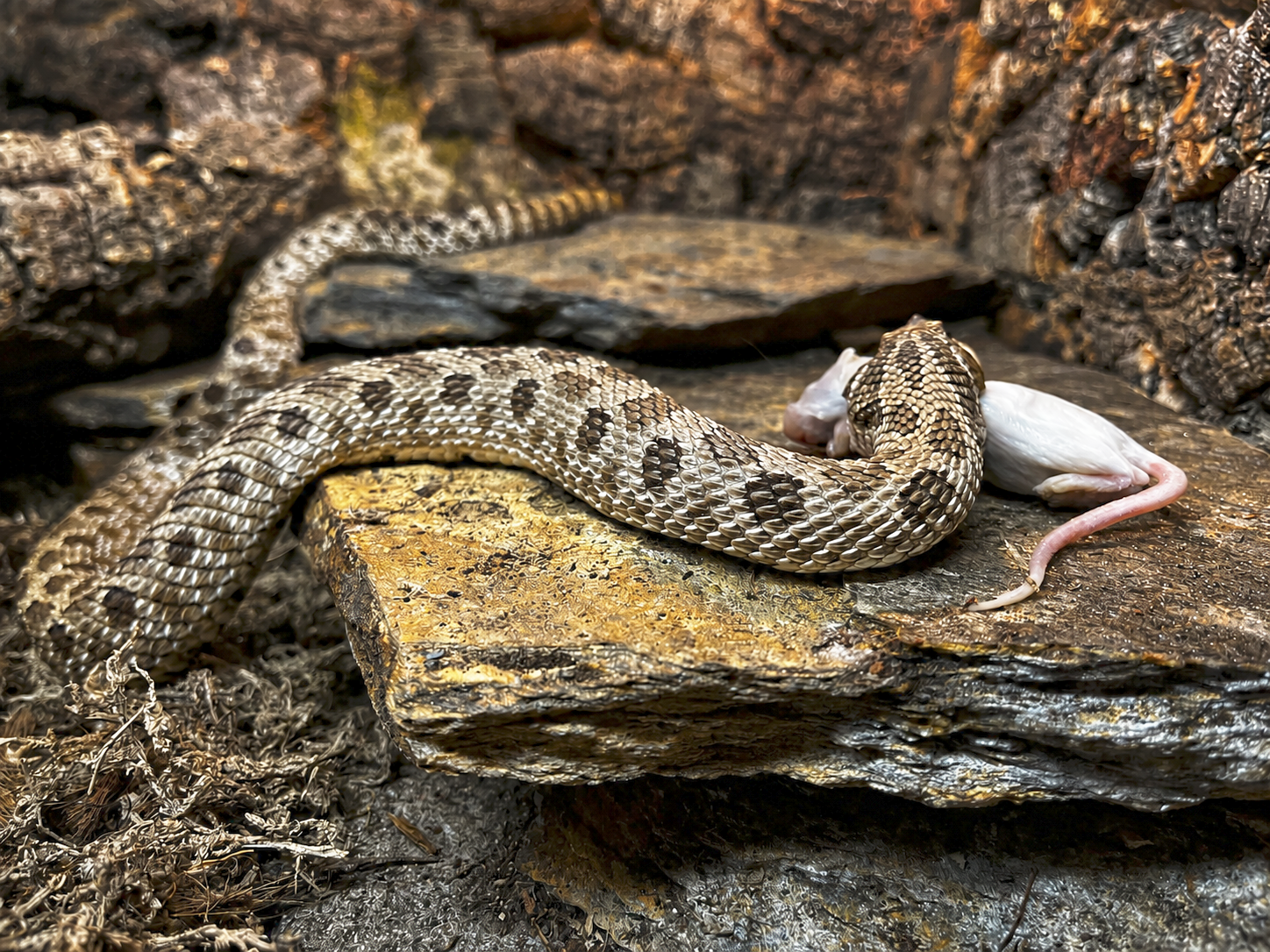
Use feeding tongs — long enough that a confident strike from the snake doesn't reach your fingers. This also prevents your hand scent from associating with feeding, which reduces accidental strike risk during regular handling.
Present prey just in front of the snake's head. A slight, irregular movement can trigger a strike response in a snake that's showing interest but hasn't committed. Don't overdo it. Frantic movement can have the opposite effect.
If tong feeding isn't producing results, try leaving the prey item in the enclosure and leaving the room. Many snakes that won't strike in front of an observer will eat reliably when left alone. Check after a few hours and remove any uneaten prey promptly. Leaving prey overnight creates bacterial contamination risk.
Do not handle your snake for 48 hours after feeding. Digestion requires stable warmth and minimal disturbance, and a snake handled too soon after a meal is more likely to regurgitate.
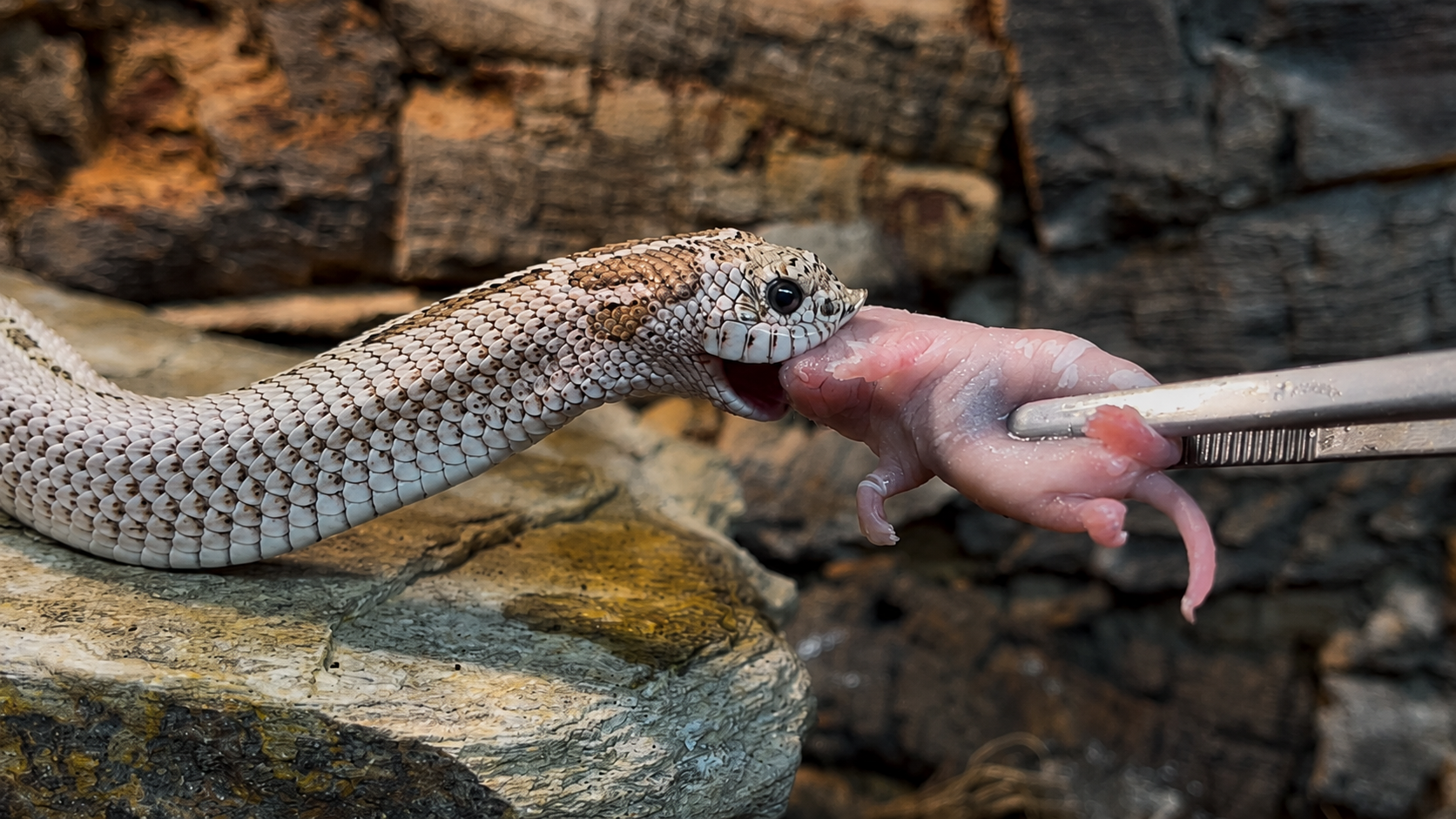
Feeding refusals are common in hognose snakes and have many possible causes. Before trying feeding techniques, verify that the enclosure conditions are correct (temperature, humidity, and adequate hides). A snake that doesn't feel secure, or whose enclosure is too cool, won't eat regardless of what you offer.
If conditions are correct, work through these approaches in order:
Prey size: try going smaller. A more manageable prey item lowers the threshold for a feeding response.
Scenting: rub the prey item on a piece of fish (tuna, salmon, or sardine work well) to transfer a scent the snake's instincts recognize. Frog and lizard scent products are also available commercially and can be more effective for some individuals.
Brain scenting: for persistently reluctant feeders, making a small incision at the skull of the prey item to expose brain tissue is one of the most reliable feeding triggers available. The neural tissue scent is a powerful stimulus for many snake species.
Prey presentation: try leaving prey in the enclosure unattended, or warming it to body temperature before offering, or feeding in a small, dark separate container.
Live prey (last resort before force feeding): a live pinky mouse — small enough to pose no injury risk — can trigger feeding responses that frozen-thawed prey doesn't. Supervise completely and remove if not eaten within 20 minutes.
For a detailed walkthrough of feeding challenges, our dedicated picky eater guide covers each technique in depth.
A snake that has just moved to a new home is dealing with significant stress: new environment, new smells, new temperatures, everything unfamiliar. The instinct to handle a new animal immediately is understandable and almost universally counterproductive.
Give a new hognose at minimum one week (ideally two) before any handling begins. During this time, maintain consistent conditions and minimize disturbances. Wait until the snake has eaten at least once before the first handling session. A successful first feed indicates that the animal is comfortable enough in its environment to engage in normal behavior. A meaningful threshold.
Approach from the side rather than directly above. An overhead approach triggers a prey response in many snakes. To a snake, something large descending from above is a predator. A side approach is less alarming and allows the snake to read you before contact is made.
Support the body fully. A snake that's dangling from a single point is an uncomfortable snake. Both hands should be involved, one supporting the midsection, one under the forward portion of the body. Allow the snake to move through your hands rather than gripping it; gentle containment rather than restraint.
Move slowly and deliberately. Sudden movements startle snakes and trigger defensive responses that don't need to be triggered. The more predictable your handling is, the faster trust develops.
Never grab by the tail. It's stressful for the snake, causes defensive responses, and can cause injury.
Start with short sessions, five to ten minutes, a few times per week. Build gradually based on how the snake responds, not on a fixed schedule. The snake's behavior is the guide: a snake that's calm, moving with relaxed exploratory energy, and not attempting to escape is comfortable. One that's constantly trying to get away, musking, or defensively posturing has had enough.
Some hognose snakes settle into handling quickly. Others take months. Both are normal. Patience and consistency produce results that rushing doesn't.
Hissing and flattening: the snake puffs up, spreads its neck, and hisses. This is the first tier of the defensive display. Stay calm, move slowly, and don't retreat dramatically. Overreacting reinforces the behavior by confirming that it works.
Musking: releasing a foul smelling musk from glands near the tail. Unpleasant but harmless. Common in hatchlings and juveniles and usually diminishes with regular handling.
Closed mouth striking: a bluff strike that makes contact with a closed mouth. More alarming than harmful.
Playing dead (thanatosis): the snake rolls onto its back, goes limp, opens its mouth. This is a last resort display. Give the snake a moment to settle rather than continuing to handle. An animal in full thanatosis is maximally stressed and needs space, not continued interaction.
Tail rattling: rapid vibration of the tail against substrate, producing a rattling sound designed to startle potential predators. Common in younger animals. Purely behavioral. There is no venom delivery mechanism in the tail.
These are easy to confuse, particularly in hungry animals or around feeding time. A snake oriented toward movement with focused, forward attention and tongue flicking is reading something as potential prey, this is a feeding response. A snake that's puffed up, hissing, and facing away from you is displaying defensively.
The practical implication: wash hands before handling, particularly if you've been handling prey items or other animals. Don't handle at feeding time or immediately after placing prey in the enclosure. Use feeding tongs, not hands, for all prey delivery.
Shedding (technically called ecdysis) is how snakes grow. The outer skin layer is periodically replaced in its entirety, revealing the new skin beneath. In young, rapidly growing hognose snakes, this may happen every few weeks. In adults, three to four times per year is typical.
The first sign of an approaching shed is usually the eyes. They take on a cloudy, bluish appearance as fluid accumulates between the old and new skin layers. This is called being "in the blue." Overall coloration may dull simultaneously. The snake often becomes more reclusive, may refuse food, and tends to be more reactive to handling because the cloudy eyes genuinely impair vision.
After several days in blue phase, the eyes often clear before the actual shed occurs. This clearing can look like the shed has resolved, but it hasn't — the shed is imminent.
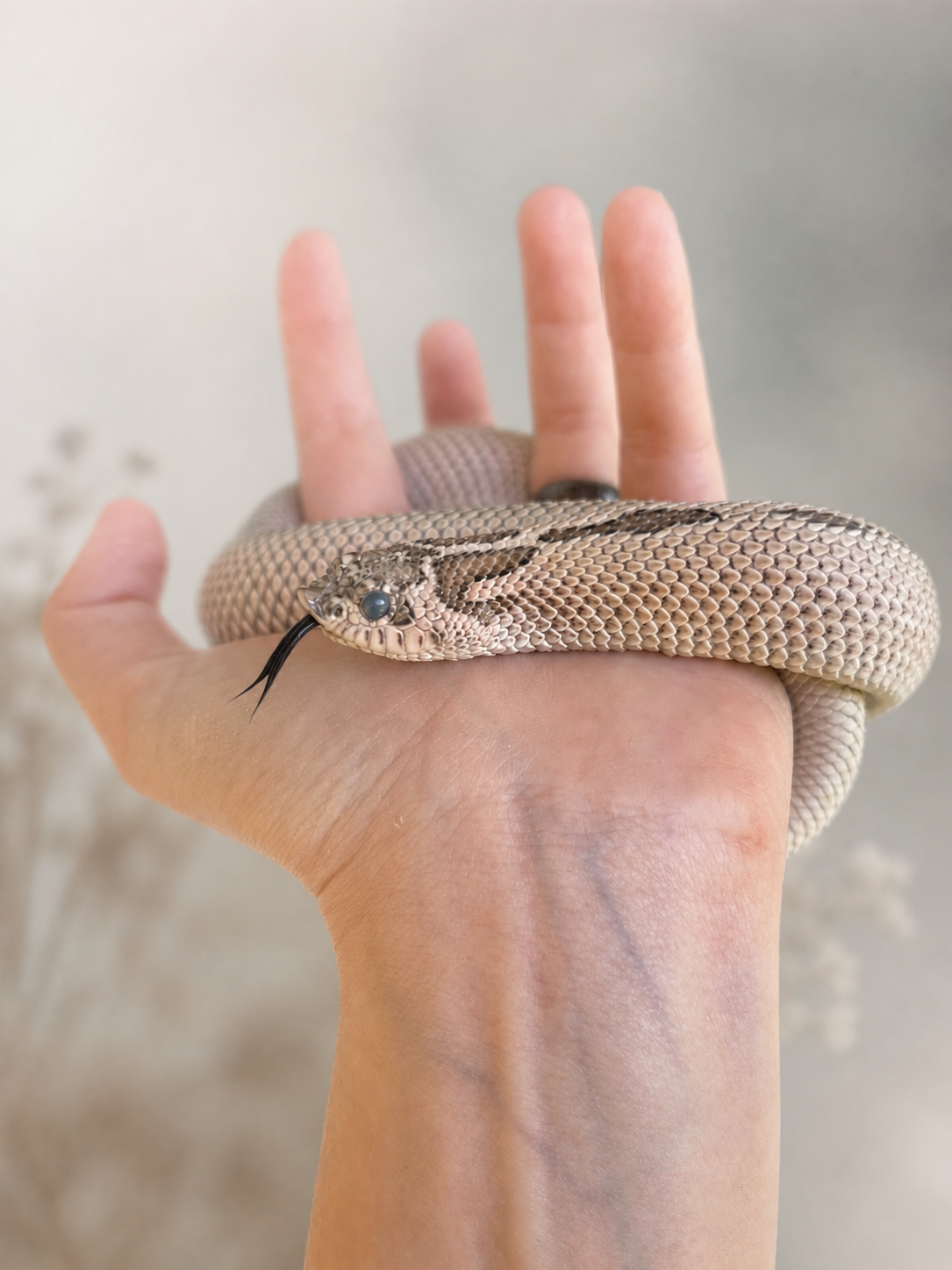
The snake rubs its snout against rough surfaces to loosen the skin around the lips and nose, then works its way forward while the old skin peels back, turning inside-out. In a healthy snake with appropriate humidity, the shed comes off in a single continuous piece including both eye caps.
If the shed takes more than 24 to 48 hours of active effort without completing, something is interfering, most commonly insufficient humidity.
Always examine a completed shed before disposing of it. Confirm that it's full length, that both eye caps are present (two small circular pieces at the head end, slightly more opaque than the surrounding skin), and that the tail end tapers to a complete point. A missing eye cap means retained spectacles on the snake's eyes. Check immediately under good light. Retained skin at the tail tip can restrict blood flow and, left through subsequent sheds, can cause the tail tip to die.
If your snake has retained skin after a shed attempt, a warm soak (shallow water at 28–30°C for 15 to 20 minutes) is the first response. Retained patches will often come away on their own or with very gentle assistance from a damp cloth after soaking.
Gentle is the key word. Skin that requires real force isn't ready to come off. Forcing it risks injuring the new skin beneath. If soaking doesn't resolve retained eye caps, consult a reptile vet rather than attempting to remove them without guidance.
Repeated incomplete sheds over multiple cycles indicate a husbandry problem — most commonly humidity too low, dehydration, or inadequate rough surfaces to rub against.
Knowing what healthy looks like is the foundation of catching problems early. A healthy western hognose snake is alert and responsive when disturbed, moves with purpose during active periods, has clear eyes (outside of pre shed), eats consistently, produces regular waste with a formed dark fecal component and separate white or cream urates, and maintains stable or increasing weight over time.
Weight tracking is one of the most valuable health monitoring tools available to keepers and costs almost nothing with a basic digital scale. Weigh monthly for healthy established animals, weekly for hatchlings or any animal you have concerns about. Record every measurement. A snake that's eating and still losing weight, or dropping weight between meals, is telling you something important that behavioral observation alone might not reveal.
One of the most common health issues in captive snakes, and almost always linked to husbandry conditions — sustained temperatures that are too low, humidity that's consistently too high, or a combination of both that gradually compromises immune function.
Signs: clicking or wheezing sounds during breathing, open-mouth breathing, head held at unusual angles, excess mucus around the mouth or nostrils, lethargy. In advanced cases, visible discharge or bubbling when the snake breathes.
Response: act the same day symptoms are noticed. Move the snake to a clean, simple enclosure with a consistent warm spot maintained around the clock, remove the open water dish to reduce humidity (offer water manually daily instead), and contact a reptile vet. Respiratory infections do not resolve on their own — they progress. Early intervention is significantly more effective than late intervention.
External parasites (mites): tiny dark specks moving on the snake or in the enclosure, particularly around the eyes, under scales, and in water dishes. Mites cause chronic stress, spread disease, and can affect feeding and shedding. Treat with reptile-safe mite treatment and thoroughly clean and disinfect the entire enclosure and everything in it.
Internal parasites: often produce loose, liquid, or unusual stool; unexplained weight loss despite eating; or partially undigested prey in waste. Diagnosis requires a fecal exam from a reptile vet. This is why a baseline fecal exam during quarantine of any new animal is worth doing — catching parasites early is straightforward; managing a parasite issue that's been developing for months is not.
Covered in detail in the shedding section above. The short version: retained eye caps and retained tail tip skin are the two locations that require prompt attention. Both respond to warm soaking as a first intervention. Both warrant vet involvement if soaking doesn't resolve them.
Infection of the mouth and gums. Signs include swollen or reddened gum tissue, pus or unusual discharge in or around the mouth, and loss of appetite. Causes include physical injury to the mouth, poor enclosure hygiene, and immune suppression from suboptimal husbandry.
Mouth rot does not resolve without treatment. Veterinary care — typically antibiotics — is required. Keep the enclosure clean and the snake's immune system supported through appropriate temperature and nutrition.
Relevant for breeding females. A gravid female who fails to lay eggs, or who lays some and then stalls, may be experiencing dystocia — the inability to pass eggs on her own. This can result from eggs that are too large, calcium deficiency, dehydration, or physical obstruction.
A warm soak is the appropriate first response when laying stalls. A female who hasn't made progress for 12 to 24 hours after beginning the laying process, or who passed one egg and stalled, should be seen by a vet promptly. Dystocia can be fatal if left untreated. We've dealt with this in our own animals and written about it in detail — the experience is covered in Bajsa's surprise second clutch post.
A snake that eats consistently but loses weight, or whose waste contains significantly undigested material, may have an underlying digestive condition. This is one of the more difficult health issues to diagnose because the early signs — slightly loose stool, modest weight fluctuation — can be easy to attribute to other causes.
If the pattern persists over multiple weeks despite correct husbandry, a vet visit with a fecal exam is the appropriate step. Some digestive conditions — including inflammatory conditions of the intestinal lining — don't produce obvious symptoms until they're significantly advanced, and by that point treatment options are more limited. We lost one of our own snakes, Julija, to lymphoplasmacytic enteritis — a chronic intestinal inflammation that we couldn't diagnose until pathology after her death. Weight tracking throughout her illness was the clearest indicator that something was wrong even when other signs were subtle.
Reptile medicine is a specialized field. Not every vet has meaningful experience with snakes, and finding a reptile-experienced vet before you need one — not during an emergency — is worth doing proactively. Ask specifically about their experience with reptiles and snakes when you contact a new clinic.
See a vet promptly for:
A note on observation: reptiles are prey animals, and prey animals conceal vulnerability. By the time a sick snake is showing obvious symptoms, the condition has often been developing for some time. Consistent daily observation — knowing what normal looks like for your specific animal — is the practice that catches problems early. Weight tracking is the most objective tool available. Everything else depends on knowing your individual animal well enough to notice when something has changed.
This guide covers the foundations — the things that matter most across the life of any western hognose snake in captivity. But care guides are reference points, not substitutes for observation. Every snake is an individual, and the most important thing you can do is pay attention to yours specifically: what's normal for them, what changes, and when those changes mean something needs to adjust.
For more on any of the topics covered here — breeding, specific health experiences, morph genetics, feeding challenges — the rest of this site goes deeper on all of it. The care guide is where the knowledge lives; the blog is where the experience lives. Both matter.