
Two weeks. That's how long the hatchlings spent in their initial setup. A simple, stripped-down box with a damp paper towel, a small water dish, and minimal interference from us. And honestly, that simplicity was the point. Freshly hatched snakes don't need complexity. They need warmth, humidity, and time to finish absorbing their yolk, complete their first shed, and stabilize before anything else is introduced.
By the two week mark, all 16 had shed at least once, were moving around confidently, and were ready for the next step. It was time to move them into the rack system.
If you're newer to breeding or keeping multiple snakes, a rack system might be unfamiliar, so it's worth explaining what it actually is and why it's the standard choice for housing hatchlings and juveniles at scale.
A snake rack is essentially a shelving unit purpose built for reptile keeping. Instead of individual enclosures, it uses a series of uniform plastic tubs that slide in and out like drawers. Each tub sits on a rail, and a heat tape or heat pad runs along the back of each row, warming a specific area of each tub from below. A thermostat — critical, not optional — regulates the temperature automatically, so every tub in the rack maintains a consistent thermal environment without constant manual adjustment.
The advantages over individual enclosures at this stage are significant. Rack tubs are easier to clean, easier to monitor, and far more space-efficient when you're managing 16 animals at once. The enclosed, dark interior of a tub also tends to make hatchlings feel more secure than an open glass enclosure. Snakes are prey animals, and a small, enclosed space mimics the kind of shelter they'd naturally seek out.
Many keepers notice that hatchlings housed in tubs settle faster and are calmer during handling than those kept in more exposed setups.
The warmth from the heat pad replicates the ground level warmth that western hognose snakes seek out in the wild — particularly important for digestion and general metabolic function in young animals.
With 16 hatchlings going in as pairs, we needed eight tubs total. Each one got the same basic setup: a small water dish, a hide on the cool side, and the heat pad covering roughly one third of the floor space at the back. This creates a simple thermal gradient. Warmer at the back near the heat source, cooler toward the front, so each snake can regulate its own body temperature by choosing where to sit.
The thermostat probe sits inside a reference tub and keeps the warm side surface temperature steady at around 30–32°C (86–90°F). The cool side of the tub sits at ambient room temperature, which in our space runs around 22–24°C (72–75°F). Both ends of that gradient matter. A snake that can only access one temperature can't thermoregulate properly, which affects everything from digestion to immune function.
Each tub got labelled before any snake went in. With 16 animals, several of which share the same morph, keeping detailed records from day one isn't optional. It's how you avoid a situation weeks down the line where you genuinely can't tell who is who. We track each pair by their individual markings: subtle differences in pattern, the precise distribution of color, small details that become easier to read the more time you spend with them. Right now it's a fun challenge. In a few months, as they develop more distinctly, it'll be much easier.
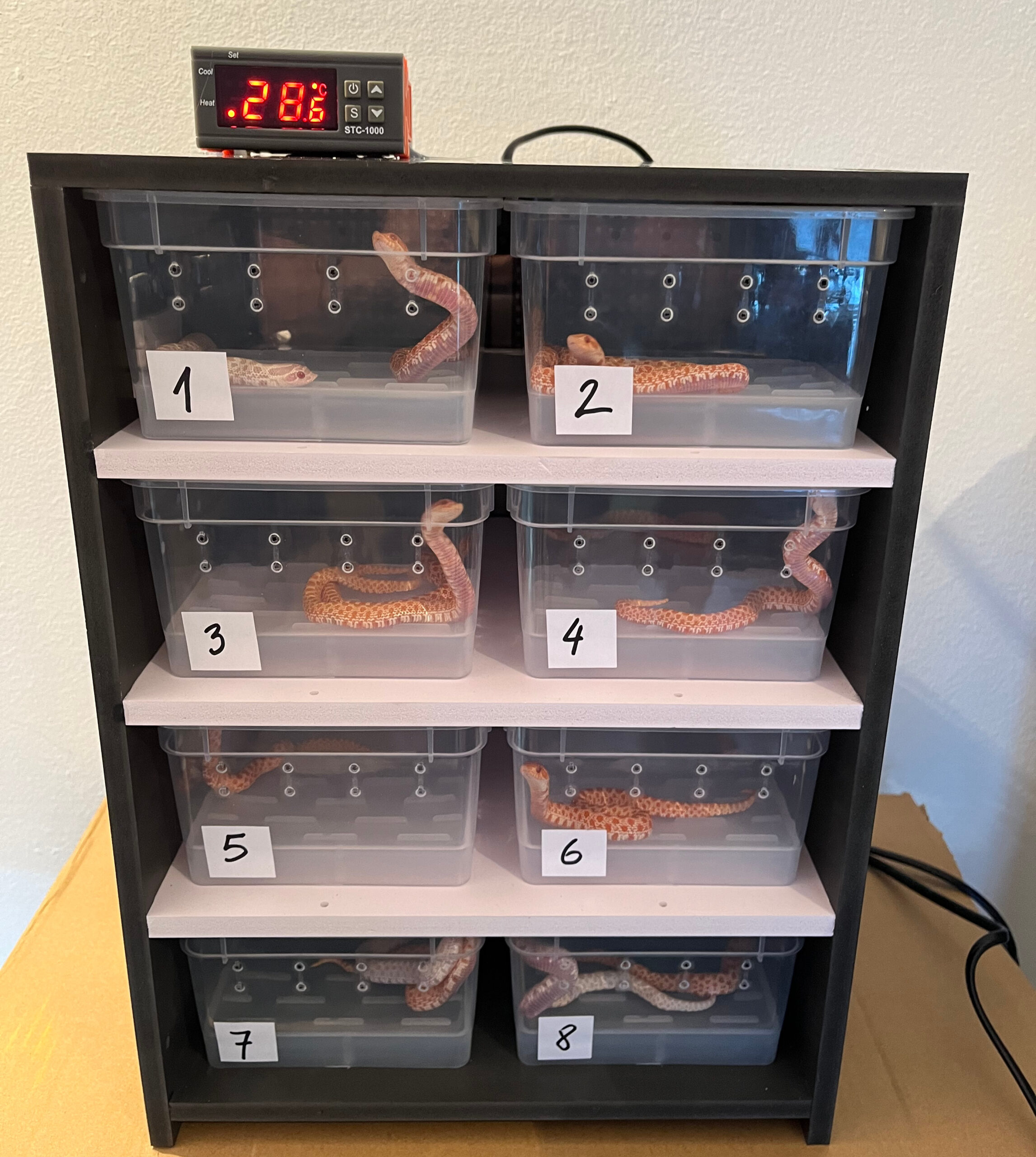
The actual transition was low key by design. Moving day for hatchlings shouldn't be an event. The goal is minimal stress, quick handling, and getting them settled as fast as possible.
We moved each pair together, placing them directly into their assigned tub with everything already in place before they arrived. Within minutes of being set down, most of them had investigated the hide, found the warm end, and settled. Hatchlings adapt to new spaces quickly when the conditions are right — the warmth does a lot of the work. A snake that can find its preferred temperature and a secure place to hide is a snake that stops being stressed relatively fast.
It was also the first real opportunity to observe them side by side and appreciate how different they already look from one another. The three snow morphs are immediately distinct — bright white with pale pink eyes, already striking even at two weeks old. The albinos vary more subtly between individuals in pattern and the depth of their orange-yellow coloring. Even within the same morph, no two are identical, which is one of the things that makes spending time with a full clutch genuinely interesting rather than repetitive.
Housing hatchlings in pairs is a common practice in the early weeks, and it works well with western hognose snakes, which don't show the territorial aggression toward clutchmates that some other species do at this age. There's some evidence that communal housing in early life can reduce stress responses in young snakes, and practically speaking, it also halves the number of tubs you need to manage during the most labor-intensive period.
That said, pairs aren't a permanent arrangement. As the hatchlings grow and approach their first feeding responses, we'll be watching for any signs of competition at feeding time — one snake consistently outcompeting the other, or worse, accidental co-ingestion, which can happen when two snakes strike at the same prey item from opposite ends. When that becomes a risk, or when size differences between pairedmates become significant, they'll move to individual tubs.
For now, they seem genuinely unbothered by each other's company. Most pairs have been found curled up together under the hide, which at minimum suggests neither is causing the other stress.
The rack move is done, the hatchlings are settled, and the next major milestone is the one that every hognose keeper thinks about more than almost anything else in the early stages: the first feed.
Western hognose hatchlings have a reputation. Some take to feeding immediately and never look back. Others are picky, dramatic, and seemingly personally offended by the presence of a pinky mouse. Getting hatchlings established on a consistent feeding schedule is its own topic — one with enough nuance and technique involved that it deserves a full post of its own, which is exactly what's coming next.
For now: 16 hatchlings, all settled, all healthy, all in their new homes. Two weeks in, and so far so good.
And as always - stay happy, stay curious, and give your hoggie a gentle boop from me.
You must be logged in to post a comment.

No comments yet — be the first.