
There's a specific kind of nervous energy that comes with first feeding day. It's not quite anxiety. You know intellectually that most hatchlings will eat eventually, that a refusal on day one isn't a crisis, that the process takes the time it takes. But knowing that doesn't fully stop you from hovering, second guessing your technique, and quietly willing each tiny snake to just please strike at the pinky.
We knew this feeling well from last year's clutch, which tested our patience considerably before everyone was reliably feeding. So when July 23rd arrived and it was time to offer the first meals to Bajsa and Albi's 16 hatchlings, we went in prepared for a long session and ready to be flexible.
What actually happened was better than we expected.
Before getting into how the day went, it's worth explaining why first feeding carries so much weight in hatchling management — because it goes beyond just getting food into a small snake.
A hatchling that takes its first meal confidently is demonstrating several things at once: that its feeding response has properly triggered, that it's healthy enough to hunt and swallow, and that it's comfortable enough in its environment to eat. All of those are meaningful data points in the first weeks of life. Conversely, a hatchling that repeatedly refuses food — not once or twice, but consistently over weeks — can fall behind in weight and development quickly, and the gap between a thriving hatchling and a struggling one widens faster than most people expect at this size.
Western hognose snakes have a reputation among breeders for being variable feeders as hatchlings. Some are bold from the start and will strike at almost anything. Others are hesitant, defensive, or simply not quite ready. Particularly if they're naturally smaller or slower to develop. The first feeding session gives you a read on where each animal sits, and that information shapes how you manage each one over the weeks that follow.
Every clutch has an outlier, and ours was a hatchling weighing just 4.5 grams, noticeably behind the 6 to 7 gram range of its siblings. It moved more slowly, looked slightly less filled out, and based on its size at hatch, we suspected it may not have fully absorbed its yolk before emerging. Not uncommon, not necessarily a long term problem, but something to watch closely from the beginning.
We started with this one deliberately. Smaller or underdeveloped hatchlings tend to have less energy reserves to draw on, which means a slower start to feeding can have a bigger impact on them than on a larger clutchmate. Getting food into the smallest animal first, while our attention was fresh and unhurried, felt like the right call.
For hatchlings who are slower to respond to a standard prey item, one of the most effective techniques is brain-exposing the pinky which means making a small incision at the skull to release the scent of brain matter. It's not particularly pleasant to describe, but the biology behind it is straightforward: the smell of neural tissue is a powerful trigger for the feeding response in many snake species, particularly those that are naturally hesitant or still developing their hunting instincts. The scent bypasses the need for the hatchling to be fully "switched on" and often gets a strike when nothing else will.
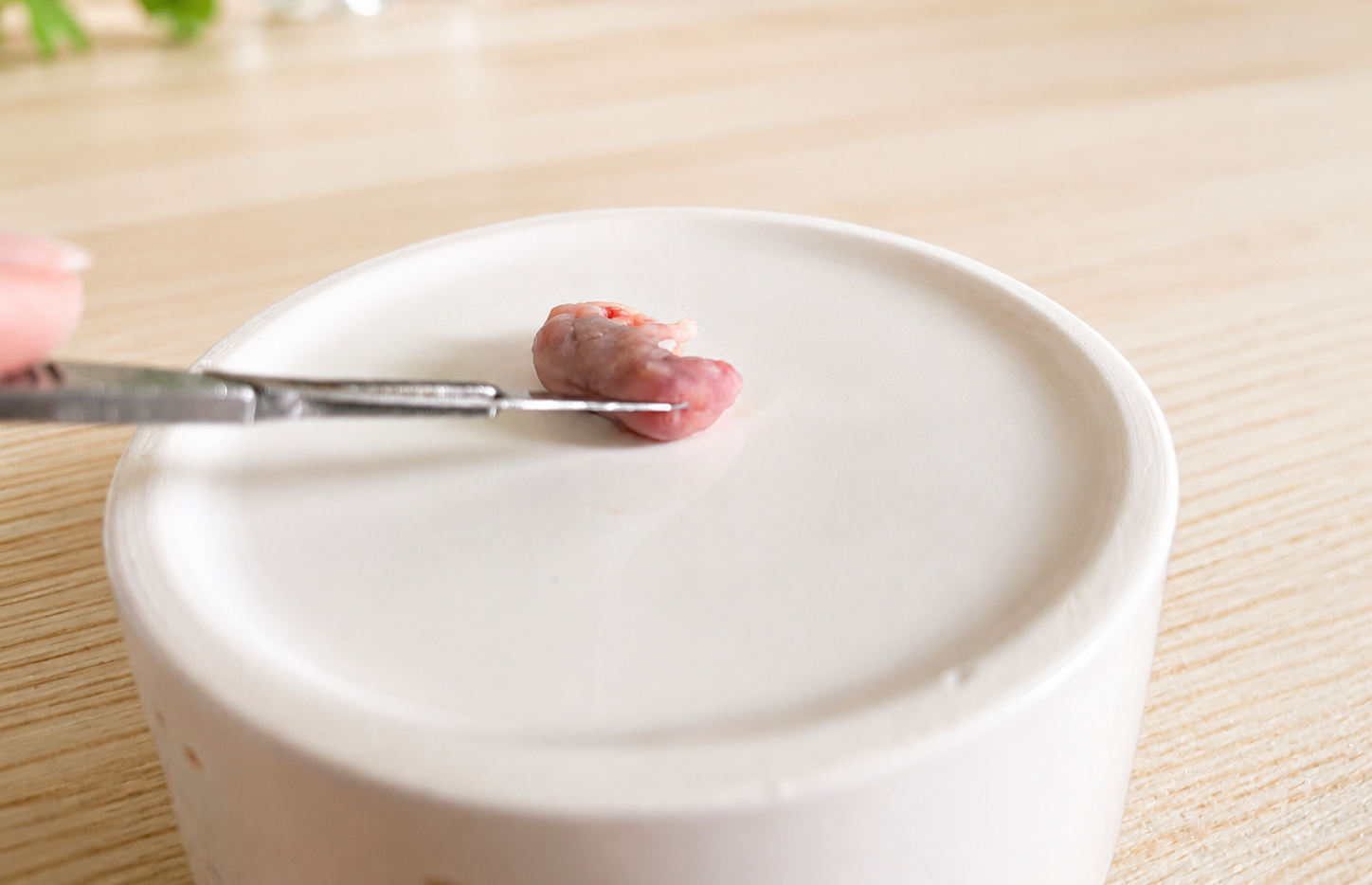
We offered the prepared pinky to our smallest hatchling, and it struck almost immediately. Not tentatively — with real commitment. We watched it work through the entire prey item slowly and steadily, and if we're being honest, there was a moment where we both just stood there quietly and watched, because sometimes that's the only appropriate response.
Four and a half grams. Took its first meal without hesitation. A small snake and a genuinely outsized moment.
With the smallest one fed, we moved through the remaining 15 hatchlings one by one.
Twelve of them ate without any intervention at all. Pinky offered, pinky struck, pinky swallowed. Clean, fast, textbook. No scenting, no brain exposure, no wiggling the prey item around to simulate movement, no waiting through several minutes of apparent disinterest before a tentative strike. Just six grams of hatchling snake doing exactly what six grams of hatchling snake is supposed to do.
For anyone who spent last season coaxing reluctant feeders for weeks on end, watching twelve out of sixteen hatchlings eat confidently on their first offer is the kind of result you don't fully trust until you've seen it with your own eyes.
Four hatchlings didn't eat — which at this stage is completely unremarkable. Refusal on the first offer can reflect a dozen different things: the hatchling isn't quite ready, the timing was slightly off, it's between sheds, or it simply needs a few more days to settle fully into its new environment. None of those are problems. They become a problem only if refusal continues over multiple weeks with no progress, and we're nowhere near that point.
Those four will be offered again in a few days, and we'll adjust our approach based on how they respond. Whether that means scenting the prey, trying a slightly different prey size, offering at a different time of day, or simply waiting. There's no single formula that works for every hatchling, which is part of what makes this stage genuinely interesting to manage rather than just mechanically repetitive.
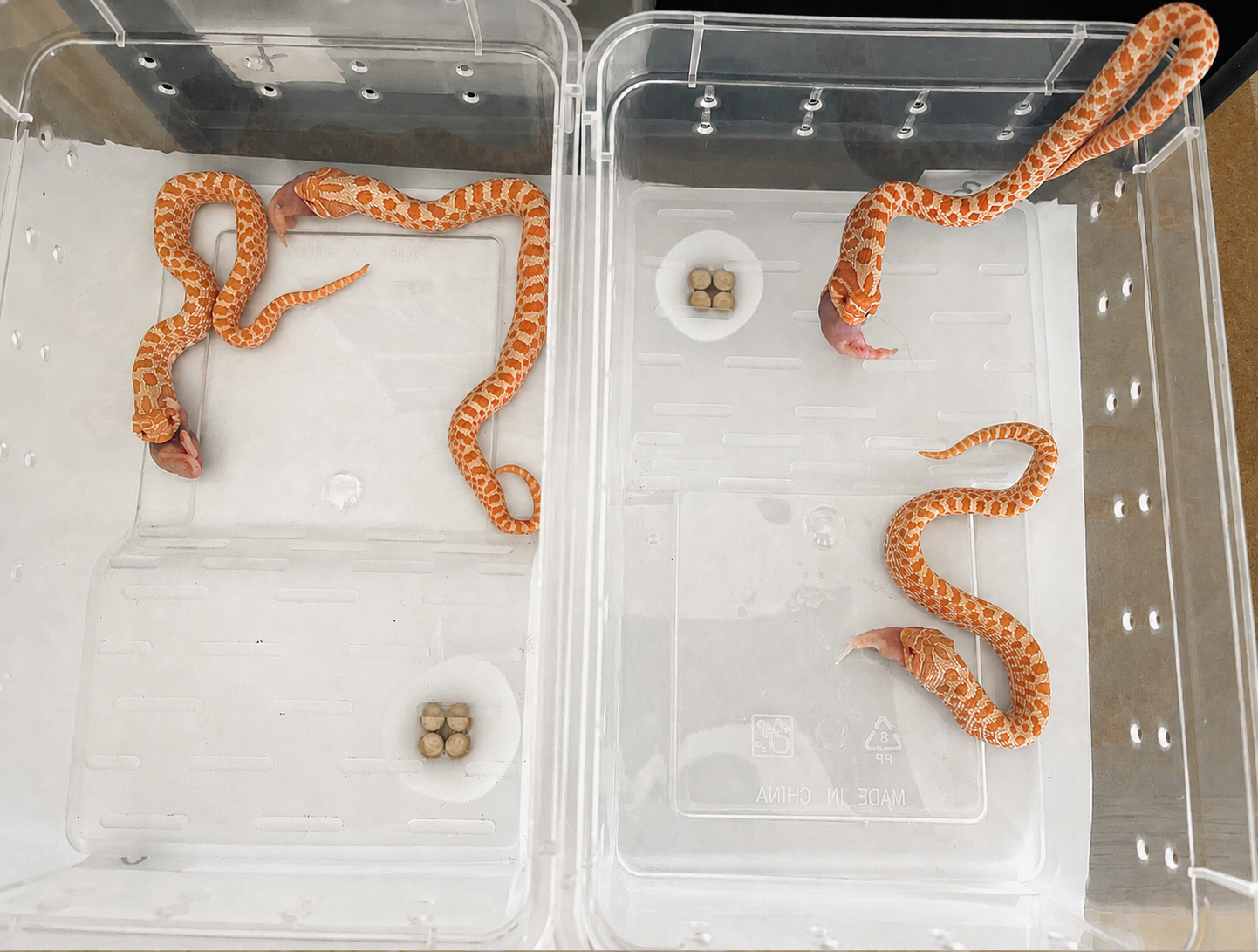
With 16 animals eating at different rates and potentially needing different approaches, record-keeping at this stage isn't optional, it's essential. We track each feeding session per individual: which pair, which animal within the pair, whether they ate, what size prey item, any technique used, and current weight. That data becomes increasingly valuable over time as patterns emerge — which animals are consistent feeders, which tend to skip around shed cycles, which might need a permanent prey adjustment.
Weight tracking alongside feeding records is particularly useful in the early weeks. A hatchling that's eating but not gaining weight, or losing weight between feeds despite eating, is telling you something important that wouldn't be obvious from a feeding record alone.
With 12 of 16 eating and the four holdouts being given time and a second offer, the immediate focus is consistency. One successful meal is a great start. Two or three consecutive feeds with the same animal is when you start to feel genuinely confident about where they're headed.
We'll also be keeping an eye on the smallest hatchling specifically. One meal is a win, but what we're looking for is whether it continues to feed reliably and whether its weight begins to close the gap with its siblings. Hatchlings that start small can and do catch up, but it tends to happen through consistent feeding over weeks, not overnight.
The next milestone after first feeding is getting everyone onto a regular schedule: a prey item every five to seven days, adjusted in size as they grow. Once that rhythm is established and everyone is eating reliably, we can start thinking about the longer term picture. Individual housing, growth tracking, and eventually, the question of where each of these 16 snakes will go.
For now though, twelve out of sixteen on the first offer, the smallest one leading the way. We'll take that.
And as always - stay happy, stay curious, and give your hoggie a gentle boop from me.
You must be logged in to post a comment.

No comments yet — be the first.