
Julija came to us from Vienna, together with Romeo. The plan was simple and optimistic in the way that reptile keeping plans often are: raise them both, watch them grow, and one day pair them. It's the kind of forward-looking thinking that makes this hobby rewarding. You're not just keeping animals, you're thinking about their futures.
She was around six months old when she arrived. An Arctic Conda, small and delicate-looking in the way that young hognoses often are, weighing just 13 grams. Nothing about her suggested she would be anything other than straightforward. She went into quarantine with Romeo as standard practice — keeping new arrivals separate from the rest of the collection while you monitor their feeding, behavior, and health, making sure nothing hidden comes in with them.
Both of them ate immediately. Both of them settled quickly. Julija started growing at exactly the rate you'd expect, and after a few months of quarantine with no concerns, she joined the collection properly.
For a while, everything was fine.
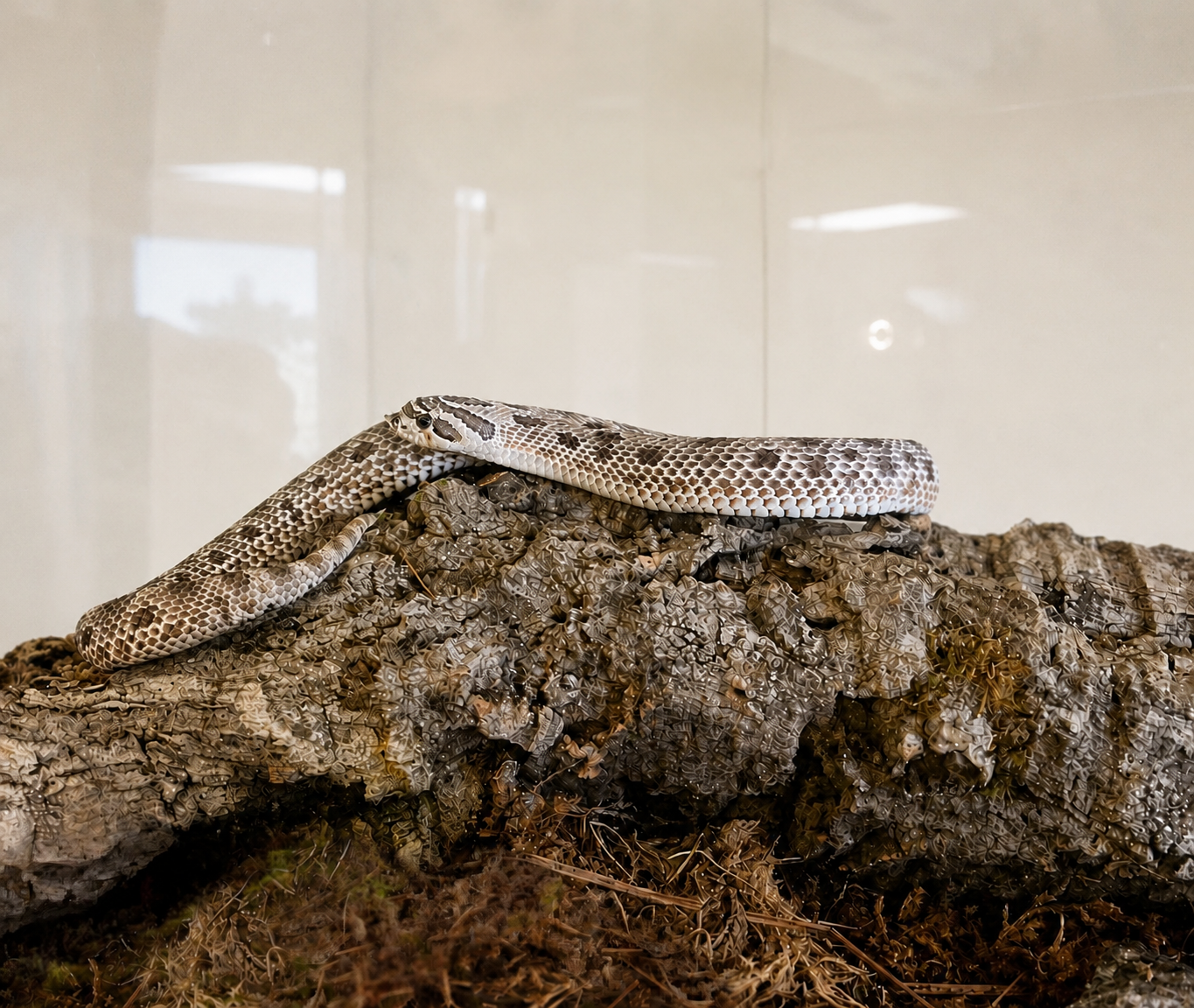
About a year in, something shifted. Not dramatically, there was no single moment that obviously signaled a problem. Just a gradual accumulation of small things that individually could be explained away, but together formed a pattern that kept nagging at the back of my mind.
Her stool became more liquid than it should be. Her weight, which had been climbing steadily, stopped progressing. She was still eating. Still showing interest in food, still striking reliably, still behaving in every visible way like a healthy snake. But something wasn't tracking correctly, and the longer it went on, the harder it was to dismiss.
The obvious first thought was parasites. We sent samples for testing.
Everything came back negative.
That result is supposed to be reassuring. In this case, it wasn't because it meant we still didn't have an answer, and the pattern continued regardless.
Over the following months, Julija's weight settled into a frustrating range: slow drops, small recoveries, slow drops again. She hovered between 45 and 50 grams without meaningful progress in either direction. The stool became more consistently liquid — still with solid elements, but surrounded by far more fluid than is normal for a healthy hognose.
For anyone unfamiliar with what healthy reptile waste actually looks like: in a western hognose snake, you're looking for two distinct components. A formed, darker section of actual fecal matter, and a separate white or cream colored chalky portion called urates (the reptile equivalent of excreted waste that mammals would pass as urine). The overall consistency should be relatively firm, with minimal liquid. Very liquid stool, frequent passing, or partially undigested content are all signals that something in the digestive system isn't functioning correctly.
What Julija was producing wasn't that. And it wasn't improving.
We ran more tests. We went to a vet. We repeated checks. Reptile medicine, even in areas with decent exotic veterinary access, is still a genuinely specialized field and sometimes, despite doing everything correctly, the tests don't give you what you need. Nothing came back with a clear answer. Nothing pointed to a treatable cause.
We tried what we could at home: probiotics, dietary adjustments, temperature modifications to support digestion. None of it changed the pattern in any meaningful way.
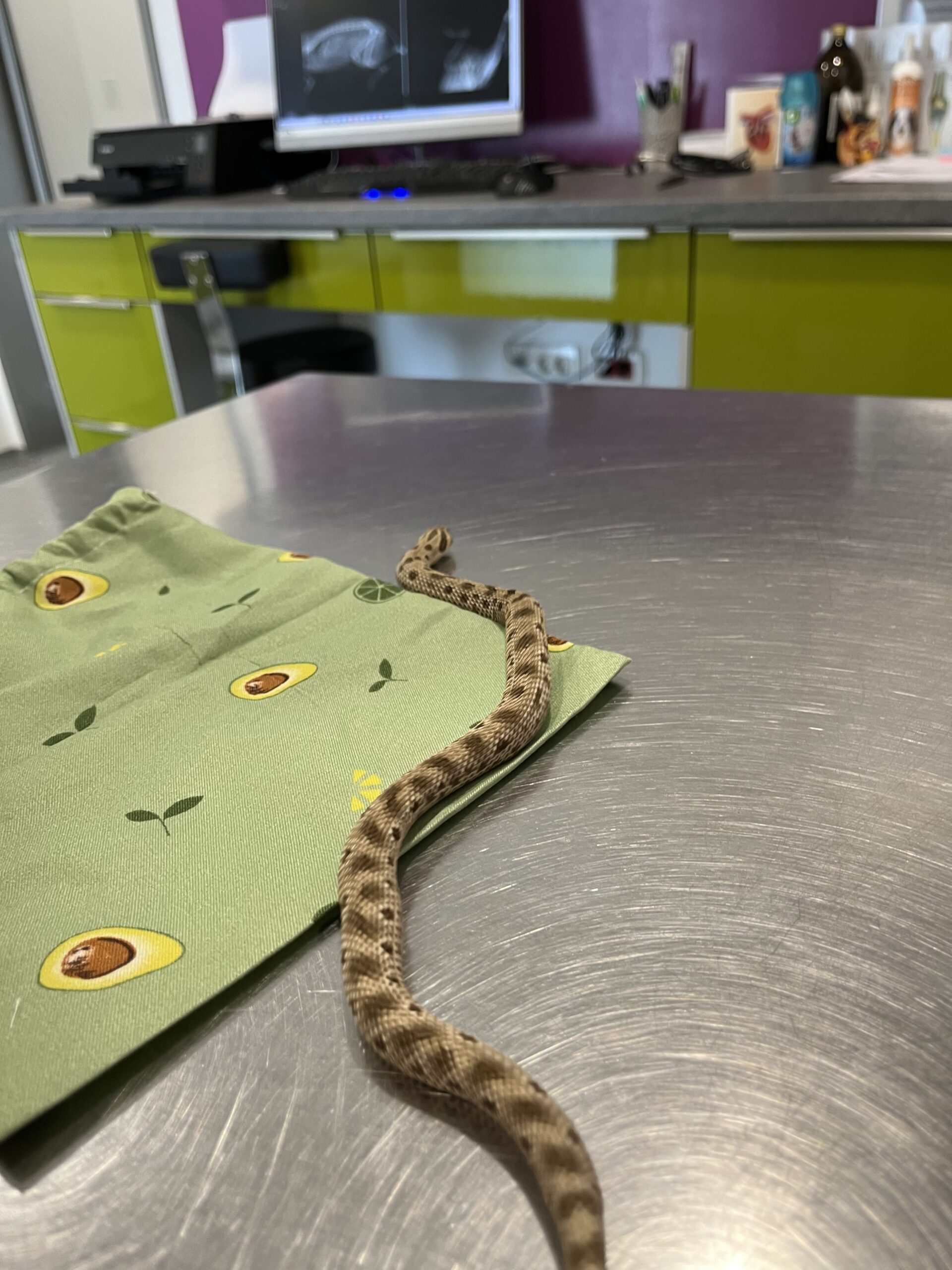
Toward the end of 2025, the deterioration became harder to watch and harder to rationalize.
Julija was still eating. She was always ready, always interested, always willing — that never changed. But it became increasingly clear that what went in wasn't staying in long enough to do anything. You could see partially digested prey in her waste. A meal that should have sustained her for several days was passing through her system in hours.
At one point, I offered a small pinky (3 to 4 grams, nothing excessive for a snake her size). She took it without hesitation and worked it past her mouth, and then her body simply couldn't move it further. Something in her esophagus had tightened to the point where swallowing had become mechanically difficult. The prey moved partway down, then slowly came back up. She tried again. It came back again. She tried a third time.
That stubbornness — that particular hognose refusal to give up on something — is one of the traits that makes these animals so compelling. In that moment, watching her keep trying, it was one of the hardest things I've witnessed with an animal in my care.
I had to remove the pinky with tweezers when it came up again. She would have kept trying indefinitely.
After that, it was clear: she could only manage prey in the 1 to 2 gram range. Tiny pinkies, sized for hatchlings. I moved to feeding her every two days, added egg yolk for additional calories, did everything I could think of to get more nutrition into her. She ate every time I offered. And she kept losing weight.
By December 2025, Julija was down to 35 grams. Then she went into shed.
In a healthy snake, a shed is unremarkable. In Julija's condition, it was a setback. She stopped eating completely through the cycle, which meant the already insufficient caloric intake dropped to nothing. I just hoped it would move quickly.
It did, at least. The shed came off in a single clean piece in early January, on her own, without assistance. A small thing to be grateful for amid everything else.
But the weight had dropped further during the break. And then came the moment I think about most when I think about those final weeks.
She ate in the morning. By that evening, the pinky had passed completely through her. Not regurgitated — passed. Fully, in a matter of hours. Her digestive system had deteriorated to the point where it was no longer absorbing anything at all. The food went in and came straight out, and she was running on nothing.
A couple of days later, I held her.
She was still flicking her tongue. Still aware of me, still tracking movement. That part of her was intact. But her body told a different story. Her spine was visible through her skin. There was no muscle left to speak of. When I held her, her tail hung straight down. She didn't have the strength to wrap it around my hand.
When a snake that normally investigates everything, that curls instinctively around any object it's placed on, can no longer hold itself up — that's not a question of whether. It becomes a question of when, and whether you're willing to let it go on any longer.
I wasn't.
On the morning of January 13th, 2026, we put Julija to sleep.
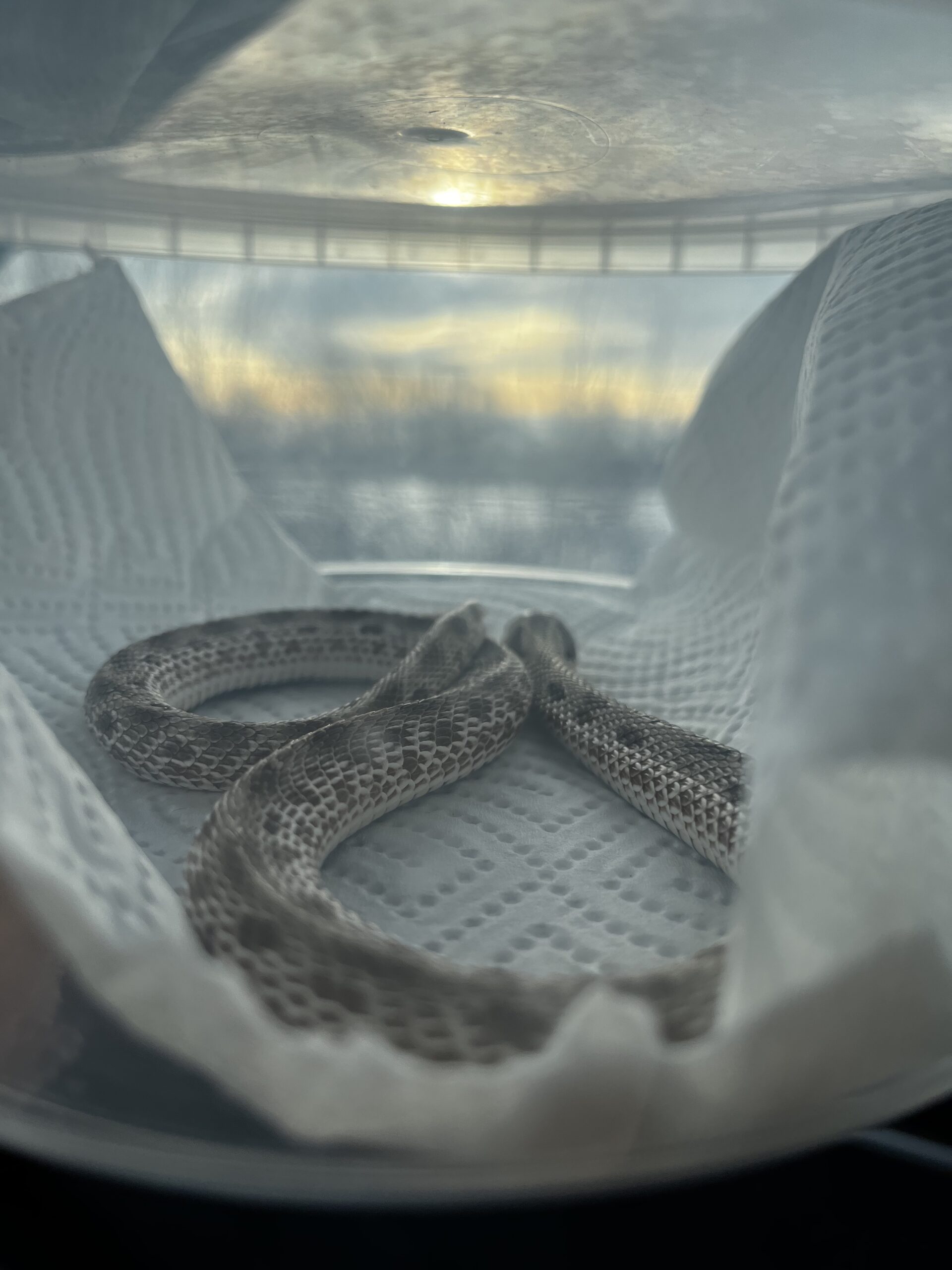
We chose to send her for pathology testing afterward. Not to second guess the decision, but because we have other snakes, and we needed to know whether whatever took Julija was something we should be concerned about for them.
The results came back months later: Lymphoplasmacytic enteritis with cachexia.

In plain terms: a chronic, progressive inflammation of the intestinal lining, in which the immune system attacks the gut continuously over time. The ongoing inflammation causes structural damage to the digestive tract, and once that damage is significant enough, the intestine can no longer absorb nutrients properly, regardless of how much the animal eats. The body begins consuming itself to compensate. That's the cachexia: severe, progressive muscle and weight loss that follows when caloric intake and absorption are no longer sufficient to sustain normal body function.
It explained everything we had seen. The liquid stool. The weight that wouldn't move. The eating that produced no growth. The late-stage deterioration that happened faster than anything we could keep up with. She wasn't failing to eat. She was eating consistently and reliably until almost the end. Her body had simply lost the ability to use what she gave it.
Julija was 3.5 years old when she died. She weighed 25 grams. A healthy western hognose female at that age would typically weigh somewhere around 200 grams.
This condition is difficult to detect early, because the early signs (mild digestive irregularity, modest weight fluctuation) are easy to attribute to other causes. By the time the pattern becomes undeniable, the damage is usually significant. There is no established effective treatment once lymphoplasmacytic enteritis has progressed to this stage.
Julija was not a difficult animal. She wasn't a puzzle or a project. She ate reliably, she behaved normally, she did everything right. And that's precisely what makes this particular kind of loss so hard to process, because there was nothing I could have done differently. No earlier intervention that would have changed the outcome. No mistake to identify and correct.
Sometimes animals get sick with things that can't be fixed, and they get sick through no fault of anyone's, and they decline despite everything done correctly on their behalf. That's a reality of keeping animals, but knowing it doesn't make it easier to sit with.
I think about the morning I had to remove that pinky with tweezers, and how she looked at me like she was ready to try again. That stubbornness. That willingness.
She had it until nearly the end.
Julija was a good snake. She deserved more time than she got, and I'm glad she had the time she did.
You must be logged in to post a comment.

No comments yet — be the first.