
Barely a week after the thrilling episode with Bajsa’s unexpected second clutch, we were greeted by another wave of excitement. The 16 eggs from Bajsa and Albi’s mating had reached day 57 of incubation, and it was clear that hatching was about to begin. And just like that, our incubator turned into a baby snake party—cute faces popping out, one after another!
During our morning check of the incubator, we were met with a delightful surprise—a tiny head poking out of one of the eggs! The hatchling was alert, flicking its tongue in and out, sensing the world for the very first time. It was pure joy.
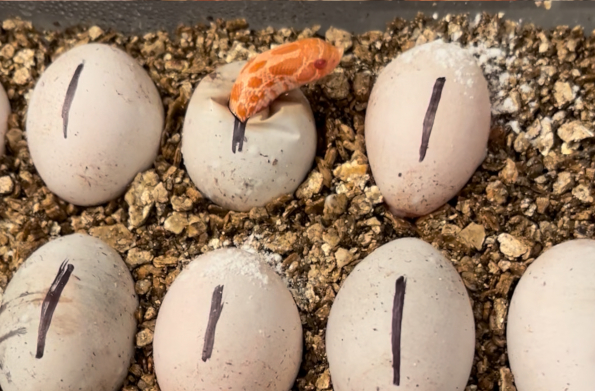
Knowing how important it is to let nature take its course, we gently closed the incubator and allowed the hatchlings to continue the process at their own pace.
By evening, several more hatchlings had joined the party, including our very first snow morph from this clutch!
Over the next day and a half, our little reptile nursery came to life. One by one, eggs began to pip, with tiny faces peeking out and slowly working their way free. By the morning of day 58, most had hatched—including three snow morphs, just as we had hoped.
It's essential to let them complete this process on their own, as they need time inside the egg to absorb the yolk, which provides crucial nutrients for their first days before they begin feeding.
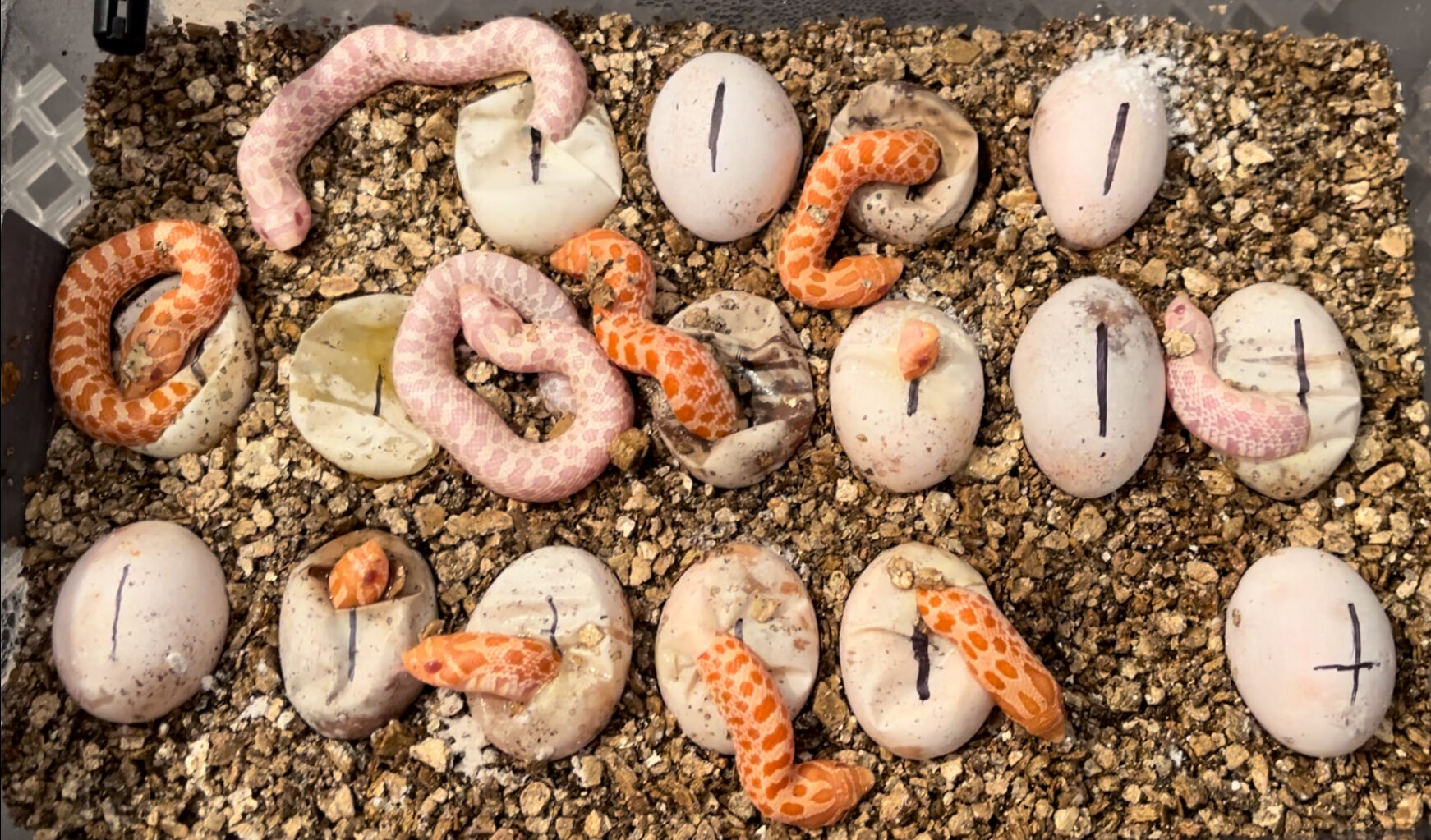
That afternoon, we noticed five eggs remained closed, with no signs of the babies cutting through the shells. In the wild, not all eggs hatch successfully. Some hatchlings may fail to cut through the shell for several reasons: they might not develop the egg tooth, it could fall off too quickly, or the shell itself might be too tough.
In captivity, however, we have the chance to step in and help. Wanting to give every hatchling the best chance at survival, we carefully cut the eggs open to assist those that couldn’t hatch on their own. Once opened, we placed the eggs back in the incubator, allowing the hatchlings to emerge at their own pace.
It’s always a delicate balance between helping and letting nature take its course. Often, seeing their siblings crawling around stimulates the others to hatch too.
To break through the eggshell, hatchlings rely on a small, temporary structure known as the egg tooth. This is a tiny, sharp projection on the tip of the snout—completely natural and not a true tooth—that helps them slice through the leathery shell. The egg tooth usually falls off shortly after hatching, once its job is done. However, if the egg tooth doesn’t form properly, falls off too early, or if the eggshell is unusually thick or dry, the hatchling might struggle to emerge on its own.
By the next morning, all 16 hatchlings had fully emerged or were in the final stages, absorbing the last of the yolk. It was a huge relief to see them all alive, alert, and doing well. Their tiny tongues flickered as they explored their new world, and we couldn’t help but feel a deep sense of accomplishment.
One fascinating thing about Western Hognose snakes is that they shed their skin almost immediately after hatching, a key part of their early development. We carefully moved the fully hatched babies to a separate box, giving the remaining hatchlings time to emerge. The setup was simple—just a damp paper towel and a small water bowl—providing a secure environment. To keep them comfortable, we placed the box on a heating mat. They’ll stay in this setup for a while until they’re ready for more permanent homes, likely with two babies per box.
Watching these tiny snakes, each with its own unique pattern and color, is a beautiful reminder of the wonders of nature and the delicate balance needed to help them thrive.
Raising these hatchlings will be a rewarding challenge. What do you think might be the trickiest part of the process? Do you have any advice or tips on caring for young snakes? We’d love to hear your thoughts in the comments!
And as always - stay happy, stay curious, and give your hoggie a gentle boop from me.

No Comment! Be the first one.