
When it comes to breeding Western Hognose snakes, there’s one item that often doesn’t get the spotlight it deserves—the laybox. This simple-looking container plays a crucial role in making sure your female feels secure enough to lay her eggs and that those eggs are placed in optimal conditions from the very beginning.
In this post, we’ll take you through what a laybox is, how we designed ours, and why every element matters when it comes to both the wellbeing of your female and the success of the clutch.
A laybox, also called an egg-laying box, is a dedicated space provided inside the enclosure where a gravid (pregnant) snake can lay her eggs. For Western Hognose snakes, it mimics the natural conditions they would instinctively seek out in the wild—typically a secluded burrow with soft, damp substrate.
A well-designed laybox serves two major purposes:
Put simply, the right laybox setup not only supports the mother—it gives her eggs the best possible start.
Designing a laybox is all about understanding your snake’s instincts and building something that feels natural and secure. Here’s a look at how we made ours for Bajsa, one of our Western Hognose females:
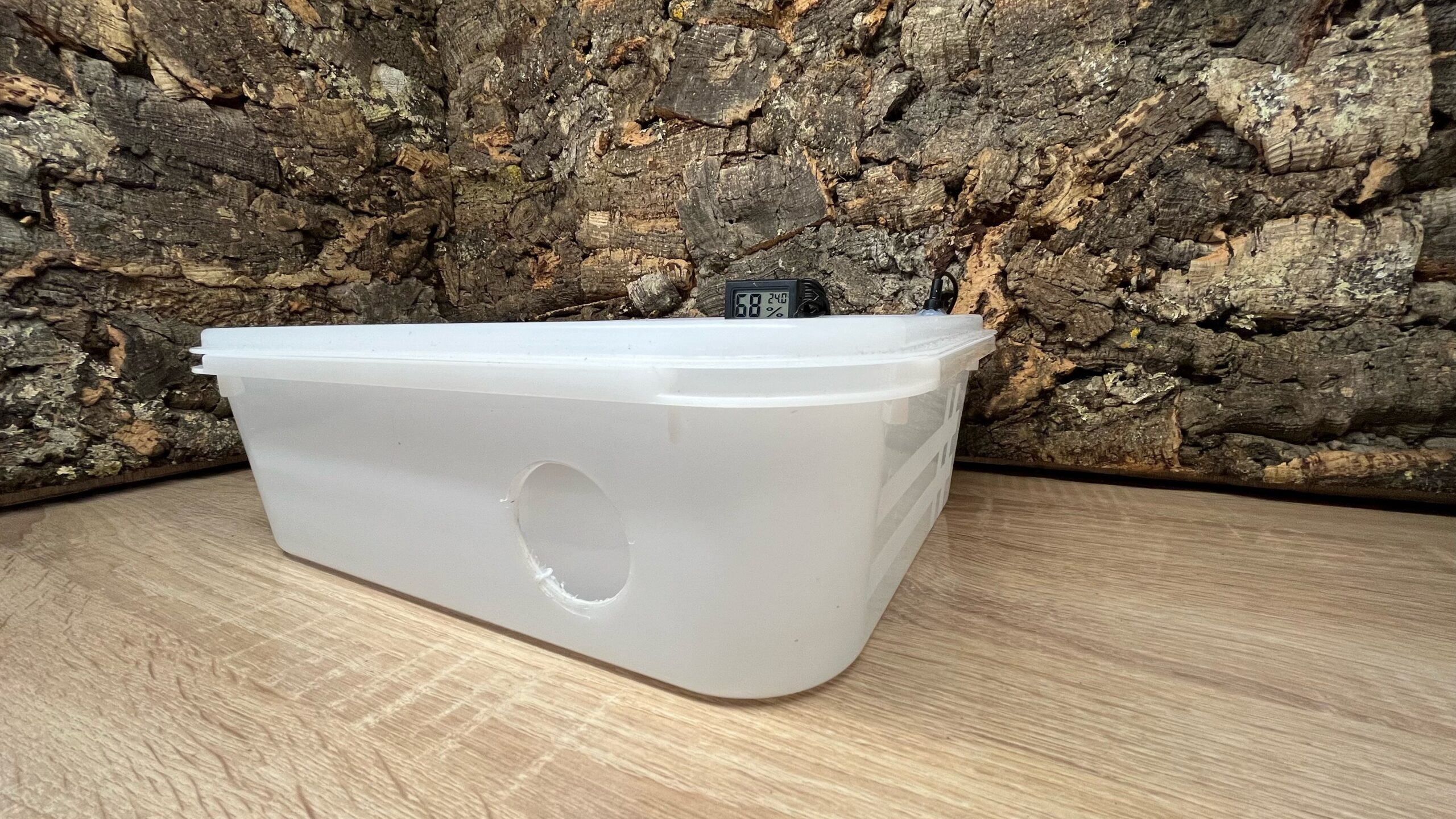
Once the laybox is in the enclosure, consistency becomes your best friend. Here’s what we aim for:
We check the readings daily and adjust as needed—usually by misting the substrate lightly or adjusting airflow.
When the female is ready, she’ll typically retreat into the laybox, dig in the substrate, and begin laying. This process can take several hours. It’s important to minimize disturbances during this time—quiet and privacy help things go smoothly.
Once she finishes, we gently remove the eggs and transfer them to an incubator where conditions can be kept precisely controlled. (If you’re curious about that step, check out our post: An Egg-cellent Day: Our Western Hognose Lays Eggs.)
A laybox might seem like a minor detail in a breeding setup, but in reality, it’s a key piece of the puzzle. When done right, it reduces stress for your female, encourages natural behavior, and ensures the eggs are placed in the best possible environment from the very beginning.
We’ve found our current setup works really well—but like most things in herpetoculture, there’s always more than one way to do it.
Have you built a laybox for your hognose? Do you use different materials or have any tips that worked for you? Let us know in the comments—we’d love to hear how others approach this part of breeding!

No Comment! Be the first one.