
April 21, 2024, turned out to be a big day in our reptile room. Our Western Hognose, Bajsa, started showing signs of an upcoming shed—but this wasn’t just any shed. This was her pre-lay shed, the one that happens shortly before she’s ready to lay eggs. If you’ve ever bred snakes before, you know this moment is full of excitement and a whole lot of checking in every few hours.
About a week after that shed, Bajsa used her lay box for the first time. For anyone unfamiliar, a lay box is basically a little hideout filled with moist moss and bio ground. It creates a warm, humid micro-environment that encourages a female snake to lay her eggs comfortably and safely. We monitor the box closely using a thermometer and hygrometer on top to make sure conditions are just right. We also cut an entrance hole so she can move in and out easily.
If you want to know how we make ours, check out our full post on Creating the Perfect Lay Box for Western Hognose Snakes—we go into all the setup details there.
As the days passed, Bajsa's belly grew noticeably rounder. Her movements slowed down, and she started spending more time near the lay box. We knew it was almost time!
On the night of May 5, 2024, it finally happened. Bajsa began laying! We woke up to find her mid-process, and by the time she was finished, she had laid 20 eggs.
Of those 20, 19 looked perfect—smooth, firm, and pearly white. One was a slug, which is what we call an infertile egg. Slugs are totally normal, especially in first clutches or when a female is still maturing. They’re usually smaller, softer, and yellowish compared to the fertile ones.
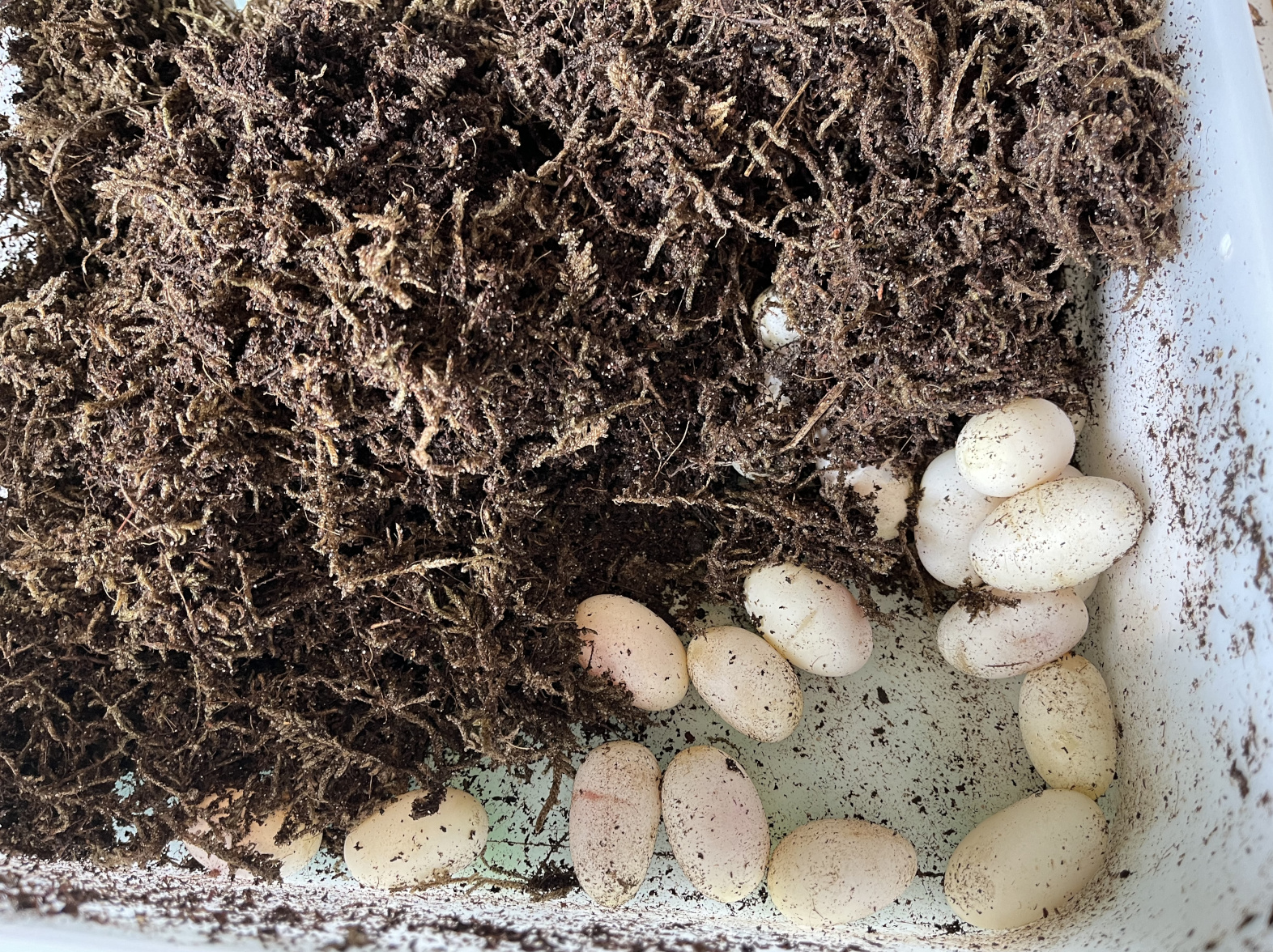
Once Bajsa was done, she moved to her basking spot to recover, and we gently removed the lay box from her enclosure. The next step was setting up the eggs for incubation.
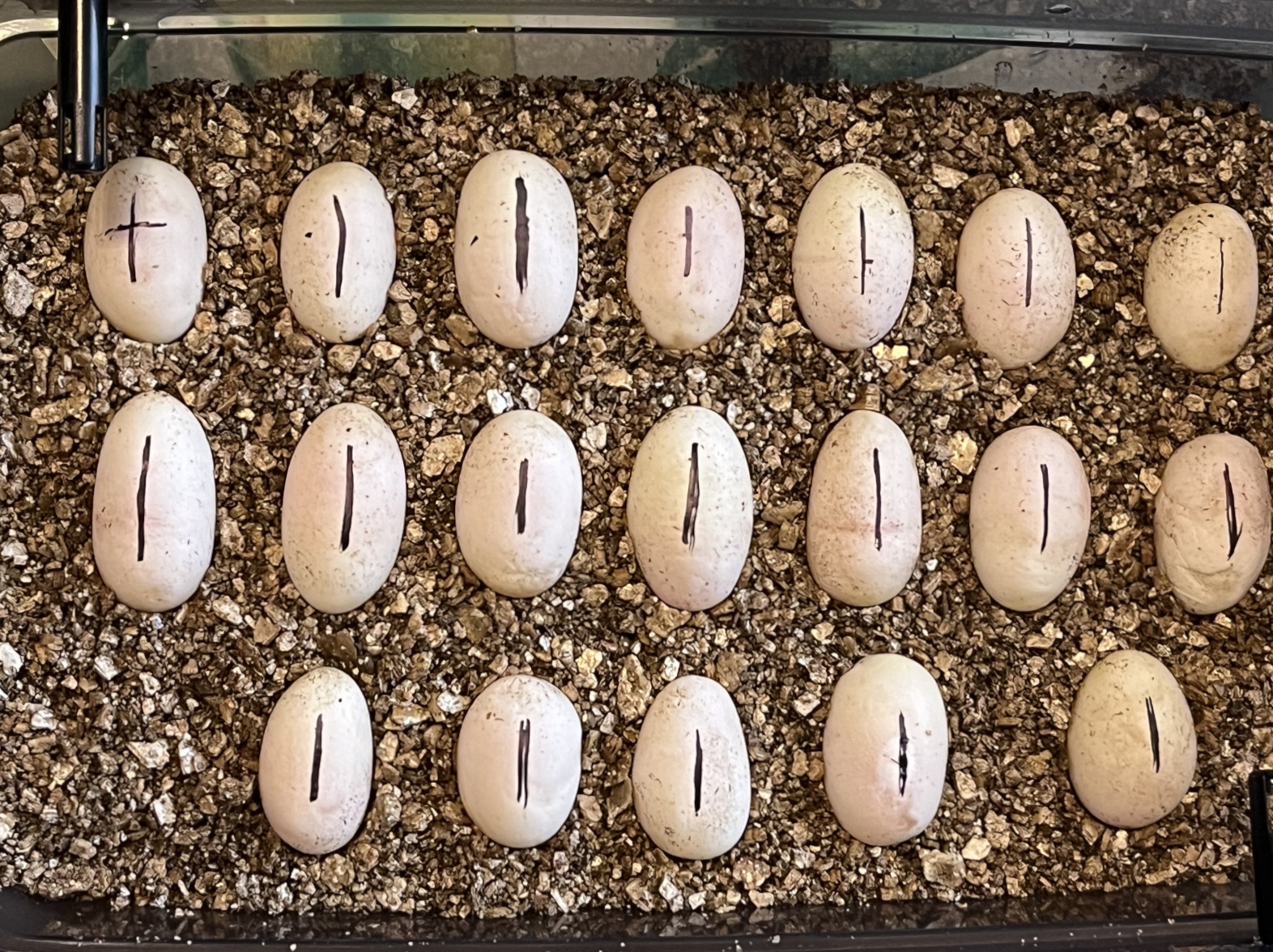
We transferred them to a new container filled with slightly moist vermiculite, a common incubation substrate that holds just the right amount of humidity. To check on the health and position of each embryo, we used a method called candling—basically shining a bright light through the egg to find where the embryo is. This helps us know which side is “up,” so we can carefully mark the tops and avoid accidentally flipping them later on.
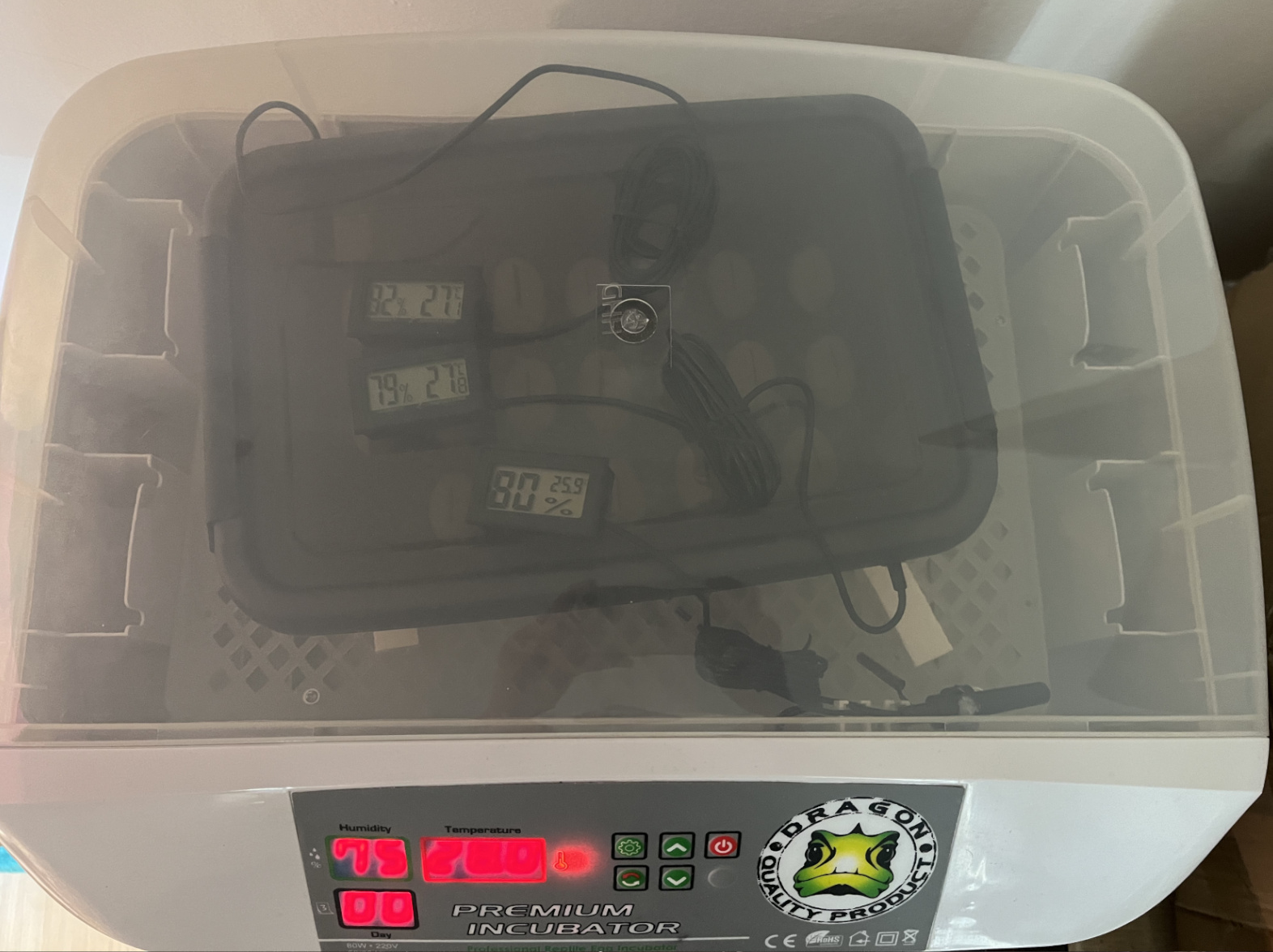
Once all the eggs were positioned and stable, we placed the container into our incubator, pre-set to a steady 27.7°C (82°F). Now, it’s a waiting game—if all goes well, we should start seeing hatchlings in about 55–60 days.
Watching Bajsa go through this process has been amazing, and we’re thrilled to see what’s next. Hopefully, in just a couple of months, we’ll be welcoming our very first baby hognoses from this pairing!
Got experience with hognose hatchlings or other reptile breeding projects? Drop your stories in the comments—we love hearing from fellow keepers. And of course, we’ll keep you posted on how the eggs are doing, with updates as hatch day gets closer. Stay tuned for the next chapter in Bajsa’s story—it’s only just beginning!
And as always - stay happy, stay curious, and give your hoggie a gentle boop from me.

No Comment! Be the first one.