
Since it’s almost Easter, what better time to talk about eggs? But not the kind you dye and hide in the backyard—we’re talking about western hognose snake eggs, which are just as exciting (and way cuter when they hatch!). With all that excitement comes a lot of questions—Are the eggs fertile? Are these slugs? How big should they be? What do I do now?
In this post, we’ll take you through everything you need to know about western hognose (Heterodon nasicus) eggs, from what they look like to how to care for them.
A healthy, fertile hognose egg is a beautiful thing—and surprisingly easy to identify once you know what to look for:
Shape: Fertile eggs are elongated and oval, not round.
Texture: They have a firm, leathery shell—not as hard as a chicken egg, but not too soft either. Think of a slightly flexible, yet strong casing.
Color: They are usually creamy white to pale ivory. The color may slightly vary from female to female, but it should never be yellow or brown.
Size: Codominant On average, western hognose eggs are around 2.5 to 4 cm long (1 to 1.5 inches) and about 1.5 to 2 cm wide.
Feel: A fertile egg feels full and firm, with some springiness. It shouldn't be rock hard or mushy.
Clumping: Hognose eggs often stick together in a clutch. This is normal and doesn’t need to be corrected unless there’s a medical or safety reason.
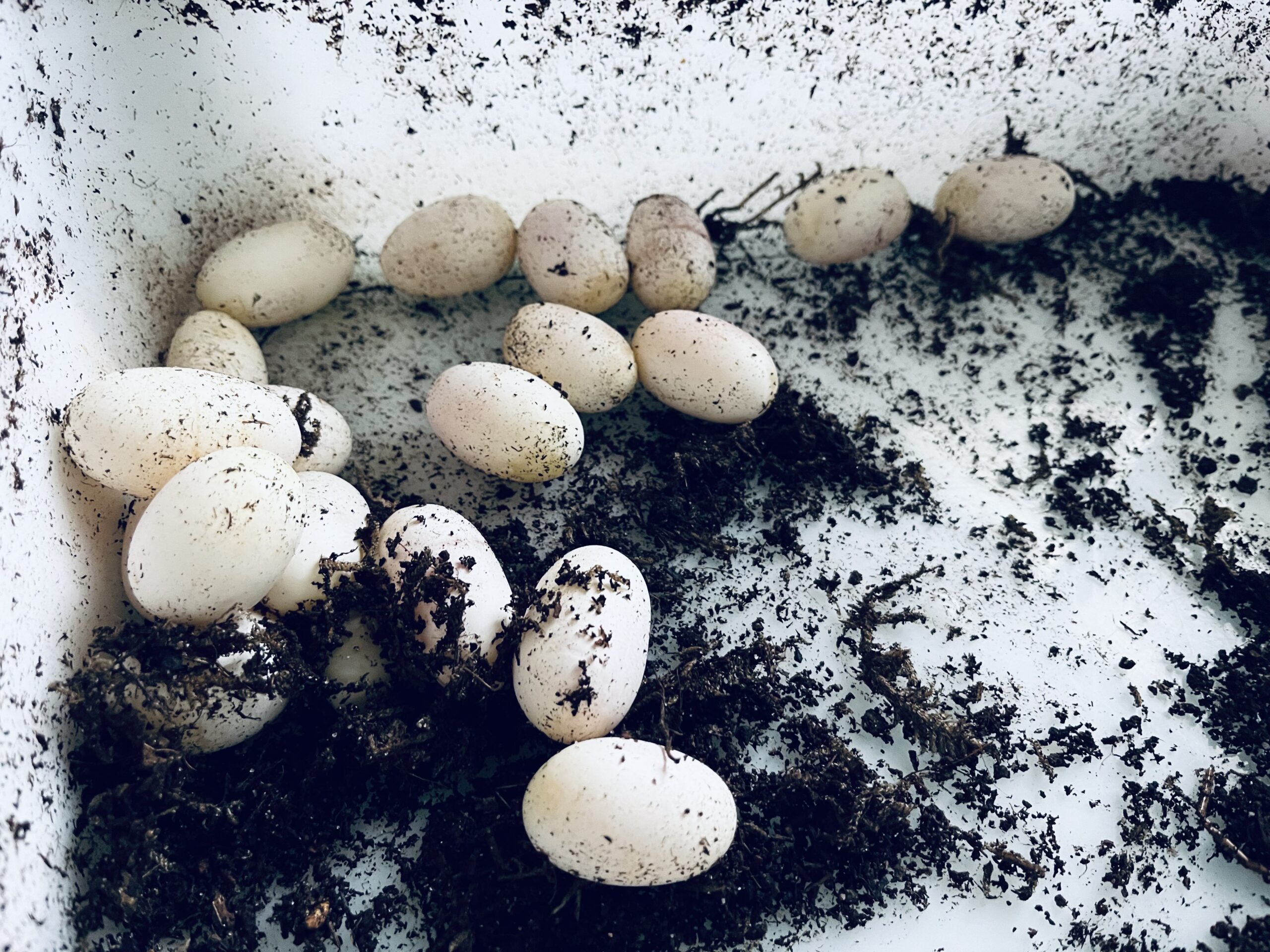
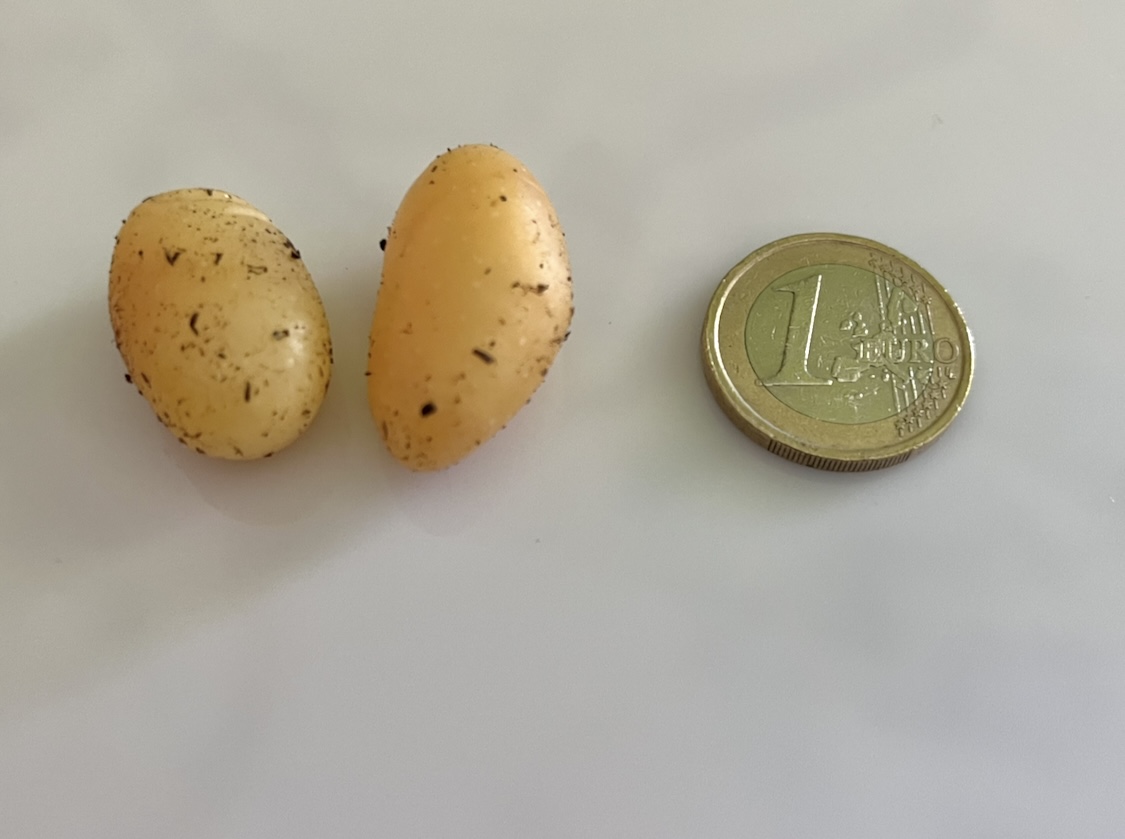
Not all eggs laid are fertile—and the infertile ones are affectionately (or frustratingly) called slugs. Here’s how to spot them:
Shape: Slugs are usually smaller and more rounded than fertile eggs.
Color: Often yellowish, off-white, or tan in color.
Texture: They tend to be softer and sometimes feel deflated or rubbery.
Size: Noticeably smaller than fertile eggs—some can be as little as half the size.
Feel: Slugs often feel loose, squishy, or empty compared to the firmer, well-formed fertile eggs.
Slugs cannot be incubated and will not hatch. It’s common for a female to lay a few slugs mixed in with good eggs, especially if it's her first clutch or if something didn’t quite go right during ovulation or fertilization.
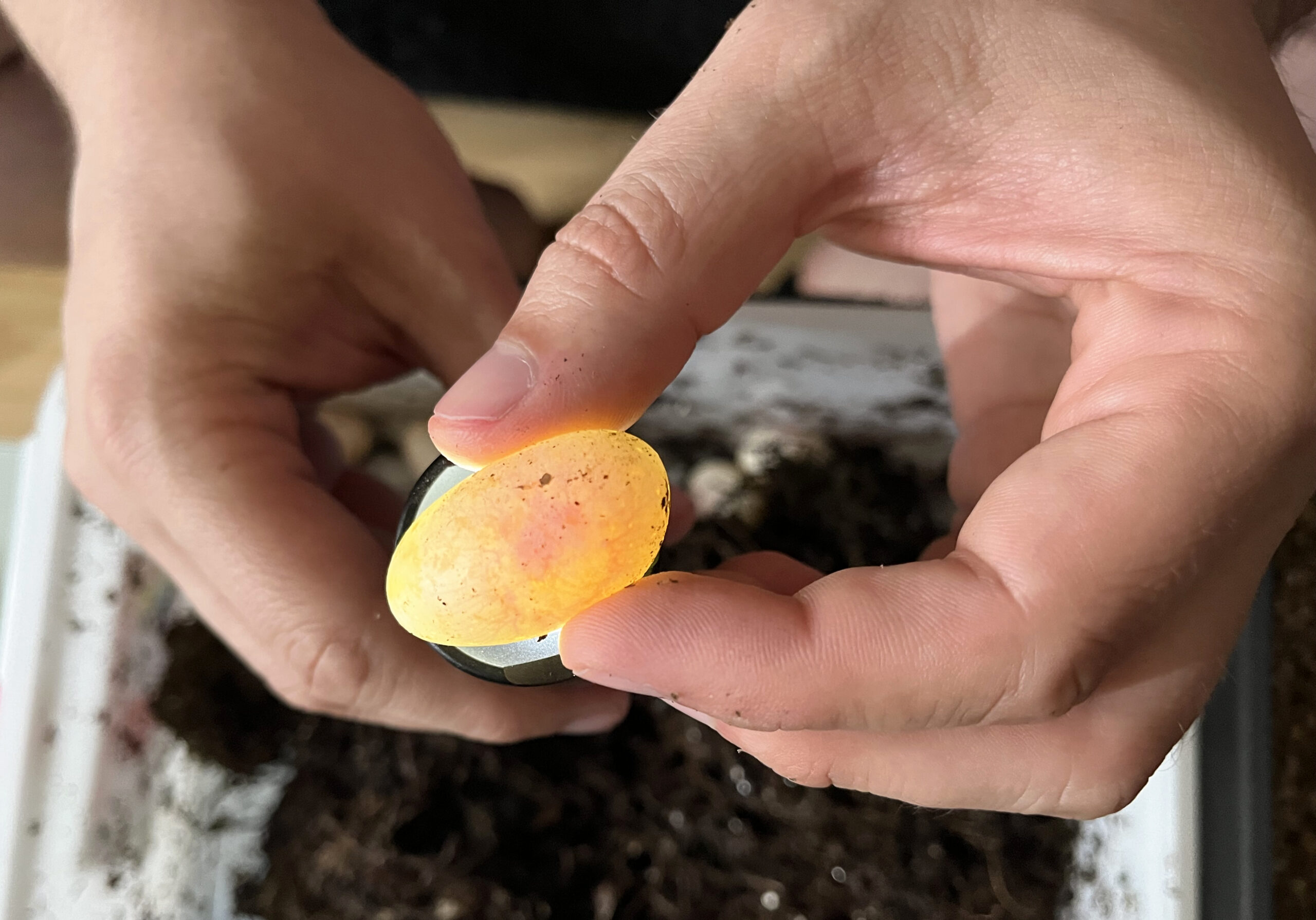
If you're unsure whether an egg is fertile just by looking or feeling, you can "candle" it to get a better idea. Candling is the process of shining a bright light (usually an LED flashlight) through the egg in a dark room to see what’s developing inside.
Fertile egg: You’ll usually see a red network of blood vessels forming within the first 7–10 days. As development progresses, you might see an embryo or shadow moving.
Infertile egg (slug): The egg remains clear, yellowish, or shows no visible blood vessels.
Be gentle when handling eggs—especially in the early days—and avoid rotating them too much, as this can harm the developing embryo.
Clutch size varies by female and her size/age, but most western hognose snakes lay 5 to 25 eggs per clutch. First-time moms often produce smaller clutches, and sometimes only slugs or a mix of fertile and infertile eggs. Females may double clutch (lay two sets of eggs in a season), though this depends on body condition, feeding, and overall health. We actually had a surprise second clutch from our girl Bajsa last year. You can read the full story here: Bajsa’s Surprise Second Clutch.
Humidity and dehydration: If an egg starts denting in during incubation, it might be dehydrated. You can often correct this by increasing humidity slightly, but avoid overdoing it—excess moisture can lead to mold or rot.
Mold on one egg: A moldy egg doesn’t automatically mean the whole clutch is compromised. Carefully separate the bad one if possible, and monitor the rest.
Scent and bacteria: Avoid touching the eggs too much with bare hands. Always wash hands before handling to avoid transferring bacteria or disrupting the eggs’ natural protective coating.
Hognose snake eggs are a fascinating part of the breeding journey. Being able to identify healthy, fertile eggs vs. slugs, understanding their feel, color, and how to care for them, helps you set the stage for a successful hatch.
Whether it’s your first clutch or your tenth, there’s always something new to learn—and that’s part of the fun of keeping these incredible snakes.

No Comment! Be the first one.